


SPLC Curriculum in K-12: Learning for Justice/Teaching Tolerance tracker
Investigations
Total number of states: 43 plus District of Columbia
Total number of state government entities: 30
Total number of school districts: 225
SUMMARY
For years, Southern Poverty Law Center’s (SPLC) education program called Learning for Justice (formerly Teaching Tolerance) has been able to integrate its far-left content and materials into K-12 schools throughout the country. The organization’s website and documents can be found on school district webpages, in teacher professional development and trainings, classroom lessons, district-wide curriculums, Social Emotional Learning (SEL), social justice standards, and district antiracism and equity policies and resources.
The aim of this report is to expose how Learning for Justice content and materials have been and are being used in schools, and how widespread the organization’s influence is in K-12 education. While this report is not exhaustive, it does capture the different ways in which the SPLC’s programming is utilized and/or promoted by state agencies, education institutions, teachers unions, professional associations, consultants, and education focused companies.
Unfortunately, the true scope of Learning for Justice’s impact on schools and districts is difficult to fully capture due to a lack of public access to curriculums, lessons, and textbooks. Additionally, because of the potential integration of the Social Justice Standards into several popular SEL curriculums, it is hard to track down all districts using the SEL programming that includes those standards.
Another complication in tracking down usage is the ability for teachers to independently incorporate Learning for Justice content and tools into daily lessons and assignments. Therefore, it is fair to assume that the use of Learning for Justice content is more widespread throughout K-12 education than this report is able to capture.
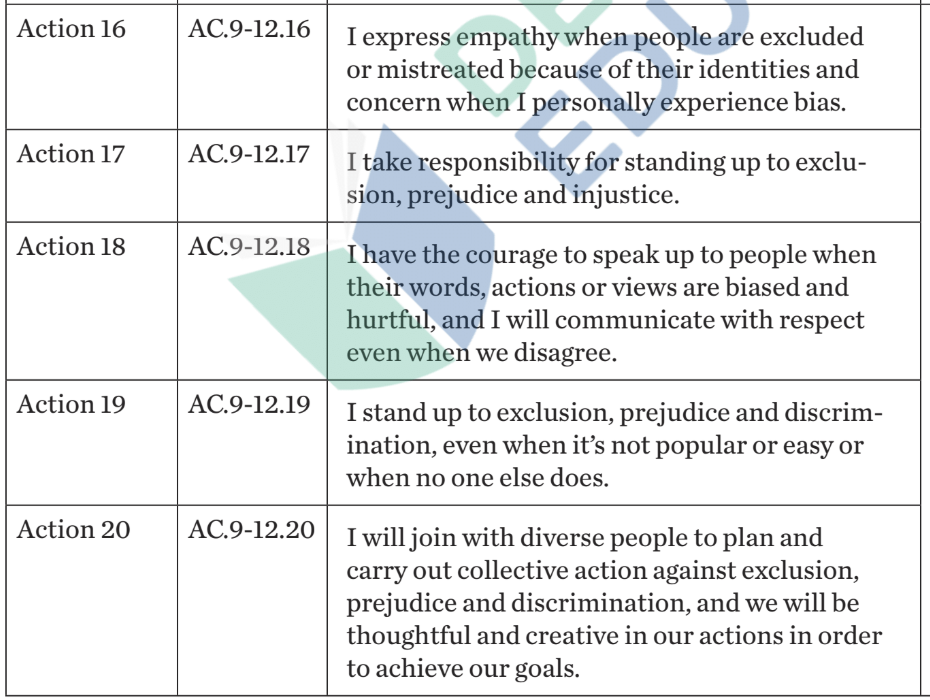
While Learning for Justice produces some content that appears neutral, the sum of its work does promote far-left ideologies and viewpoints that push a leftwing agenda. For example, the organization’s Social Justice Standards includes an entire domain focused on teaching the youngest of learners to engage in “action” or activism for social justice causes.
What follows are examples, documents, and links showing how the SPLC’s Learning for Justice content has wormed its way into American education institutions and the influence it has on policy, standards, curriculum, daily lessons, and the community.
KEY TAKEAWAYS
- Learning for Justice’s Social Justice Standards include an Anchor Domain focused on “action” that includes Anchor Standards that focus on students planning and carrying out “collective action against bias and injustice in the world” and to “evaluate what strategies are most effective.”
- The Smithsonian’s National Museum of the American Indian includes Learning for Justice/ Teaching Tolerance as “Recommended Resources” in lessons and “Recommended Reading” related to “Native Americans of California during the mission period.”
- According to the 2020 National Sex Education Standards (NSES) document, the standards were “further informed by the work of …the Social Justice Standards.”
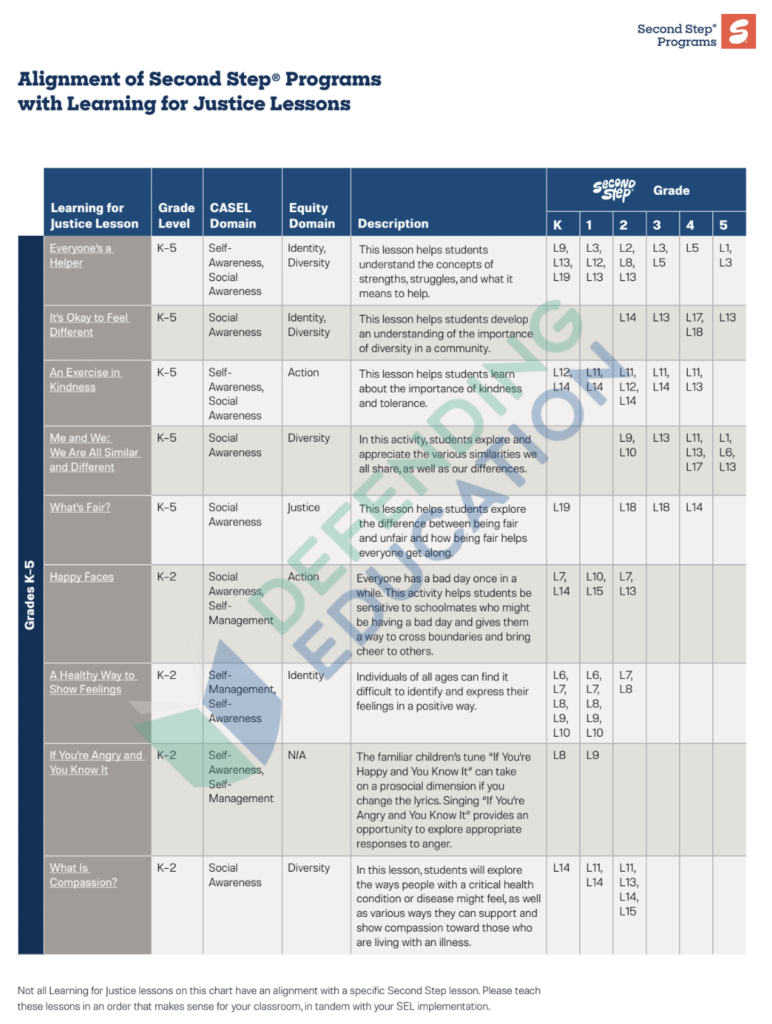
- Second Step social and emotional learning program used in schools across the country “curated a set of Learning for Justice lessons” to be taught in “tandem with your Second Step implementation to incorporate diversity, equity, and social justice work into your classroom’s SEL plan.”
- Documents show that Yale Center for Emotional Intelligence’s (YCEI) SEL program called RULER integrates Learning for Justice’s Social Justice Standards into the curriculum and lessons.
- The Social and Emotional Learning company 7 Mindsets states that its course is “aligned with 10 SEL competencies (the CASEL 5 and 5 additional ones)” as well as the “Social Justice Standards.”
- In 2022, the New York State Education Department (NYSED) added “equity revisions” to its NY Social Emotional Learning Benchmarks which aligned the benchmarks with “Learning for Justice’s Social Justice Standards.”
- Piedmont Unified School District’s (CA) Racial Equity policy requires the district to “adopt curriculum such as the Teaching Tolerance Anti-Bias Framework” and “integrate social studies standards curriculum into units of study across all levels and in all content areas.”
- Cambridge Public Schools (MA) incorporates the Social Justice Standards into its Junior Kindergarten through Fifth grade Physical Education curriculums.
- In late 2023, the Francis Howell School District Board of Education voted to “rescind approval, for use of the academic standards titled ‘Social Justice Standards: The Teaching Tolerance Anti-Bias Framework.'”
- Princeton Public Schools’ (NJ) Equity webpage notes that the district used a grant to update its Early Childhood “library and humanities curriculum based on the Social Justice Standards, a road map for anti-bias education at every stage of K-12 instruction.”
- Learning for Justice’s Social Justice Standards are incorporated into Somerset Hills School District’s (NJ) Social Studies curriculum from kindergarten through high school.
- Yonkers Public Schools’ (NY) Pre-Kindergarten Project Based Learning Unit Design Plan incorporates the Social Justice Learning Standards into the curriculum and lessons.
- According to an Essex Westford School District’s (VT) policy procedure, the district will “achieve Goal A of the district Equity Policy by implementing “curriculum to teach the social justice standards developed by Learning for Justice.”
- Sun Prairie Area School District’s (WI) Student Academic Standards for Social Studies includes Learning for Justice’s “Social Justice Standards.”
- The American Bar Association’s (ABA) “Bullyproof Resources for Educators” webpage promotes “Teaching Tolerance Classroom Resources.”
THE SOUTHERN POVERTY LAW CENTER (SPLC) AND LEARNING FOR JUSTICE
What is the Southern Poverty Law Center?
The Southern Poverty Law Center (SPLC) is a left-of-center nonprofit organization and advocacy group that engages in civil rights litigation and monitors groups it claims are extremist or “hate groups.” The organization declares it is fighting against racism and discrimination through its various efforts.
Additionally, the organization promotes content, resources, and social justice standards for K-12 schools through its Learning for Justice (formerly Teaching Tolerance) program, which are intended to advance anti-racism, diversity, equity, and inclusion (DEI) and other far-left ideologies into school curriculums and lessons.
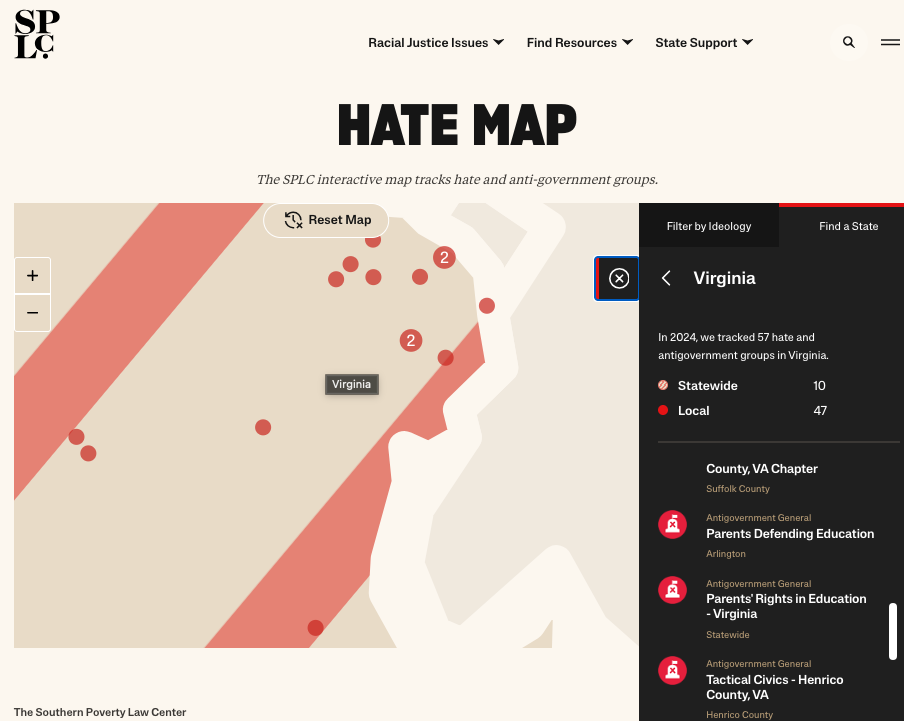
In 2022, the SPLC labeled [Parents] Defending Education and other parental rights groups as “extremist” and placed them on its well known “Hate Map.”
What is Learning for Justice (formerly Teaching Tolerance)?
According to the SPLC, Learning for Justice (LFJ) (formerly Teaching Tolerance) is a “community education program of the Southern Poverty Law Center (SPLC) that cultivates and nurtures dialogue, learning, reflection and civic action from those closest to and harmed most by injustices in the South.” It focuses on “education for liberation — community civic and political action education — LFJ complements the SPLC’s work to increase power and capacity for multiracial, inclusive democracy.”
Learning for Justice Content, Lessons, and Materials Examples
Learning for Justice offers a range of content, lessons, and other materials for school districts and teachers to incorporate into their teaching methods and to use in the classroom. The content often pushes or reinforces far-left cultural and political ideologies such as leftwing activism, anti-racism, Black Lives Matter, gender ideology and queer theory, white privilege, white supremacy, whiteness, and transgenderism.
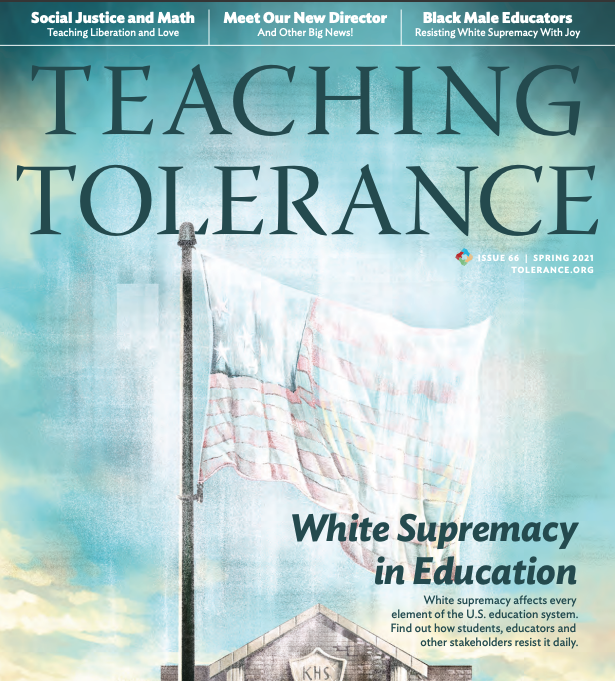
The Fall 2018 issue of Teaching Tolerance features an article titled “What is White Privilege, Really?” The article, which focuses on the idea that “white privilege” is an unearned systemic advantage given to white people regardless of socio-economic status. The piece also offers several ways that white people can recognize their privilege and take action. The article is found quite often on school district diversity, equity, and inclusion sites,
Another often used article in curriculums, lessons, and as a recommended resource is “Why Talk About Whiteness?” which claims that “the normalization of whiteness and the impenetrable ways it protects itself are cornerstones of the way institutions function in the United States.”
The article continues by stating that “recognizing white privilege is a necessary but insufficient means for confronting racism and increasing opportunities for people of color. In fact, acknowledging white privilege but taking no initiative to own it or address it can be harmful and counterproductive.”
Learning for Justice’s Social Justice Standards
Learning for Justice’s Social Justice Standards are a “set of anchor standards and age-appropriate learning outcomes divided into four domains – identity, diversity, justice and action (IDJA).” The document states that teaching these domains “allows educators to engage a range of anti-bias, multicultural and social justice issues” and focuses on both “prejudice reduction and collective action.”
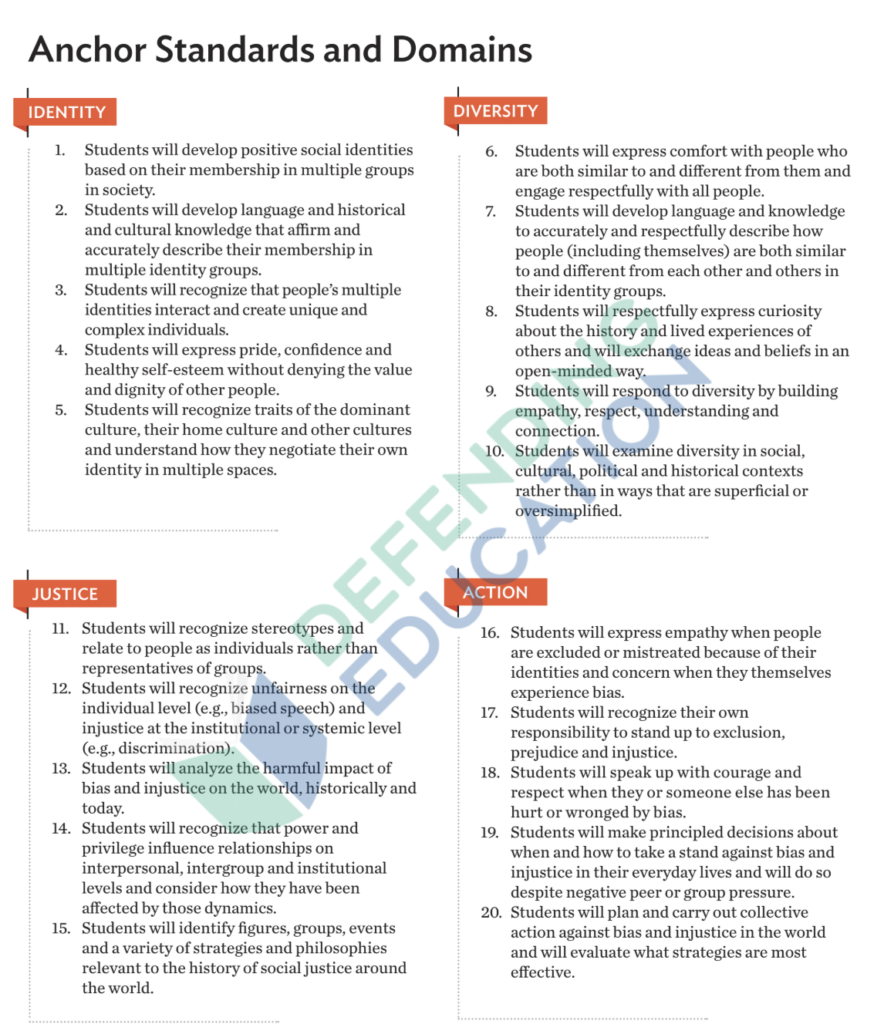
One of the “Anchor Domains titled “Action” calls upon students to engage in activism against bias, “exclusion, prejudice and discrimination” by carrying out “collective action.”
Examples of Implementation in Districts
Learning for Justice content, materials, and Social Justice Standards work their way into classrooms through curriculum, district-wide adoption of the standards, independent incorporation into lessons by teachers, social emotional learning (SEL) programming, and even promoted by outside consultants via equity audits.
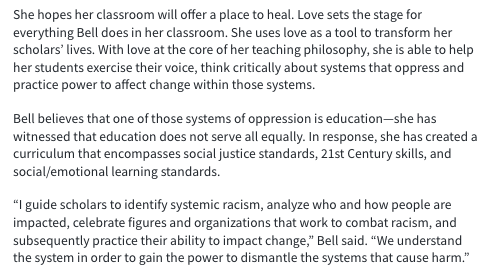
For example, a Minnesota Teacher of the Year semifinalist who “believes that one of those systems of oppression is eduction” helped create a “curriculum that encompasses social justice standards, 21st Century skills, and social/emotional learning standards.”
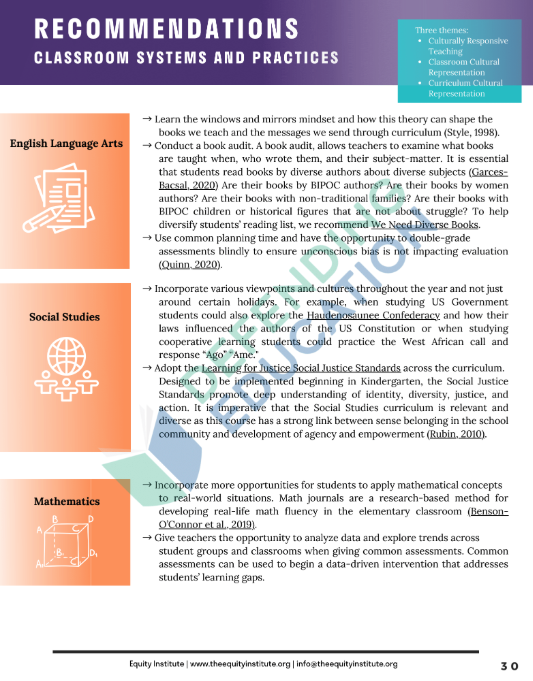
In some cases, equity consultants will include in their equity audit recommendations the adoption of the Social Justice Standards. As can be seen in North Providence School District’s equity audit completed by the Equity Institute.
TEACHERS UNIONS, PROFESSIONAL ORGANIZATIONS, & COMPANIES
American Federation of Teachers
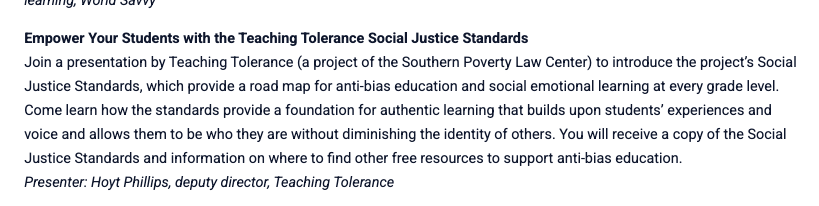
The American Federation of Teachers (AFT) promotes the use of Learning for Justice resources and lessons and has offered presentations to its members on how to integrate the Social Justice Standards into school curriculums and lessons.
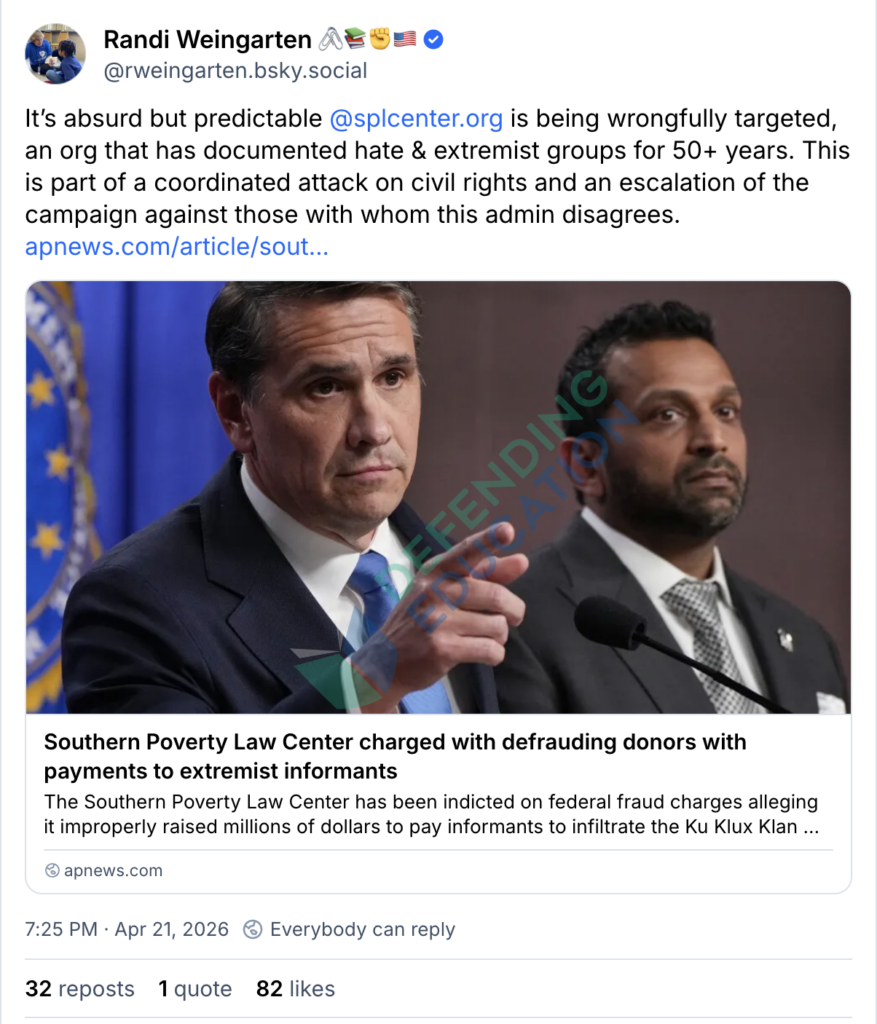
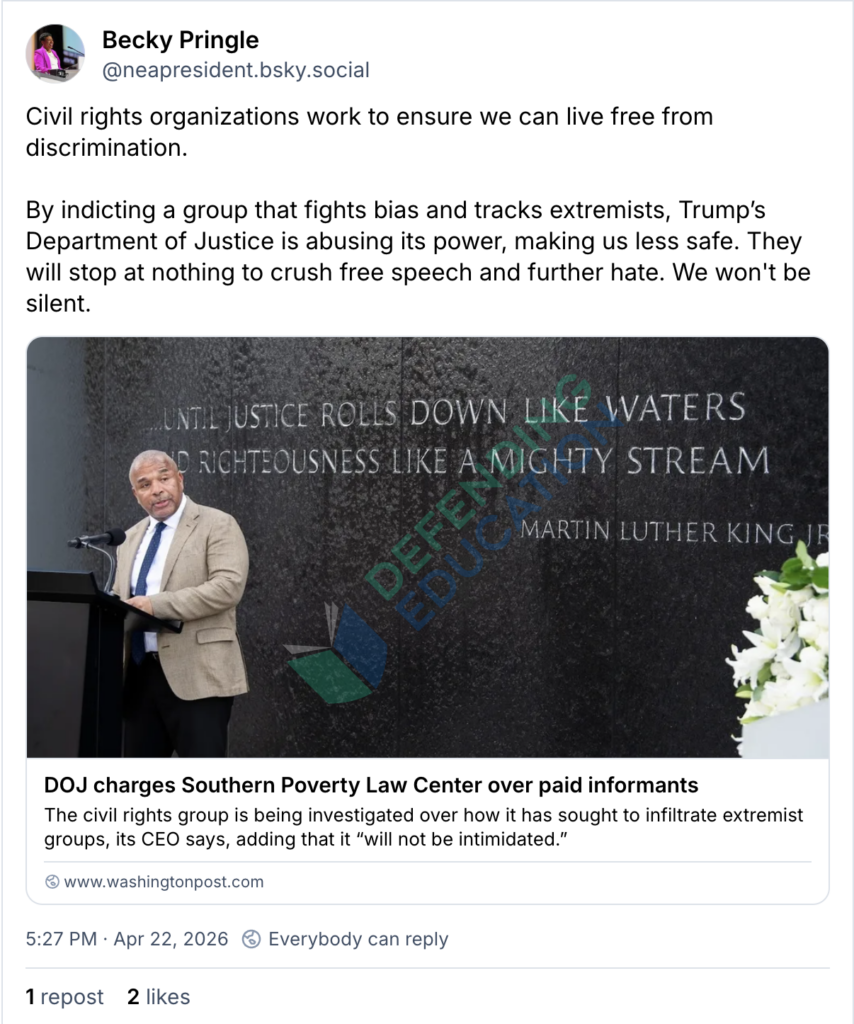
After the Department of Justice (DOJ) charged the Southern Poverty Law Center with fraud in 2026, AFT President Randi Weingarten posted on BlueSky her support for the indicted organization.

American School Counselor Association
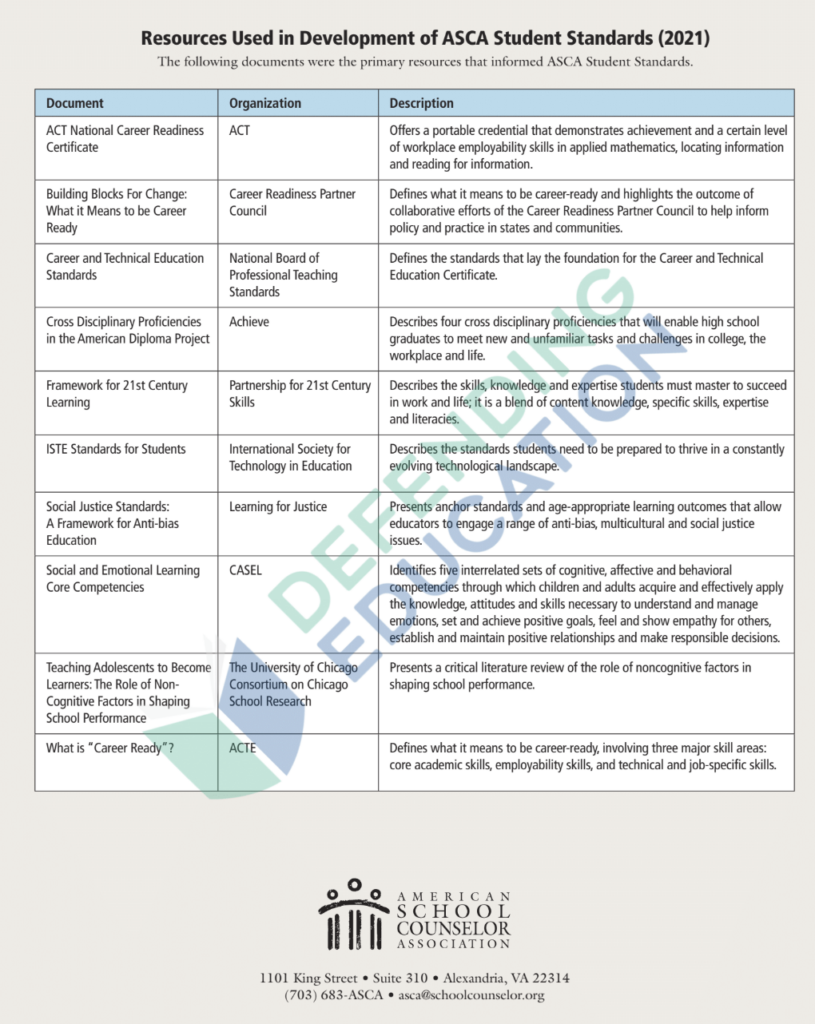
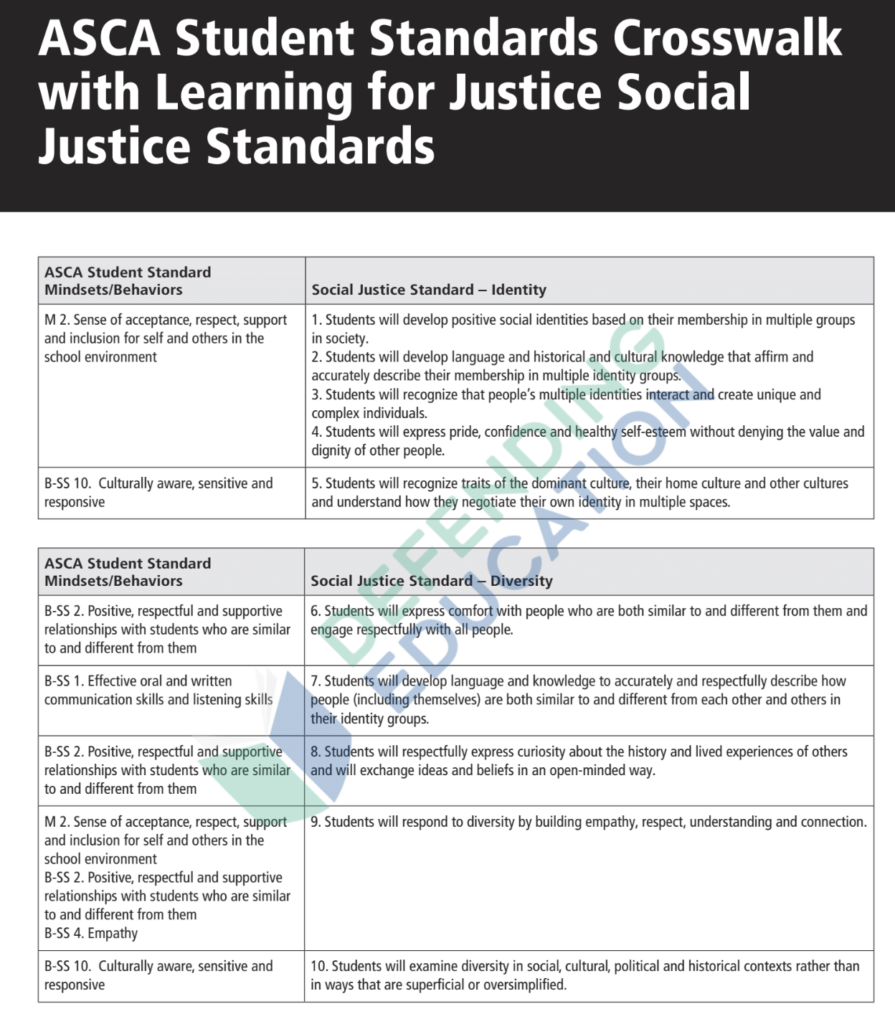
The American School Counselor Association’s (ASCA) “Student Standards :Mindsets & Behaviors for Student Success” states that the Social Justice Standards were one of the “primary resources that informed” the creation of the document. The ASCA also includes another document titled “ASCA Student Standards Crosswalk with Learning for Justice Social Justice Standards” demonstrates how the four Social Justice Standards domains align with the organization’s “Student Standards.”
Amplify Education
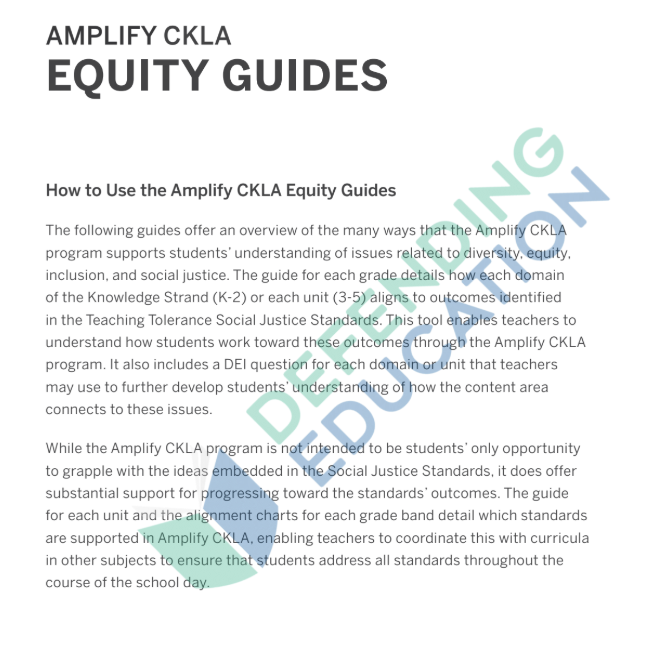
Amplify Education, a company that provides K-12 school districts across the country with supplemental curriculum, assessments, and intervention programs, aligned its Core Knowledge Language Arts (CKLA) program to “outcomes aligned in the Teaching Tolerance Social Justice Standards.” The guides include “a DEI question for each domain or unit that teachers may use to further develop students’ understanding of how the content area connects to these issues.”
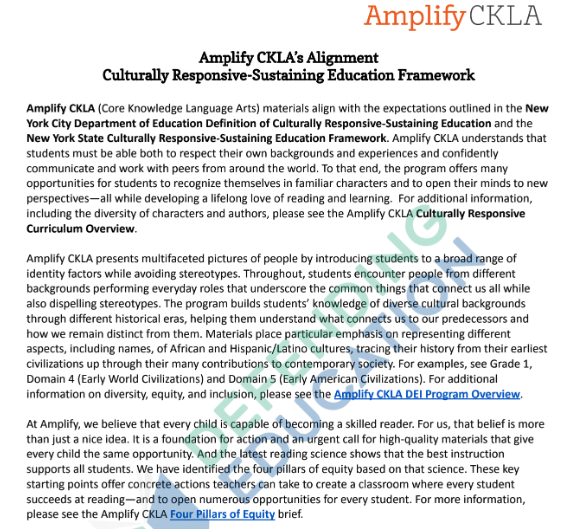
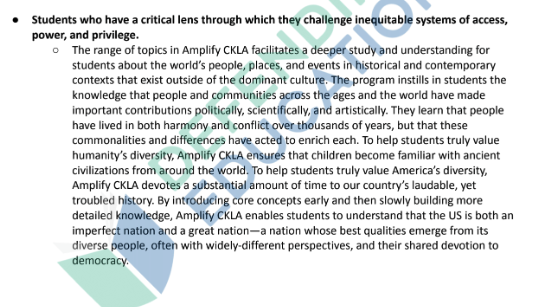
The company also aligned the CKLA program to “the expectations outlined in the New York City Department of Education Definition of Culturally Responsive-Sustaining Education and the New York State Culturally Responsive-Sustaining Education Framework.” This includes alignment with the New York state guidelines that “students who have a critical lens through which they challenge inequitable systems of access, power, and privilege.”
Association of Alaska School Boards
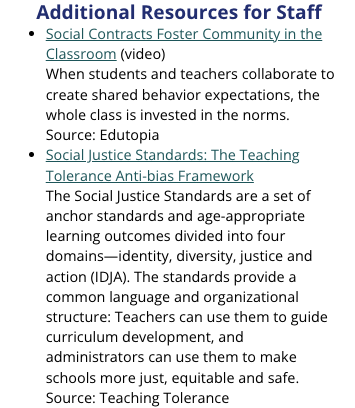
The Association of Alaska School Boards’ “School-Wide Practices and Climate” webpage includes a link to Teaching Tolerance’s Social Justice Standards under “Additional Resources for Staff.” The site states that the “standards provide a common language and organizational structure: Teachers can use them to guide curriculum development, and administrators can use them to make schools more just, equitable and safe.”
National Education Association (NEA)
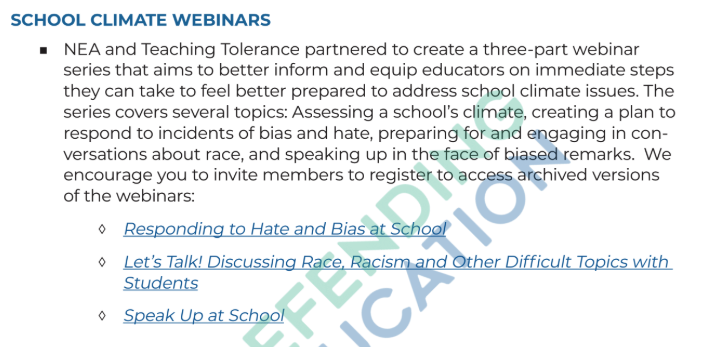
A 2018 National Education Association (NEA) resource guide titled “Racial Justice in Education” notes that the teachers union partnered with Learning for Justice (then Teaching Tolerance) to “create a three-part webinar series that aims to better inform and equip educators on immediate steps they can take to feel better prepared to address the climate issues.”
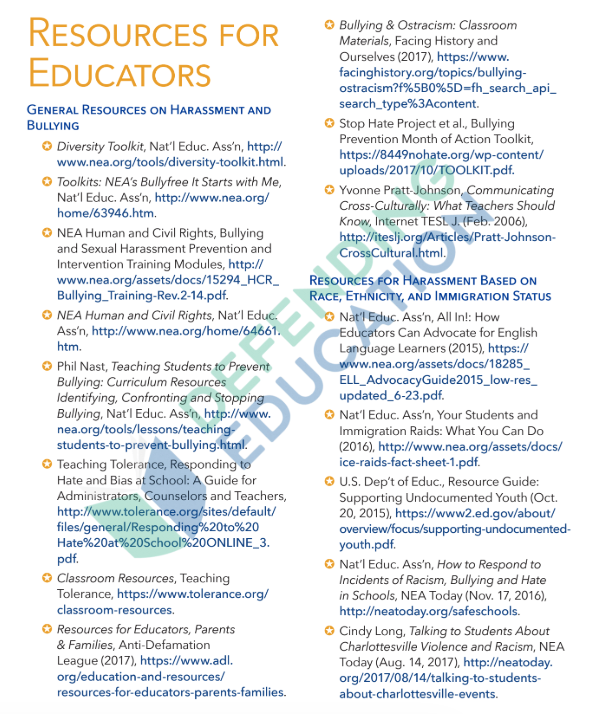
A NEA document titled “Legal Guidance on Student’s Rights: Discrimination and Harassment Based on Race, Religion, National Origin, and Immigration Status” includes links to Teaching Tolerance materials under the “Resources for Educators” section.
On April 22, 2026, NEA President Becky Pringle posted on X that “by indicting a group that fights bias and tracks extremism, Trump’s Department of Justice is abusing its power, making us less safer. They will stop at nothing to crush free speech and further hate.”
Second Step
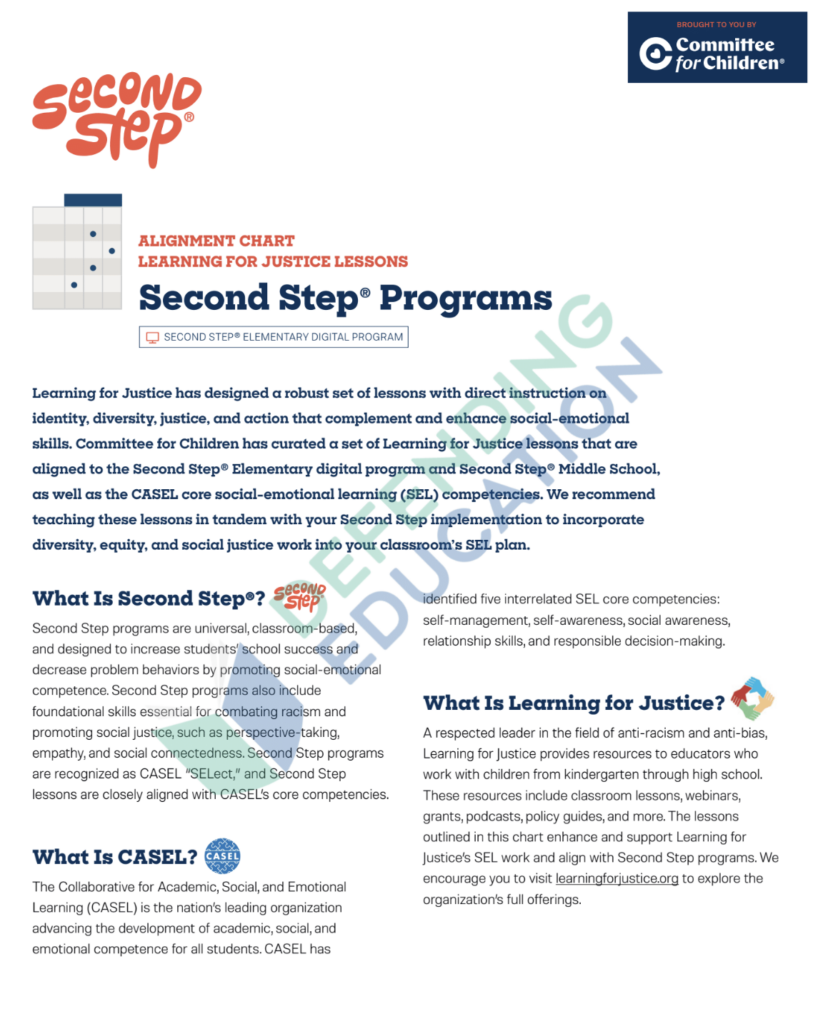
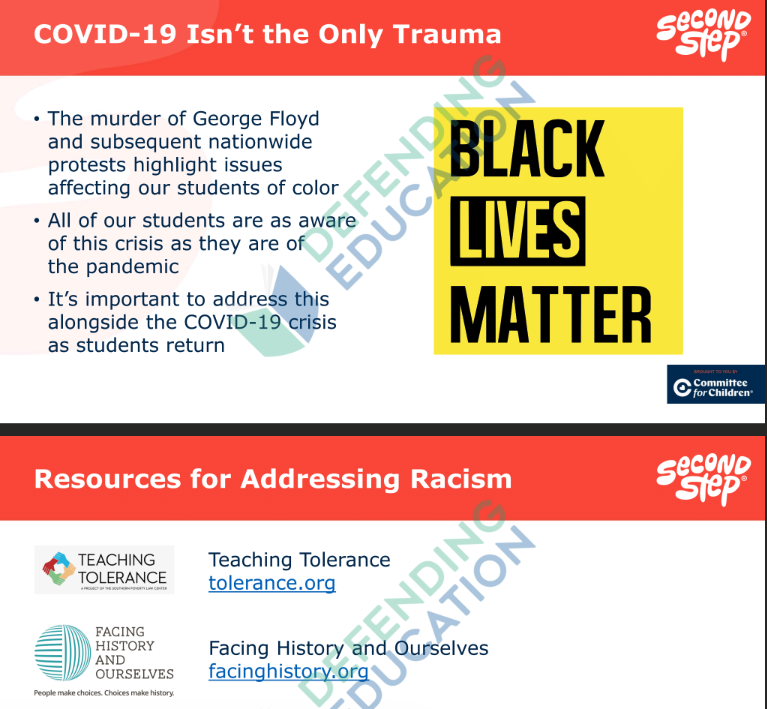
Second Step, a popular Social Emotional Learning (SEL) program used in many districts, states that it has “curated a set of Learning for Justice lessons that are aligned to the Second Step Elementary digital program and Second Step Middle School” to be taught in “tandem with your Second Step implementation to incorporate diversity, equity, and social justice work into your classroom’s SEL plan.”
DISTRICTS
Below is a list of districts and departments of education (DOE) by state. Because some of the documentation is from past years, the inclusion of institutions on this list does not automatically mean that school or DOE is currently using or promoting Learning for Justice content or standards. This list primarily serves to highlight the wide use of Learning for Justice materials throughout K-12 education.
Artifacts that are used to justify adding a district or DOE to the list include:
- Lessons, curriculums, and resources,
- Professional development
- School or district level accountability reports (such as California’s Local Control and Accountability Plan (LCAP) or School Accountability Report Card)
- Adoption of Teaching Tolerance’s social justice standards
- Use of social emotional learning (SEL) programs such as Second Step that incorporate the organization’s content, resources, or social justice standards
- Defending Education dispatches and reports
- It should be noted that some of these are a few years old and may no longer be in use. If that is the case, a note will by added about this update but the artifact will remain as a means to illustrate the prevalence of the use of the organization’s content.
This is not a comprehensive list and will be updated as new information is found or shared. Additionally, non-school district entities such as school board associations, teachers unions, and other professional organizations are highlighted in red and state Departments of Education are italicized to make them stand out from school districts.
ALASKA
Alaska Department of Education Education and Early Development
Fairbanks North Star Borough School District
Kenai Peninsula Borough School District
Association of Alaska School Boards
ARIZONA
Arizona Department of Education
- Social Studies Resources
- Special Education – Public Education Agency (PEA) Determinations Resources for Technical Assistance
- Emergency Distance Learning Guidance (August 2020)
Tempe Union High School District
Tucson Unified School District
- July 31, 2023: Tucson Unified School District is using Learning for Justice’s Social Justice Standards to build “multicultural” curriculum for students
Arizona Association of School Psychologists
ARKANSAS
Arkansas Department of Education
Arkansas School Counselor Association
CALIFORNIA
California Department of Education
- Accurate and Inclusive Curriculum – Curriculum Frameworks & Instructional Materials
- Quality Schooling Framework – Equity
- California Transformative Social and Emotional Learning Competencies and Conditions for Thriving
- Social and Emotional Learning in California: A Guide to Resources (2018)
Alameda Unified School District
Berkeley Unified School District
- Teaching of Controversial Issues
- Jewish American Heritage Month TK-8 Teaching Resources
- EFM to Staff Resources on Teaching About War Between Israel and Hamas
Bonsall Unified School District
Bright Star Schools (Charter)
Colton Joint Unified School District
Corona-Norco Unified School District
Culver City Unified School District
- English 12: Ethnic Literature and Studies
- Environmental Science for Social Justice course
- Statistics for Social Justice course
Davis Joint Unified School District
Folsom Cordova Unified School District
Gateway Public Schools
Glendale Unified School District
Gravenstein Union School District
Los Alamitos Unified School District
Los Angeles Unified School District
- Human Relations, Diversity, & Equity
- Hancock Park Elementary
- Mount Washington Elementary – Anti-Racism
- Theodore Roosevelt Senior High
Manhattan Beach Unified School District
Marin County Office of Education
Moraga School District
Natomas Unified School District
New Haven Unified School District
Oak Grove School District
Orange Unified School District
Piedmont Unified School Distrcit
Pleasant Valley School District
Robla School District
Sacramento City Unified School District
San Francisco Unified School District
San Lorenzo Unified School District
San Mateo Union High School
Santa Barbara Unified School District
Santa Monica-Malibu Unified School District
- Board Policy Regulation 6143 – Courses of Study
- Social Justice & Culturally Relevant Teaching Resources
- Examples: Social Justice Standards integration into courses
Solano County Office of Education
Sunnyvale School District
Temple City Unified School District
West Contra Costa Unified School District
Woodland Joint Unified School District
California Teachers Association
California State PTA
Roosevelt Elementary PTA – Santa Monica-Malibu Unified School District
COLORADO
Colorado Department of Education
Aurora Public Schools
Denver Public Schools
- Denver Center for International Students at Fairmont – Social Justice
- Cory Elementary School – Black Excellence Plan
Ridgway School District R-2
CONNECTICUT
Connecticut State Department of Education
- Understanding the Link Between Schooling Practices, Equity, and Student Success (2019)
- February 6, 2023: Connecticut state K-12 curriculum features Black Lives Matter, promotes ‘Anti-Racism’ and ‘Implicit Bias’
Canton Public Schools
Hamden Public Schools
Regional School District 17
Stratford Public Schools
West Hartford Public Schools
DELAWARE
Delaware Department of Education
- Digital DE – Instructional Resources – Culturally Responsive Resources
- Delaware Teacher Leadership Toolkit (2025)
Appoquinimink School District
Caesar Rodney School District
Christina School District
Colonial School District
Positive Outcomes Charter School
Red Clay School District
DISTRICT OF COLUMBIA
Office of the Deputy Mayor for Education
District of Columbia Public Schools
FLORIDA
Broward County Public Schools
- School Wide Social and Emotional Learning Implementation (2019-2020)
- School Culture and Student Support – Prevention Curriculum Infusion
Okaloosa County School District
Pasco County Schools
GEORGIA
Atlanta Public Schools
- November 4, 2022: Atlanta Public Schools Center for Equity and Social Justice Features Zinn Education Project in Its Guidelines for Teaching Controversial Issues
DeKalb County School District
- January 26, 2022: DeKalb County School District promotes Black Lives Matter movement; provides educators with resources to teach BLM material
- Lesson plans included in the material all link to Learning for Justice resources.
Fulton County Schools
IDAHO
Idaho Department of Education
ILLINOIS
Illinois Department of Early Childhood
Illinois State Board of Education
- Teaching About LGBTQ+ Resources
- Supporting Transgender, Nonbinary and Gender Nonconforming Students – Additional Resources
Chicago Public Schools
- District Social Justice Standards
- Equity Framework – Tools
- Elizabeth H. Sutherland Elementary School – Equity Initiative
Community Consolidated School District 59
Community High School District 218
Illinois Mathematics and Science Academy
Indian Prairie School District 204
Oak Park Elementary School District 97
School District U-46 (Elgin)
Woodland School District 50
Illinois Education Association
INDIANA
Indiana Department of Education
Indiana Department of Child Services
Monroe County Community School Corporation
IOWA
Decorah Community School District
Iowa City Community School District
- August 5, 2021: Iowa City Community School District website recommends resources that promote critical race theory and “abolitionist teaching”
- Memorandum of Understanding with Teaching Tolerance for professional development (2019)
Waukee Community School District
- April 4, 2022: Waukee Community School District adopts Learning for Justice’s “Social Justice Standards”; teachers reportedly promote race and gender ideology in classrooms
Iowa State Education Association
KANSAS
Lawrence Public Schools
Olathe Public Schools
KENTUCKY
Jefferson County Public Schools
Kentucky Association of Elementary School Principals
LOUISIANA
St. Martin Parish School District
MAINE
Maine Department of Education
- 2022 Health Education Standards 2 MLR Resources
- Engaging Multilingual Newcomers PLC: Social and Emotional Supports of ML Newcomers
Maine Education Association
MARYLAND
Maryland State Department of Education
Calvert County Public Schools
Frederick County Public Schools
Howard County Public Schools
- Acceptance and Belonging: Confronting Bias
- Middle School Black Lives Matter Lesson 3 – Queer Affirming, Transgender Affirming, and Collective Value
Montgomery County Public Schools
- July 6, 2022: Montgomery County Public Schools adopts Learning for Justice’s “Social Justice Standards”
- A Guide for Discussing Ferguson with your Students (2015)
- Discussing Election 2016 Instructional Resources and Suggestions
- Equity Unit – Resources
- “All Together Now/ Speaking Out Against Racism and Hate” – Superintendent message (2023)
- Grade 4 Social Studies Framework
- Grade 5 Social Studies Framework
- Contract for Social Studies Grade Kindergarten-2 Curriculum and Instructional Materials (2024)
Prince George’s County Public Schools
Hillcrest Elementary School Parent Teacher Association
Maryland State Education Association
Montgomery County Council of PTAs
Pot Spring Elementary Parent Teacher Association
MASSACHUSETTS
Massachusetts Department of Elementary and Secondary Education
- May 2, 2022: Massachusetts Department of Education brief encourages educators to teach students as young as pre-school to “disrupt white privilege”
- ESL Best Practices Quick Reference Guide: Racial Equity and Social Justice
- Applying the Guiding Principle 2 Planning Questions: US History, Topic 6 – Rebuilding the United States: Industry and Immigration
Acton-Boxborough Regional School District
Bedford Public Schools
- Hate/ Bias Incident Response Protocol (2025)
- Equity and Diversity at Lane School: Anti Bias Picture Books Curriculum (2016)
Boston Public Schools
- Resources for Promoting Safe, Healthy and Welcoming Schools
- Office of Civil Rights – Resources for Educators
Cambridge Public Schools
Cohasset Public Schools
Easthampton Public Schools
Everett Public School District
Framingham Public Schools
Leicester Public Schools
Lexington Public Schools
Monomoy Regional School District
Mount Greylock Regional School District
Newton Public Schools
- July 14, 2021: Newton Schools embrace affinity groups, teach students they must “dismantle racist structures, ideas and practices” and replace them with “antiracist structures, ideas and practices”
Norwood Public Schools
Public Schools of Brookline
Salem Public Schools
Somerville Public Schools
- January 20, 2022: Somerville Public Schools wants students and educators to “experience discomfort”; partners with organizations that promote teaching gender identity to young children
Swampscott Public Schools
Taunton Public Schools
Truro Central School
Wellesley Public Schools
Winchester Public Schools
MICHIGAN
Michigan Department of Civil Rights
Michigan Department of Education – Office of Educator Excellence
East Grand Rapids Public School District
- August 29, 2022: School SEL lesson features elementary students writing poetry focused on racial identities
East Lansing Public Schools
- Racial Justice District-wide letter (2020)
- ELPS Sexual Health & HIV Board Approved Curriculum and Materials
- Marble Equity Team
Mason Public Schools
West Bloomfield School District
MINNESOTA
Minnesota Department of Education
- Social and Emotional Learning (SEL) Resource List – Culturally Responsive SEL Resources
- Title IV, Part A: Safe and Healthy Student Resources
Independent School District 728 – Elk River Area
Independent School District 196: Rosemount – Apple Valley – Eagan Schools
Lakeville Area Schools
Rochester Public Schools
South St. Paul Public School District
MISSISSIPPI
Mississippi Department of Education
MISSOURI
North Kansas City School District
- December 5, 2023: North Kansas City School District provides teachers with lesson plans on LGBTQ issues for students as young as kindergarten in celebration of LGBTQ History Month; provides teachers with resources from GLSEN and Learning for Justice
Raymondville R-VII Public School District
The School District of Clayton
Webster Groves School District
NEBRASKA
Nebraska Department of Education
Omaha Public Schools
NEVADA
Washoe County School District
- November 8, 2022: Washoe County School District creates “Equity Guidebook”
NEW HAMPSHIRE
New Hampshire Music Educators Association
New Hampshire School Counselor Association
NEW JERSEY
New Jersey Department of Education and New Jersey Division on Civil Rights
Bound Brook School District
Brentwood Union Free School District
Cherry Hill Public Schools
Emerson Public Schools
Florence Township School District
Florham Park School District
Franklin Lakes School District
Hackensack Public Schools
Highland Park Public School District
Hillsborough Township School District
Lawrence Township Public Schools
Morris School District
Princeton Public Schools
Rahway Public Schools
Somerset Hills School District
South River Public Schools
Springfield Public Schools
Verona Public Schools
Westfield Public Schools
New Jersey Association of School Social Workers
NEW MEXICO
New Mexico Public Education Department
University of New Mexico – Latin American & Iberian Institute
NEW YORK
New York State Education Department
- Parent and Family Engagement (2017)
- Culturally Responsive-Sustaining Education Framework (2019)
- NY Social Emotional Learning Benchmarks – Equity Revisions (2022)
Amherst Central Schools
Brentwood Union Free School District
Brighton Central School District
East Ramapo Central School District
Fairport Central School District
Gananda Central School District
Grand Island Central School District
Guilderland Central School District
Hastings-On-Hudson Union Free School District
- November 16, 2022: Farragut Middle School Hosts Race-Based Affinity Groups for Students
- Exploring Equity – Grades 6-8 Course Synopsis
Levittown Public Schools
Malverne School District
New Paltz Central School District
New York City Public Schools
- Handbook for Substitute Teachers
- Respect for All: NYCPS’s Commitment to Safe and Supportive Learning Environments
- Social Studies – Black History Month
- Social Studies – Current Events
- Social Studies – Hispanic Heritage Month
Newburgh Enlarged City School District
Penn Yan Central School District
Pine Plains Central School District
Rochester City School District
Salamanca City Central School District
Schalmont Central School District
Sharon Springs Central School District
Troy City School District
Washingtonville Central School District
Yonkers Public Schools
- Justice Sotomayor School- Project Based Learning Unit Design Plan – pre-Kindergarten
- Las Hermanas Mirabal Community School – Project Based Learning Unit Design Plan – pre-Kindergarten
New York State United Teachers
NORTH CAROLINA
Duplin County Schools
Durham Public Schools
Guilford County Schools
Winston-Salem/ Forsyth County Schools
NORTH DAKOTA
North Dakota Department of Public Instruction
OHIO
Ashtabula Area City Schools
Cleveland Metropolitan School District
Edison Local School District
Kings Local Schools
Lynchburg-Clay Local School District
Mentor Public Schools
- April 11, 2022: Mentor Public Schools’ presentation explains to teachers how they can become “co-conspirators while using a curriculum rooted in whiteness.”
OKLAHOMA
Oklahoma State School Boards Association
- January 21, 2022: Oklahoma State School Boards Association offers teaching resources that promote “racial equity” to educators (including a series for preschoolers that denounces the concept of racial equality and suggests only white individuals can be racist)
OREGON
Oregon Department of Education
Ashland School District
Portland Public Schools
Riverdale School District
West Linn – Wilsonville School District
PENNSYLVANIA
Commonwealth of Pennsylvania Department of Education
- General Equity – School/ District resources
- Disciplinary Equity
- Respecting Educator Activists of Color: The Anti-Racist Guide to Teacher Retention
Bethlehem Area School District
Carlisle Area School District
Easton Area School District
Jersey Shore Area School District
Lower Merion School District
- Gender Identity & Biological Sex – Additional Resources
- Selecting High Quality Instructional Materials in Social Studies (2022)
Norristown Area School District
Penn Hills School District
School District of Springfield Township
Seneca Valley School District
Upper Merion Area School District
Wissahickon School District
RHODE ISLAND
Rhode Island Department of Education
- Supporting Multilingual Students with Inconsistent/Interrupted Formal Education (SIFE)
- Civic Learning Guidebook: Instructional Guidance for All Teachers
- Social Studies Curriculum Framework
TEXAS
Alvin Independent School District
Judson Independent School District
UTAH
Salt Lake City School District
Utah Parent Teacher Association
VERMONT
Vermont Legislature
Vermont Agency of Education
Burlington School District
- February 15, 2022: Burlington School District supports allowing young children to choose their gender identity and pronouns; promotes segregated “affinity spaces” for students and staff
- Equity Resources
Essex Westford School District
Hartford School District
South Burlington School District
- June 8, 2022: South Burlington elementary school curriculum aims to inspire students to become “active anti-racists” with resources from ‘Reading is Resistance’ and ‘Woke Kindergarten’. District staff required to participate in “white privilege” activity.
- The district’s Understanding White Privilege and Whiteness webpage links to LFJ’s “What is White Privilege, Really?” and “Why Talk About Whiteness?” pieces.
VIRGINIA
Virginia Department of Education
- Office of Equity and Community Engagement – Culturally Responsive Teaching Part 1
- Office of Equity and Community Engagement – Monthly Newsletter (July 2020)
Virginia Department of Health
Albemarle County Public Schools
Arlington Public Schools
Fairfax County Public Schools
- Anti-Racism & Anti-Bias Curriculum – School Board Work Session (2020)
- Strategic Plan: Goal 2, Caring Culture (2020-2021)
Falls Church City Public Schools
Loudoun County Public Schools
Scott County Schools
Virginia Education Association
Churchill Road Elementary PTA – Fairfax County Public Schools
WASHINGTON
Washington Office of Superintendent of Public Instruction (OSPI)
Washington State Governor’s Office of the Education Ombuds
Catalyst Public Schools
Edmonds School District
Highline Public Schools
Lake Washington School District
- Antiracism Resources for Families
- LGBTQIA+ 2021 Resources from the Opportunity, Equity, and Inclusion Department
- 2023-2024 Annual Report – Antiracism K-5 Lesson Pilot
North Thurston Public Schools
Northshore School District
Seattle Public Schools
- Department of Racial Equity Advancement – Individual pursuing the next step in their anti-racist journey
- Approval of Resolution 2020/21-24, approving Seattle Public Schools’ Academic and Student Well-Being Recovery Plan for submission to OSPI on June 1, 2021
- April 21, 2022: Seattle Public Schools utilize K-5 gender lessons that teach kindergartners about transitioning and pronouns
Shoreline Public Schools
Snohomish School District
South Kitsap School District
South Whidbey School District
Tacoma Public Schools
Tahoma School District
Hazel Wolf K-8 Parent Teacher Student Association
WEST VIRGINIA
Berkeley County Schools
- February 2, 2023: Berkeley County Schools provides teachers with lesson plans for students from the organization Learning for Justice
Lewis County Schools
Marion County Schools
WISCONSIN
Wisconsin Department of Public Instruction
- Instructional Practice Guide for Equitable Teaching and Learning in English Language Arts (Grades 9-12)
- Mental Health Literacy Instructional Units (Grades 3-5)
- Mental Health Literacy Instructional Units (Grades 6-8)
- Mental Health Literacy Instructional Units (Grades 9-12)
Columbus School District
Fox Point – Bayside School District
Greendale School District
Howards Grove School District
Madison Metropolitan School District
Middleton-Cross Plains Area School District
Oconomowoc Area School District
School District of Ashland
School District of Holmen
School District of McFarland
Stoughton Area School District
Sun Prairie Area School District
Waterloo School District
Wisconsin School Counselor Association
WYOMING
Big Horn County School District #1
Stay Informed