




LiberatED: San Diego Unified School District’s ethnic studies courses include texts on “white fragility” and “white privilege”; additional courses teach students to develop a “critical consciousness” by teaching them “critical theory” and “critical race theory.”
Incidents
- Issues
- Ethnic Studies
SUMMARY
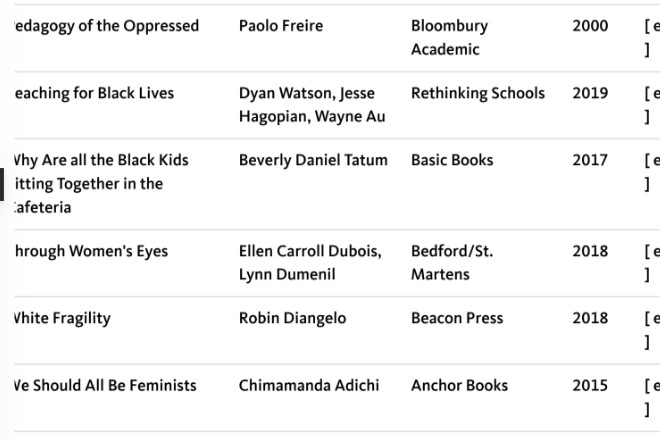
San Diego Unified School District’s ethnic studies courses feature content such as critical race theory, oppression, privilege, power, white fragility, and whiteness. Courses also include Paulo Freire’s Pedagogy of the Oppressed, Robin DiAngelo’s “White Fragility” and Peggy McIntosh’s “White Privilege: Unpacking the Invisible Knapsack” as course texts.
The district Equity & Belonging webpage includes resources from the Ethnic Studies Department.
A presentation available on the site includes a slide stating “What is Ethnic Studies?” It states that ethnic studies is the “study of the perspectives, knowledge, experiences, and contributions of people of color within the context of indigeneity and roots, colonialism, hegemony, and regeneration.”

Another slide asks “What does a day in an Ethnic Studies Classroom look like?” and includes terms such as “anti racism,” “anti bias,” social justice consciousness,” “critiquing White supremacy,” “restorative practices,” and “SEL.”

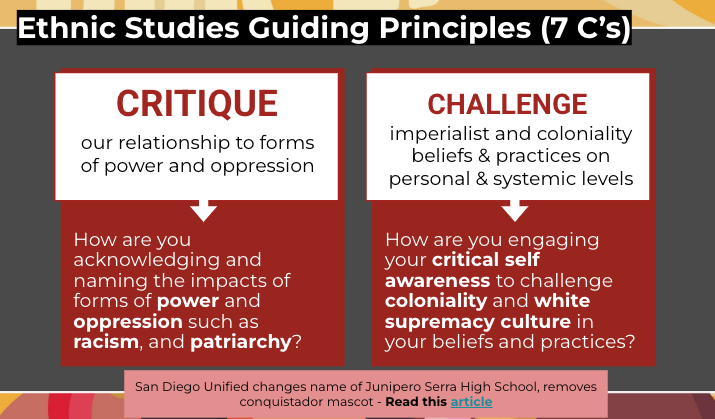
Another presentation focused on the district’s “Principles of Ethnic Studies” includes a slide asking “How are you acknowledging and naming the impacts of forms of power and oppression such as racism, and patriarchy?” and “How are you engaging your critical self awareness to challenge coloniality and white supremacy culture in your beliefs and practices?”
COURSES
A 2023 Freedom of Information Act request filed by Zachor Legal has revealed that San Diego Unified School District’s ethnic studies courses use Robin DiAngelo’s “White Fragility” and Peggy McIntosh’s “White Privilege: Unpacking the Invisible Knapsack” as course texts.
Introduction to Ethnic Studies
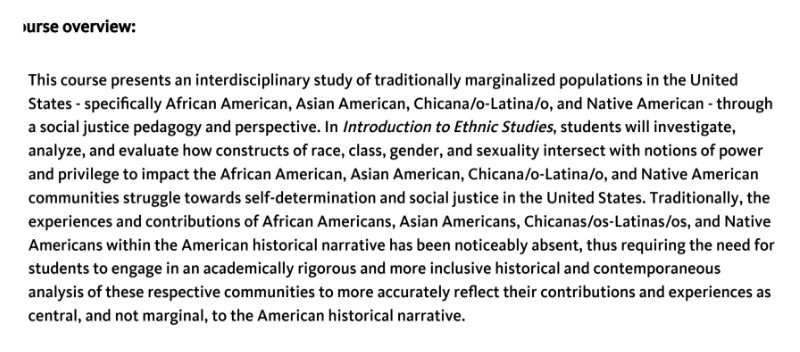
The district’s “Intro to Ethnic Studies” course states that students will:
investigate, analyze, and evaluate how constructs of race, class, gender, and sexuality intersect with notions of power and privilege to impact African American, Asian American, Chicana/o-Latina/os, Native Americans communities struggle towards self-determination and social justice in the United States.
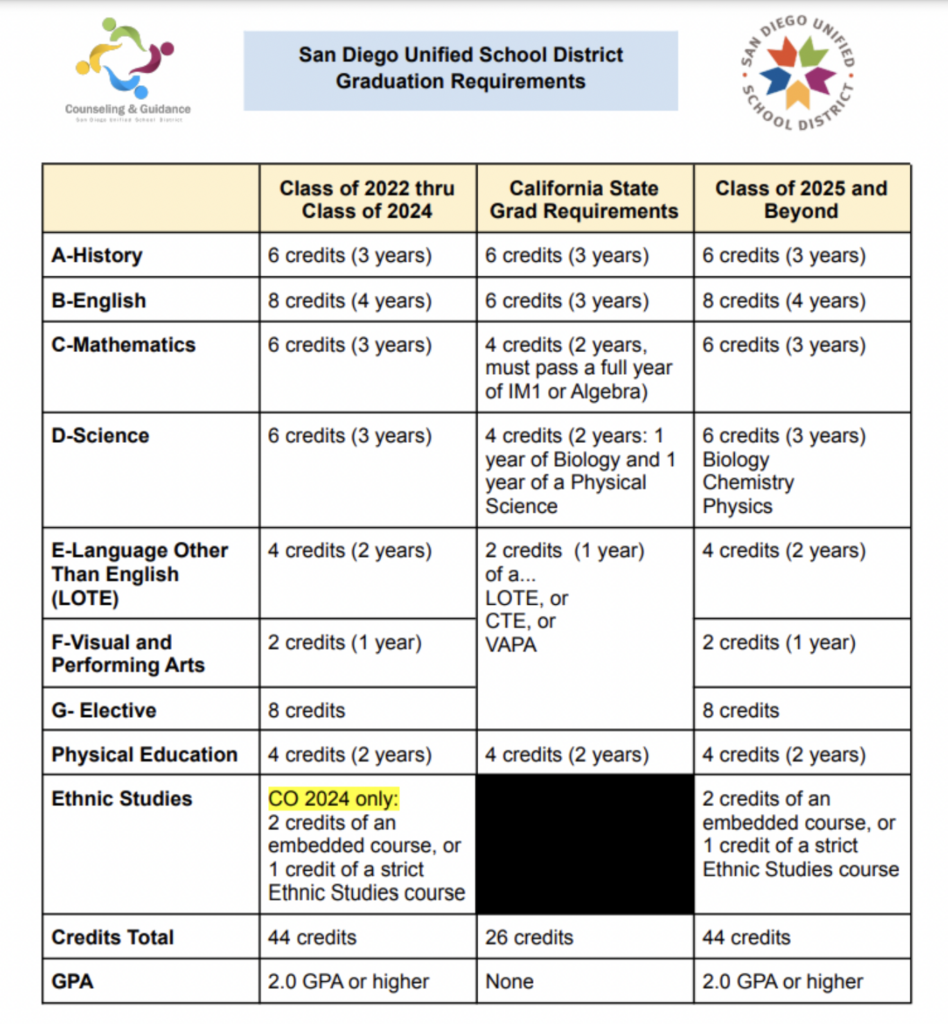
Starting with the class of 2024, all students must take and pass an Ethnic Studies course (or a course embedded with ethnic studies) in order to graduate.
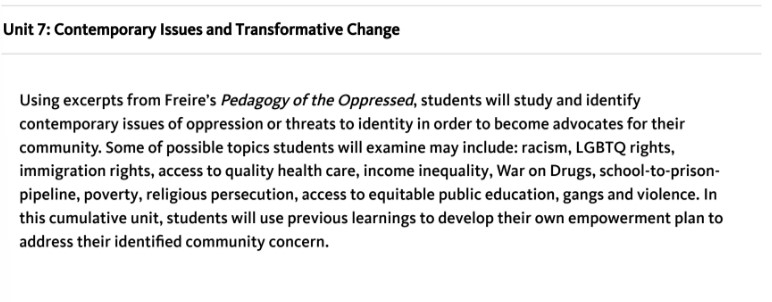
As part of the ethnic studies course, students will write an “informative essay” that includes developing a “critical consciousness on the significance of naming themselves and their worlds which constitute processes of self-determination and self-actualization.”
Course materials for the “Intro to Ethnic Studies” offerings at schools in the district include Paulo Freire’s “Pedagogy of the Oppressed,” Robin DiAngelo’s “White Fragility,” and Peggy McIntosh’s “White Privilege: Unpacking the Invisible Knapsack.”
Embedded Courses
The following courses are not titled “Ethnic Studies” but are considered “embedded courses” that fulfill the ethnic studies requirement because of their content.
A tenth-grade course titled “Critical Thinking and Social Change 1/2” states in the overview that students will “learn to critically analyze multiple texts in order to reflect on personal and collective identity for community impact” through the “interdisciplinary study of literature, history, sociology, and critical theory.”
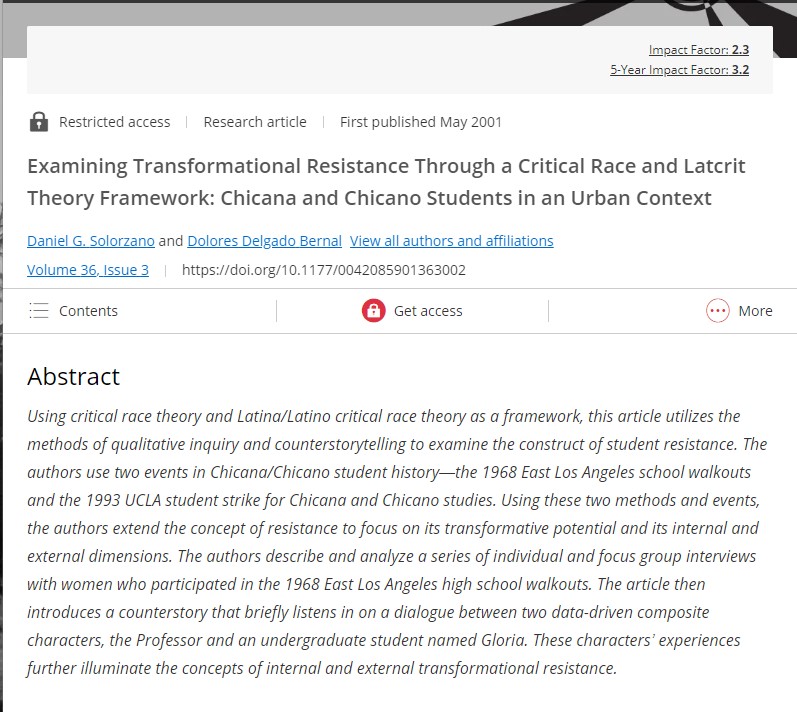
A unit titled “Equity and Resistance” states that students will “evaluate accounts of resistance from the readings and film in relation to Solorzano and Delgado-Bernal’s model of four types of resistance, which include reactionary, self-defeating, conformist, and transformational resistance.” The “model of four types of resistance” comes from the article “Examining Transformational Resistance Through a Critical Race and Latcrit Theory Framework: Chicana and Chicano Students in an Urban Context.”
Additionally, students will “define individual, interpersonal and institutional oppression, and reactionary, self-defeating, conformist and transformational resistance in a collaborative 10-minute play which clearly delineates oppression and resistance in relation to the individual, the school, and the larger community.”
Another district offering is a course for tenth graders titled “English Literature and Ethnic Studies Advanced.” It “aims to educate students to be politically, socially, and economically conscious about their personal connections to local and global histories.” And students will “learn about cultural wealth and will pay particular attention to institutionally oppressed communities.”
One of the units included in the course titled “Race, Ethnicity, and Identity in America” asks “essential questions” such as: “What are the origins of race and racism in the United States? How has race been socially constructed?” and “What does it mean to be ‘colorblind?'” The unit assignment requires students to “write a personal essay in which they reflect on their identities as well as past experiences with ethnic diversity, discrimination, privilege, and disadvantage.”
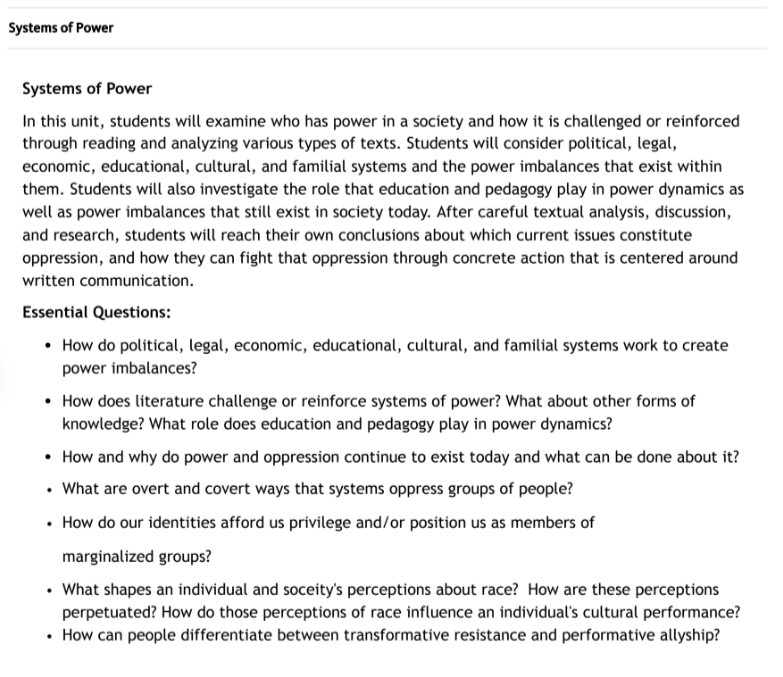
As part of the unit called “Systems of Power,” students will “examine who has power in a society and how it is challenged or reinforced through reading and analyzing various types of texts.” Students will also “investigate the role that education and pedagogy play in power dynamics as well as power imbalances that still exist in society today.”
An assignment asks students to “examine an issue in education (grading practices, seating arrangements, course design, text selection, etc.) and create an alternative model with racialization and social justice in mind.”
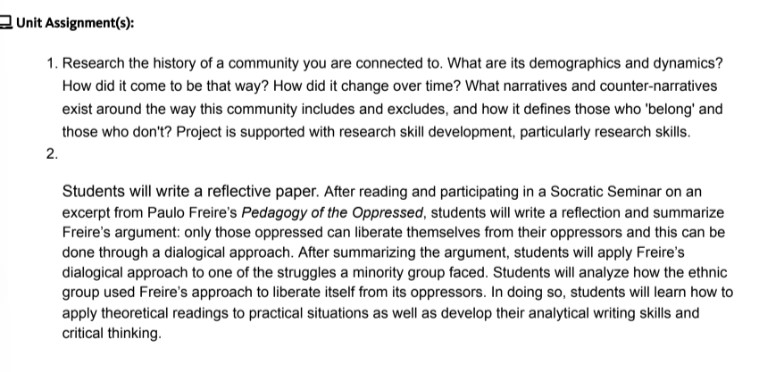
A final unit for the course titled “Hegemony and Normalization” features the use of Paulo Freire’s “Pedagogy of the Oppressed.” The students are required to write a “reflective paper” on Freire’s argument that “only those oppressed can liberate themselves from their oppressors and this can be done through a dialogical approach.” Students are then asked to “apply Freire’s dialogical approach to one of the struggles a minority group faced.” The course assignment states that “students will learn how to apply theoretical readings to practical situations as well as develop their analytical writing skills and critical thinking.”
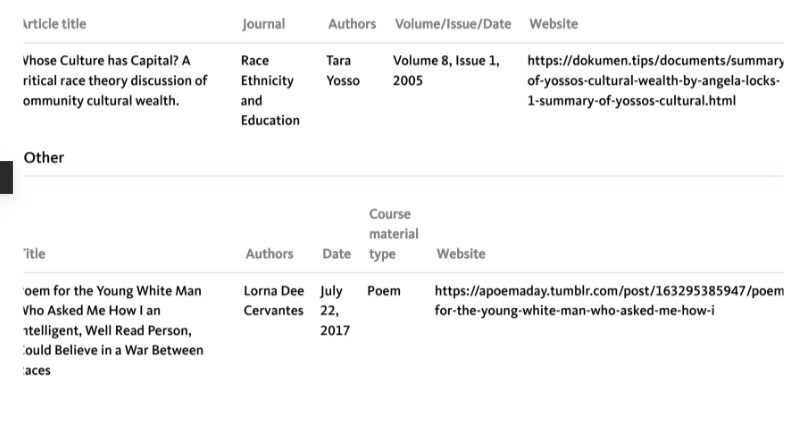
Unit texts include an article titled “Whose culture has capital? A critical race theory discussion of community cultural wealth.”
A course titled “Identity and Agency in US History” states that students will “study the influence of systems of power (i.e. legal, political, philosophical, and technological forces) on issues of equity and access.” Essential questions for the course include “How have power and oppression been utilized/ institutionalized to define the identity of being “American?” and “To what extent did the Constitution establish a just government for non-White people?”
Stay Informed