



AccreditED: University of Minnesota Law School case study
Investigations
SUMMARY
The University of Minnesota Law School’s “James H. Binger Center for New Americans” trains law students in far-left immigration activism, provides pro bono services to illegal aliens facing deportation, and hosts events that promote radical policy goals.
Events, trainings, and forums have covered topics such as “deportation abolition,” including a nationwide effort to stop the deportation of Somali immigrants. They have also focused on organizing union workers for immigration activism, argued that law enforcement perpetuates “whiteness,” and discussed strategies for helping clients avoid deportation by hiding or leaving out details about criminal records.
The school’s Student Legal Services also provides resources that guide students on how to handle interactions with Immigration and Customs Enforcement (ICE), including warnings that ICE “lies.”
The Binger Center has featured speakers from the Council on American-Islamic Relations (CAIR).
KEY TAKEAWAYS
- The Binger Center’s activism is not limited to migrants whose only offense is their immigration status. The Center provides explicit resources and tips on how to shield criminal aliens from deportation by downplaying their offenses and “scrubbing” legal records of their criminal acts.
- The Binger Center is led by radical activists who work to defend criminal aliens, advocate for police abolition, and more.
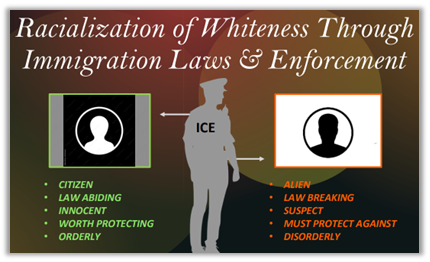
- A fall 2024 “Immigration Forum” discussed how “systemic racism and economic exploitation shape the immigrant experience” and how immigration policies “exploit immigrants of color for economic gain.” The Forum claimed that law enforcement perpetuates “whiteness” through racist stereotyping.
- The Binger Center states that it provides “urgently needed legal services for noncitizens, pursues litigation to improve our nation’s immigration laws, and supports noncitizens in the region.”
- The University created the Binger Center in 2013 in response to a “critical, unmet need for pro bono legal services in our immigrant and refugee communities” and calls the Center the “first of its kind in the nation.”
- The Binger Center was established in partnership with “preeminent law firms—Faegre Baker Daniels, Robins Kaplan, and Dorsey & Whitney—and our state’s leading immigration nonprofits—the Immigrant Law Center of Minnesota, The Advocates for Human Rights, and Mid-Minnesota Legal Aid.”
PROGRAMMING
CLINICS
The Binger Center offers immigration-related legal clinics, outreach programs, and pro bono legal services.
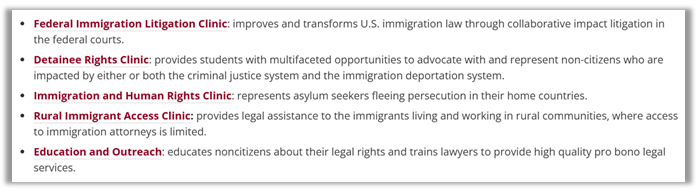
- The Binger Center’s “Federal Immigration Litigation Clinic” seeks to “transform U.S. immigration law through collaborative impact litigation.”
- Students will learn “skills important to the effective representation of clients in federal immigration litigation,” including “asylum and related issues, challenges to the unlawful detention of immigrants, as well as the intersection of immigration and criminal law.”
- Students are also expected to engage in “policy advocacy outside the courtroom” that furthers the Center’s priorities for “systemic change in immigration law.”
- A job posting for a fellowship with the clinic noted that “strong preference” would be given to candidates who are fluent in Somali.
- The Binger Center’s “Detainee Rights Clinic” teaches students to represent illegal aliens who are “impacted by either or both the criminal justice system and the immigration deportation system.”
- The clinic also provides opportunities for students to “advocate for changes to the current system” by “creating a state legislative campaign” and drafting legislation or “working with state agencies … to create or craft changes to rules.”
EVENTS
The Binger Center regularly hosts events, including a yearly forum and various discussions and training sessions. In 2022, the Binger Center hosted a “Community Discussion on Deportation Abolition.”
- In 2024, the Binger Center hosted a discussion about a book titled, Welcome the Wretched: In Defense of the “Criminal Alien.”
- The author argued that the U.S. should not use the criminal legal system to help prioritize targets of deportation.
- In 2018, the Binger Center hosted a discussion on how Minnesota law students helped lead a “nationwide effort to stop the deportation of Somali immigrants.”
- The Binger Center’s 2025 Fall Immigration Forum featured speakers from far-left activist organizations including FWD.us and the Council on American-Islamic Relations (CAIR).
- The forum featured discussions on how U.S. citizenship has been “mobilized and weaponized to sustain structural racism” and how it can be “reimagined to advance racial equity.”
- The forum also discussed legal and legislative strategies for “protecting and advancing immigrant rights” as well as “litigation to address overreach of federal immigration authorities.”
- The Binger Center’s 2024 Fall Immigration Forum discussed how “systemic racism and economic exploitation shape the immigrant experience” and how immigration policies “exploit immigrants of color for economic gain.”
Resources
The Binger Center has published resources encouraging defense lawyers to downplay and omit facts about the criminal records of their clients to help them avoid deportation:
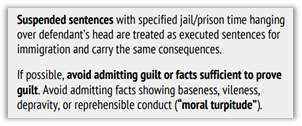
- In a document discussing the immigration-related consequences of criminal convictions, the Binger Center notes that offenders should “avoid admitting guilt or facts sufficient to prove guilt” as well as “facts showing baseness, vileness, depravity, or reprehensible conduct.”
- The document gives tips on how to avoid aggravated felony convictions such as violent crimes.
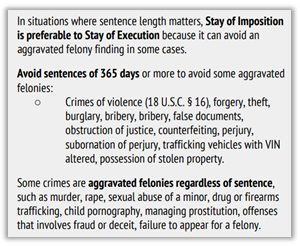
- The document adds, “If possible, avoid jail/prison sentences (probation is better).”
In 2015, the Binger Center published a “practice advisory” for immigration attorneys with clients facing drug offenses.
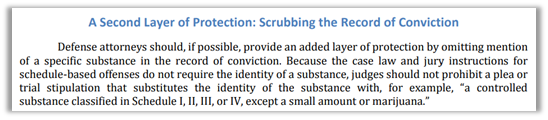
- The document advises attorneys to “scrub” their clients’ record of conviction by “omitting mention of a specific substance in the record,” noting that immigration judges will therefore be unable to find the “underlying facts of the substance involved” during deportation proceedings. (page 9)

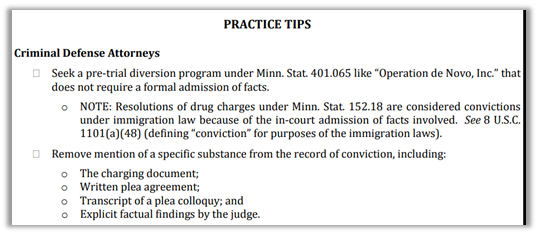
- The document also advises attorneys to “remove mention of a specific substance from the record of conviction” and “seek a pre-trial diversion program … that does not require a formal admission of facts.” (page 11)
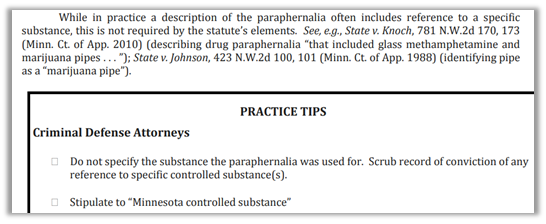
- The document similarly suggests scrubbing the record of specific details about drug paraphernalia, such as methamphetamine pipes. (page 15)
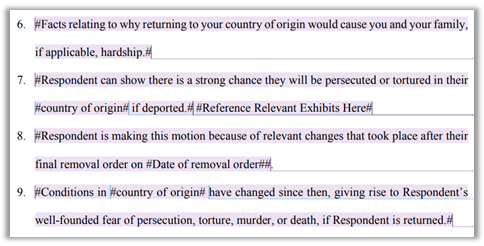
The Binger Center published a template draft of a motion against deportation proceedings that provides language claiming their clients would face “persecution” in their home country.
In 2021, the Binger Center published a report stating that the “laws used to prosecute people for reentering the U.S. after deportation are rooted in racism, eugenics, and white supremacist ideology.”
- The report accused ICE of perpetuating the “racist history of policing and prisons in the U.S.”

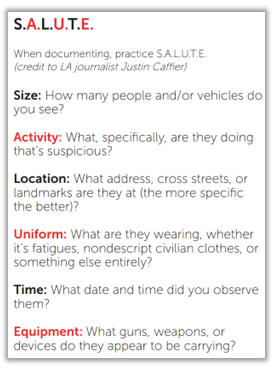
The Binger Center links to a “Constitutional Observer Handbook” that trains activists on “rapid response” tactics to monitor ICE activity.

The Binger Center offers a resource on “How You Can Be an Immigrant Ally Locally” from left-wing activist organization Indivisible, which discusses ways to promote local sanctuary city laws.
Leadership
Longtime immigration activist Sarah Brenes is the executive director of the Binger Center.
- Brenes states that her mission is to “lighten the legal load noncitizens are forced to carry in an unwelcoming legal system and often hostile political environment in which we all need them to thrive.”
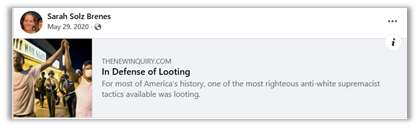
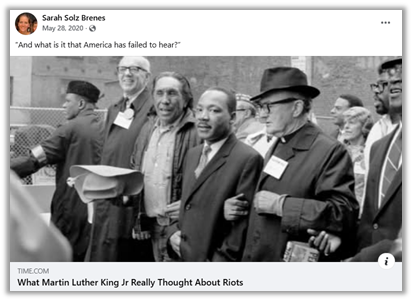
- Brenes supports “police abolition” and shared articles on her social media in defense of looting and rioting during the George Floyd riots.

Linus Chan is the director of the Binger Center’s Detainee Rights Clinic.
- In 2025, Chan wrote an article arguing that the president should have the power to grant clemency to prevent deportation of criminal aliens.
- Chan wrote, “As we face an unprecedented era of criminal deportations divorced from individualized assessments of justice, presidential clemency offers a constitutionally sound mechanism to restore proportionality and humanity to our immigration system.”
- Chan has also written articles titled, “Process as Suffering: How U.S. Immigration Court Process and Culture Prevent Substantive Justice,” “How the Harm of Immigration Detention Must Be Factored in Custody Decisions,” and “Unjust Deserts: How the Modern Deportation System Lacks Moral Credibility.”
- Chan claims the Trump administration “seems to value fear.”
Nadia Anguiano is the director of the Binger Center’s Federal Immigration Litigation Clinic.
- Anguiano’s work focuses on “challenges to the adverse immigration consequences of criminal convictions” and “post-conviction relief.”
Litigation & advocacy fellow Kimberly Medina has focused on “providing representation to detained individuals caught at the intersection of criminal and immigration law.”
STUDENT LEGAL SERVICES
The University of Minnesota’s Student Legal Service (SLS) offers “advice and legal representation to eligible students,” including “services related to immigration for students systemwide.” It gives illegal immigrants advice on how to deal with ICE encounters and suggests that students “plan ahead in the event you may be detained.”
Student Legal Services notes that it “can help you prepare a plan based on your specific situation.” SLS offers “crimmigration support” to analyze the “immigration impacts of criminal arrests, citations, charges, and convictions.”
SLS links to resources including a page titled “Know Your Rights with ICE” by the Immigrant Defense Project.
- The Immigrant Defense Project supports abolishing immigration detention and opposes the “demonization of immigrants and people with criminal convictions.”
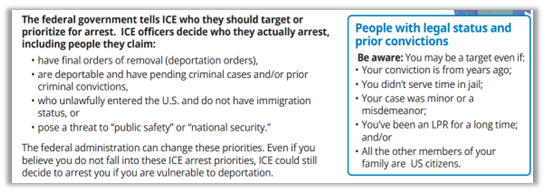
- The SLS-linked resource warns illegal aliens with criminal convictions that they may be a target for ICE and notes that aliens “do NOT have to share any information” relating to their criminal record with ICE.

- The page also warns people not to “fall for” ICE’s “lies.”

Stay Informed