


Minneapolis Public Schools’ ethnic studies courses feature content that teach students that capitalism and Western culture are exploitative and lead to slavery, colonialism, genocide, and white supremacy
Incidents
SUMMARY
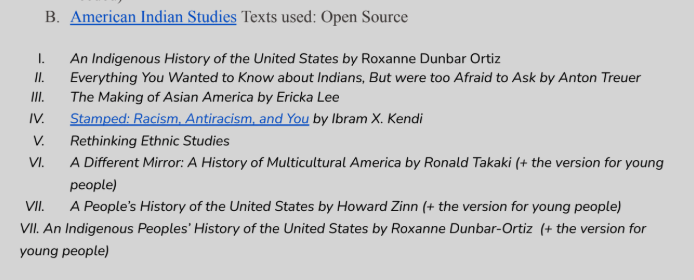
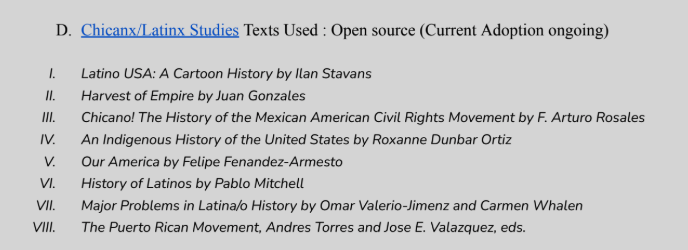
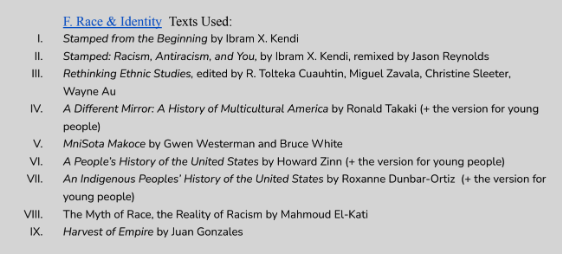
According to documents obtained through a data practices request*, Minneapolis Public Schools’ ethnic studies curriculum features multiple course options which include content such as critical race theory, colonialism, intersectionality, social justice activism, and the pillars of white supremacy. The courses also include texts by Ibram X. Kendi and Howard Zinn.
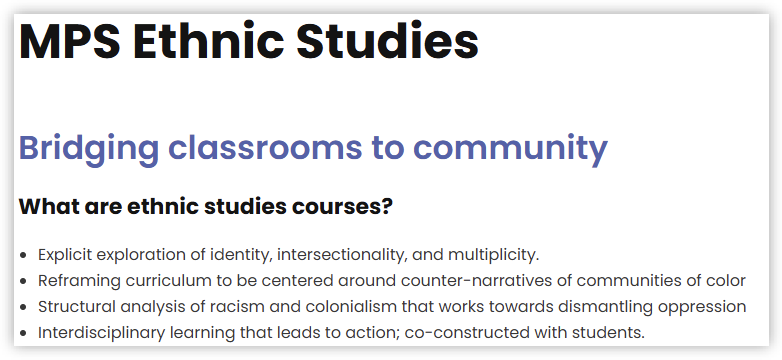
Minneapolis Public Schools (MPS) maintains an ethnic studies department that encourages the “explicit exploration of identity, intersectionality, and multiplicity.”
- Goals of the program include “reframing curriculum to be centered around counter-narratives of communities of color” and conducting a “structural analysis of racism and colonialism that works towards dismantling oppression.”
The MPS webpage notes that “Ethnic Studies courses are one part of our equity work and do not replace efforts to transform all Social Studies courses.”
MPS claims its Ethnic Studies courses “deeply examine the concept of race as an organizing construct in US society, and students are provided opportunities to examine their own identity.”
The MPS school board approved a mandate requiring all students to complete at least a 0.5 credit (or 1 semester) Ethnic Studies course, beginning with the graduating class of 2025.
*In MN, public records requests are called data practices requests.
KEY TAKEAWAYS
- Course materials from “Hmong Studies” rely on ideas from Karl Marx to teach students that capitalism is exploitative and is a system that makes the “rich richer and the poor poorer.”
- The course “Hmong Studies” uses the text Tara J. Yosso’s, “Whose culture has capital? A critical race theory discussion of community cultural wealth“
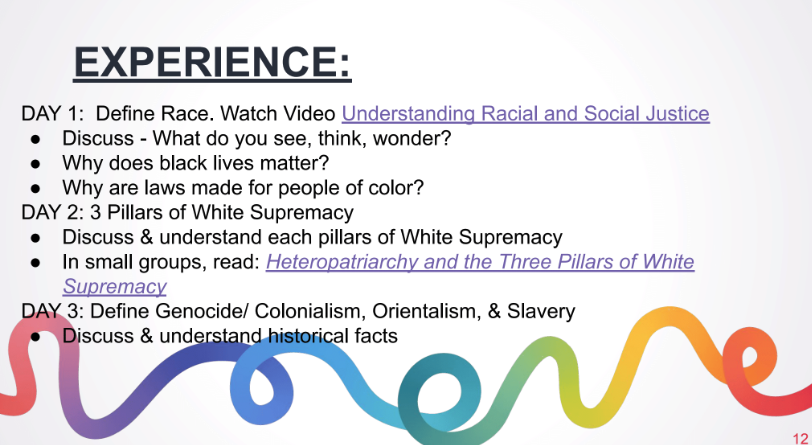
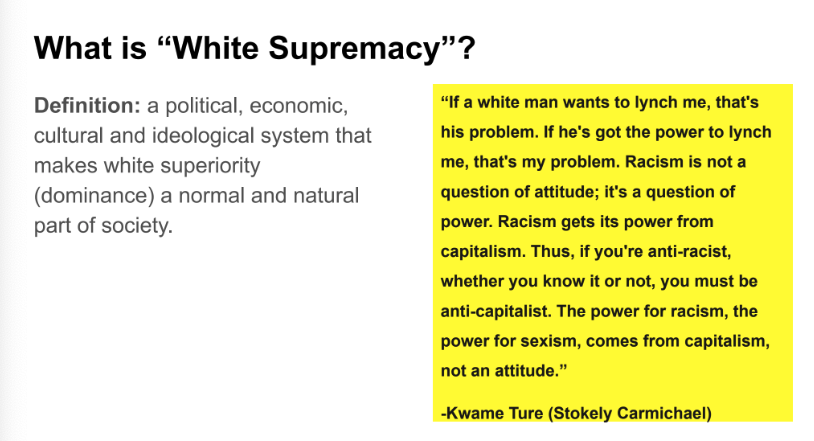
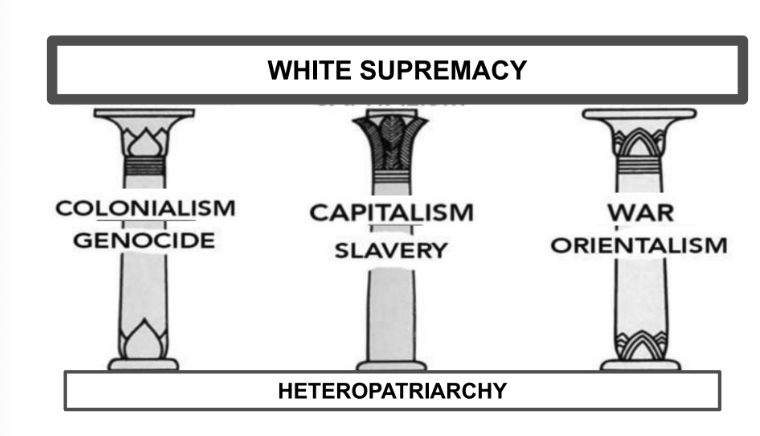
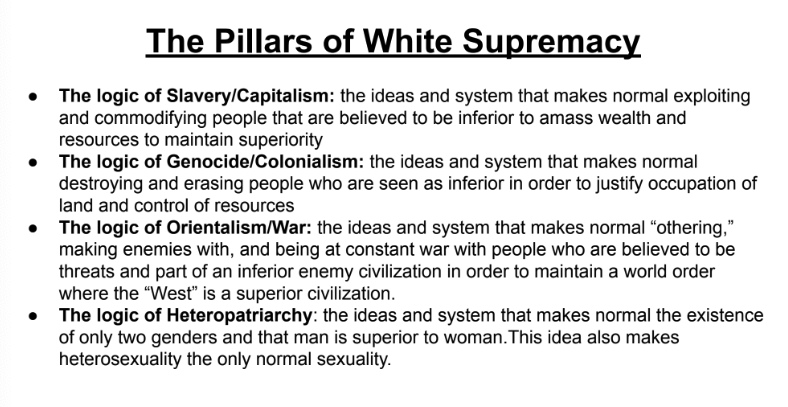
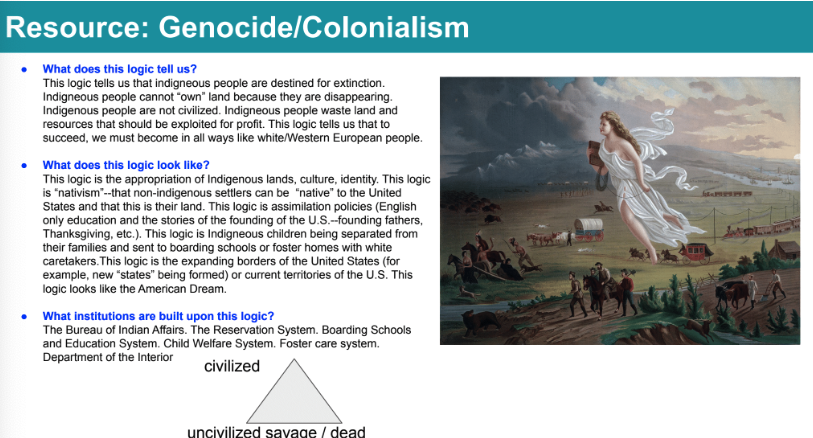
- A second quarter presentation for “Hmong Studies” titled “Power Struggles & Resistance” pushes the idea that slavery, genocide, colonialism, and white supremacy stem from capitalism and Western culture.
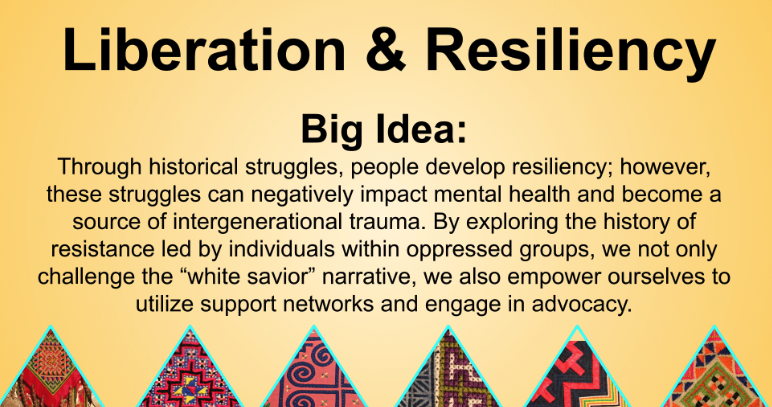
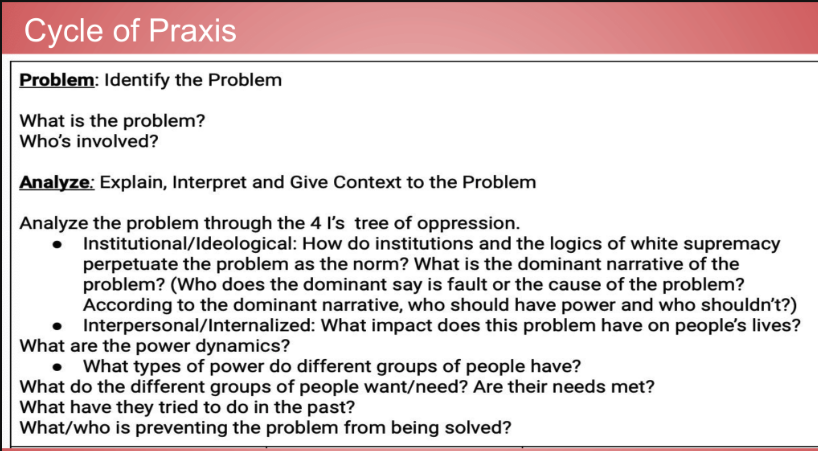
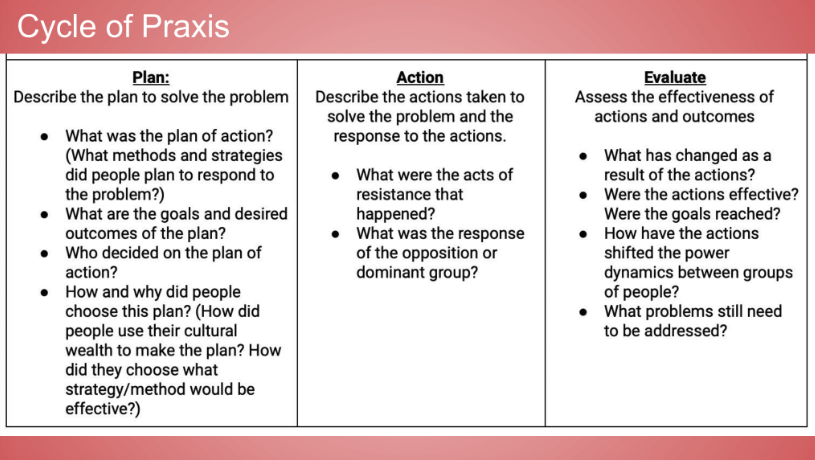
- Another “Hmong Studies” unit titled “Liberation & Resiliency” teaches students to “challenge the ‘white savior’ narrative” and engage in Youth Led Participatory Action Research (YPAR) or social justice activism.
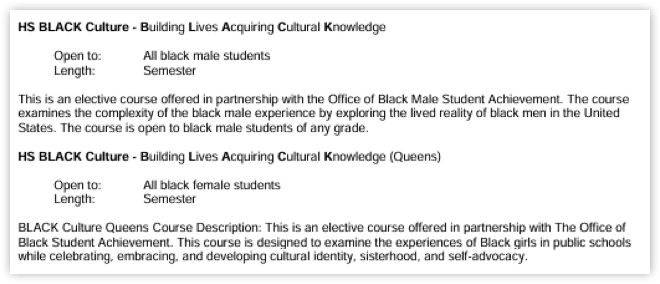
- The district’s South High School offers electives titled “HS BLACK Culture – Building Lives Acquiring Cultural Knowledge” and “BLACK Culture Queens” which appear to only be open to Black male and female students.
COURSES
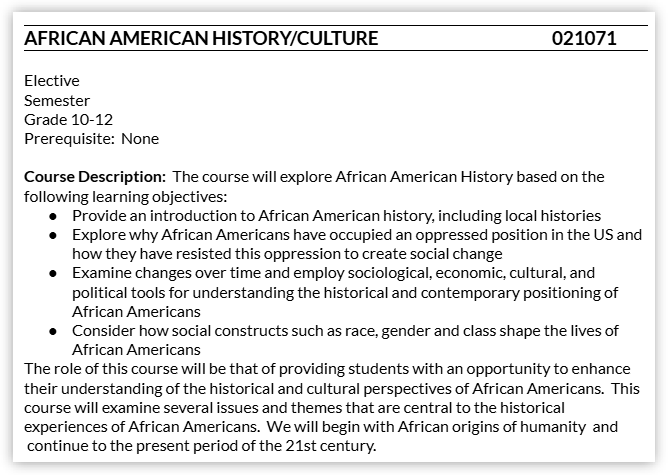
Ethnic Studies course options offered at Minneapolis Public Schools include:
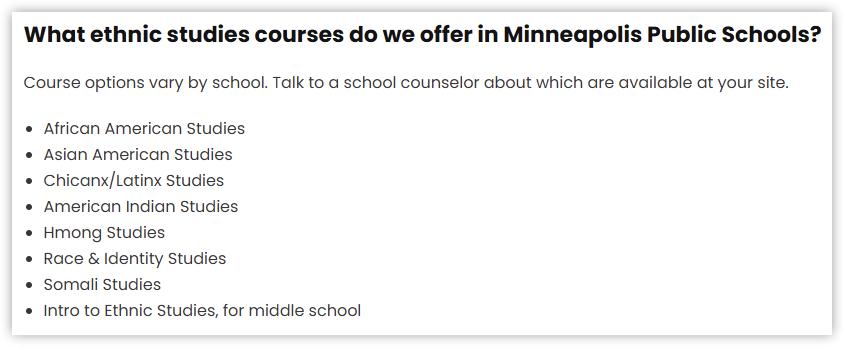
African American History/Culture
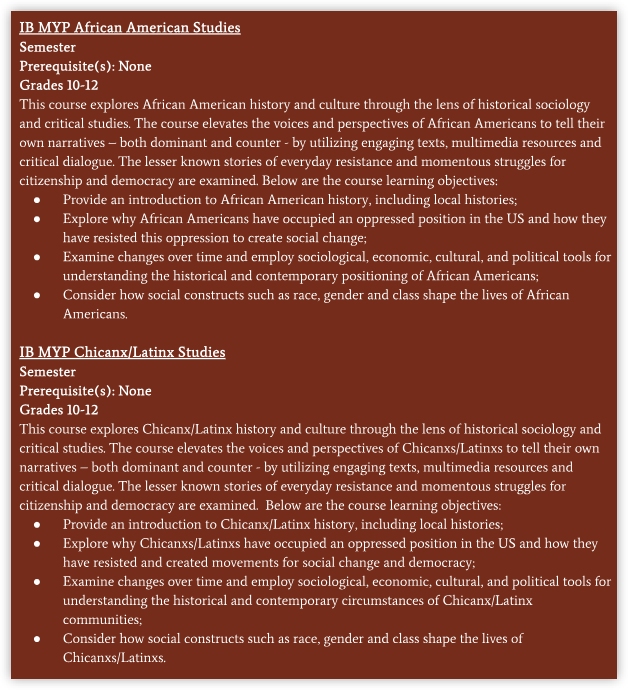
Students in grades 10-12 at Washburn High School may take African American History/Culture, which explores “why African Americans have occupied an oppressed position in the US.”
American Indian Studies
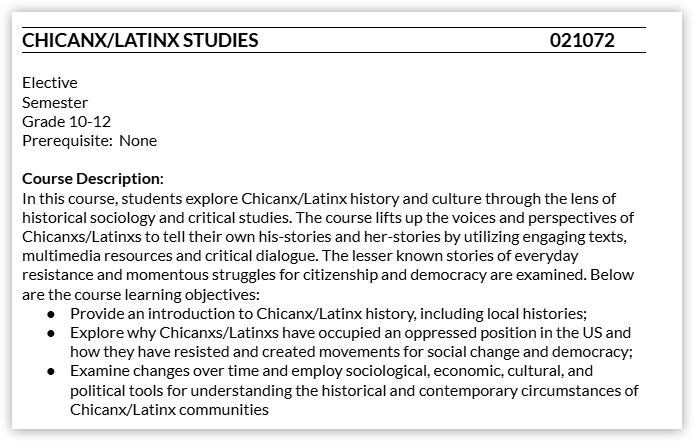
Chicanx/Latinx Studies
Students in grades 10-12 at Washburn High School may take Chicanx/Latinx Studies, a course that “lifts up the voices and perspectives of Chicanxs/Latinxs to their own his-stories and her-stories…”
- The course explores “why Chicanxs/Latinxs have occupied an oppressed position in the US and how they have resisted and created movements for social change and democracy.”
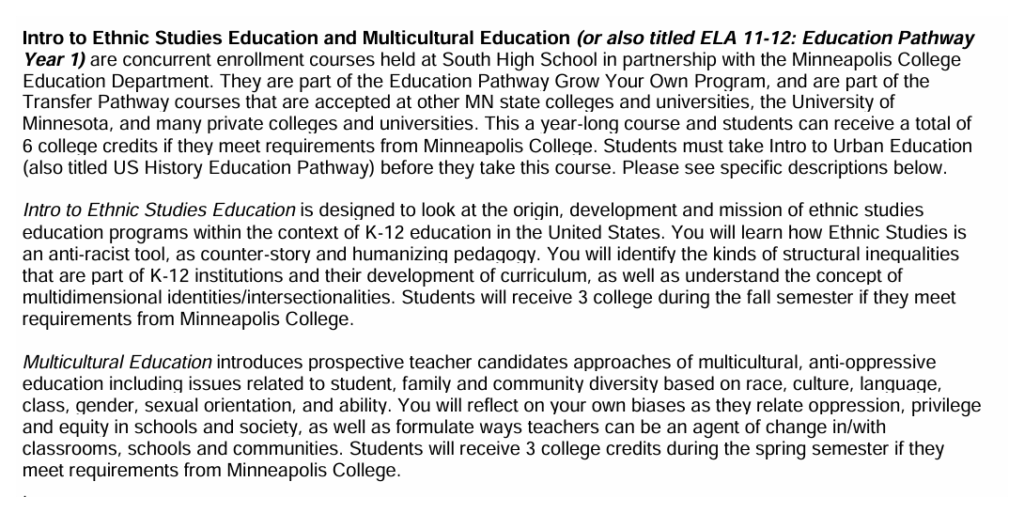
Intro to Ethnic Studies Education
Students in grades 11-12 at South High School may take Intro to Ethnic Studies Education or Multicultural Education, concurrent enrollment classes offered in partnership with the Minneapolis College Education Department.
- In Intro to Ethnic Studies Education, students learn “how Ethnic Studies is an anti-racist tool” and how to “identify the kinds of structural inequalities that are part of K-12 institutions.”
- In Multicultural Education, students learn different “approaches of multicultural, anti-oppressive education” and are asked to “reflect on your own biases as they relate oppression, privilege and equity in schools and society.”
HS BLACK Culture and HS BLACK Culture (Queens)
South High School offers electives that are only open to black students, including “HS BLACK Culture – Building Lives Acquiring Cultural Knowledge” and “HS BLACK Culture – Building Lives Acquiring Cultural Knowledge (Queens).”
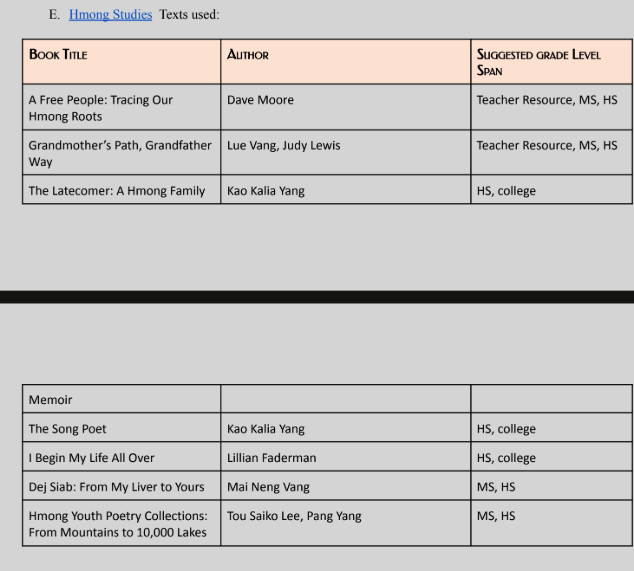
Hmong Studies
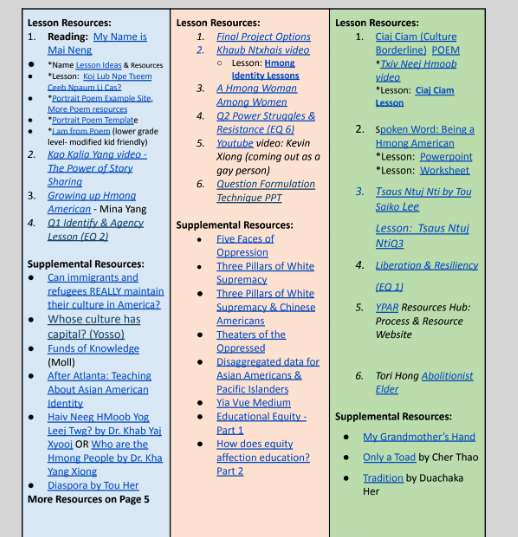
Five Faces of Oppression
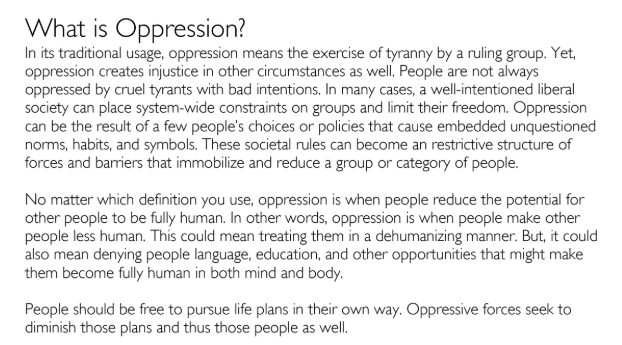
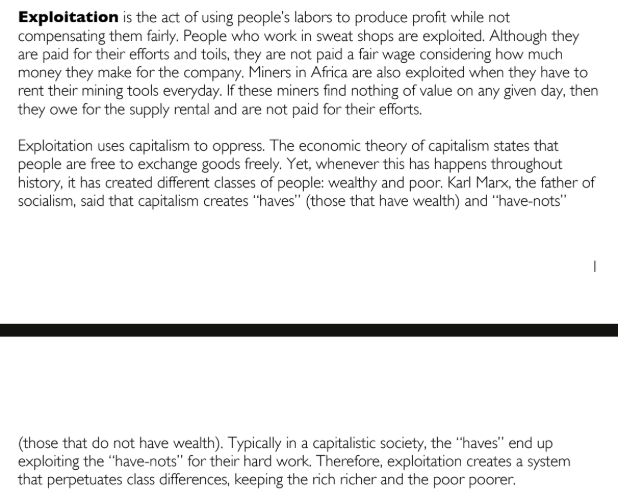
The course lists the article “Five Faces of Oppression” as a lesson resource. The document states that “people are not always oppressed by cruel tyrants with bad intentions” but rather it is that a “well-intentioned liberal society can place system-wide constraints on groups and limit their freedom.”
The resource makes the claim that “exploitation uses capitalism to oppress” and that whenever capitalism has happened through history, “it has created difference classes of people: wealthy and poor.” It continues by stating that “Karl Marx, the father of socialism, said that capitalism creates ‘haves’ (those that have wealth) and ‘have-nots’ (those that do not have wealth).” The section also states that in a “capitalistic society, the ‘haves’ end up exploiting the ‘have-nots’ for their hard work” which “creates a system that perpetuates class differences, keeping the rich richer and the poor poorer.”
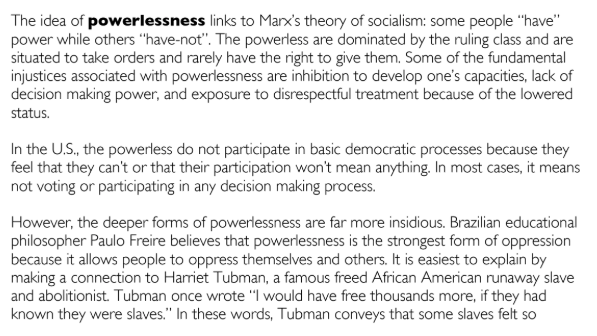
According to the document, “powerlessness links to Marx’s theory of socialism: some people ‘have’ power while others ‘have-not.'” It makes the claim that in the United States, the “powerless do not participate in basic democratic processes because they feel that they can’t or that their participation won’t mean anything.”
Hmong Studies – Quarter 2: Power Struggles & Resistance
A lesson presentation titled “Power Struggles & Resistance” includes promoting social justice activism, that capitalism and traditional American values promote white supremacy, and genocide/colonialism is normalized in Western culture.

Hmong Studies – Quarter 3: Liberation & Resiliency
The unit titled “Liberation & Resiliency” focuses on having students engage in Youth Lead Participatory Action Research (YPAR) or social justice activism.

Race & Identity Studies
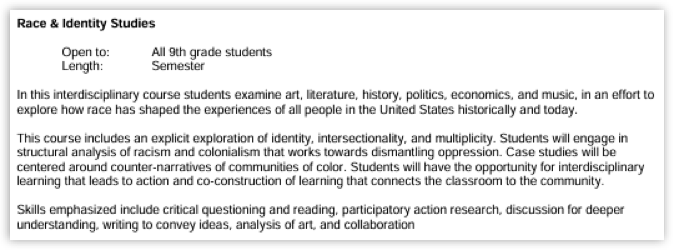
Students in grade 9 at South High School may take Race & Identity Studies, a course where students “engage in structural analysis of racism and colonialism that works towards dismantling oppression.”
- “Case studies will be centered around counter-narratives of communities of color.”
Intro to Urban Education
Students in grades 10-12 at South High School may take Intro to Urban Education, a concurrent enrollment class in partnership with the Minneapolis College Education Department.
- Key themes of the course include: “Race, Identity & School Experiences,” “Indigenous Education,” “Black Lives Matter at School,” “Language Justice,” and “Decolonizing Education.”
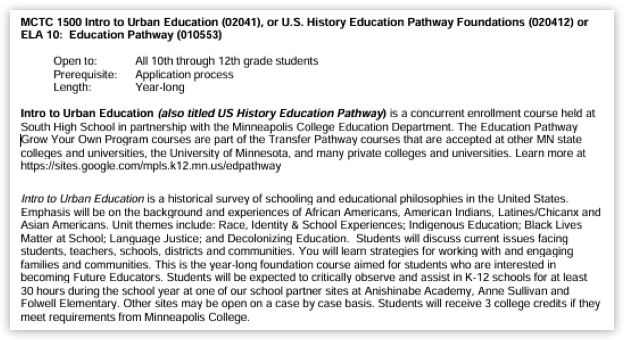
Students at Camden High School may take Intro to Urban Education, a class where students learn about “different forms of oppression.”
- The class slide deck features topics on “implicit bias,” “structural racism,” and “internalized oppression.”
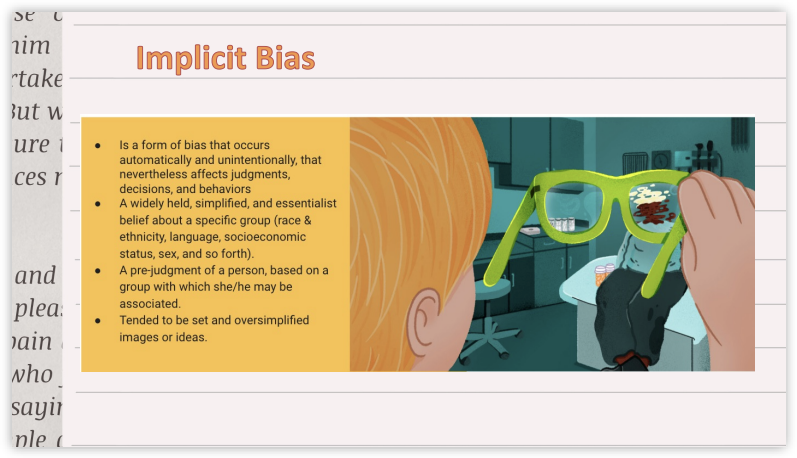
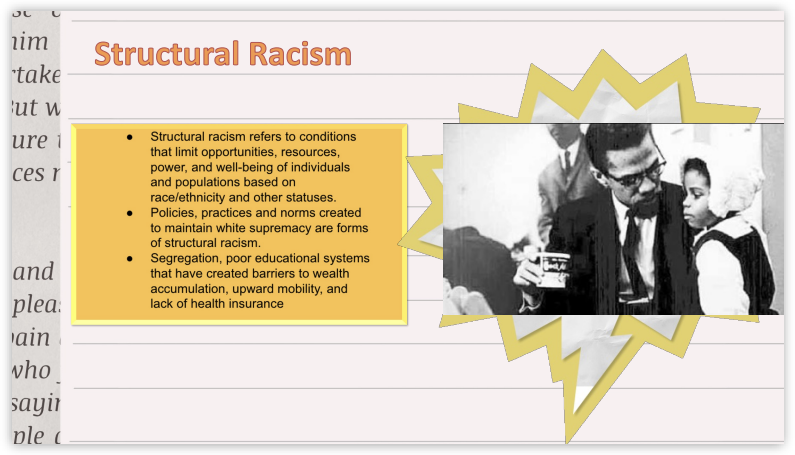
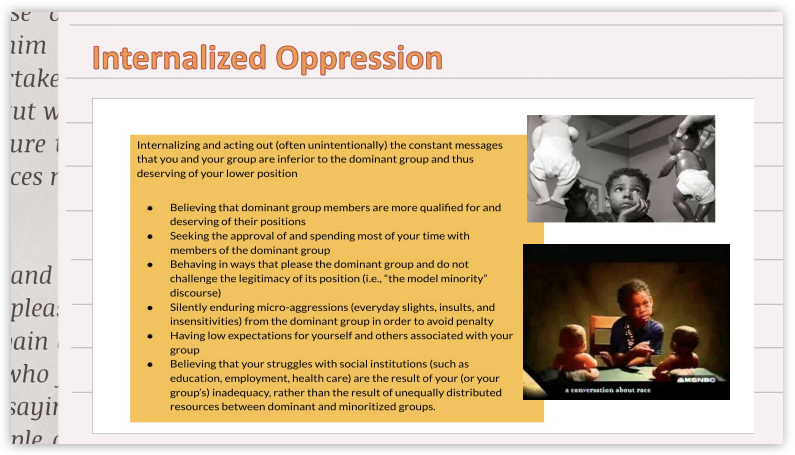
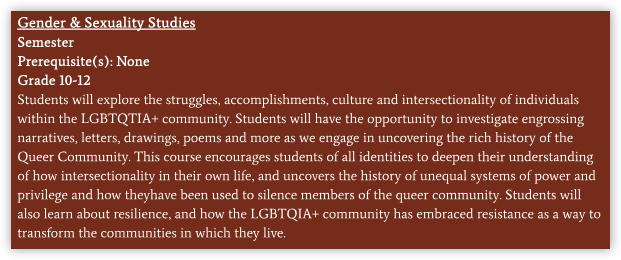
Students at Camden High School may also take courses such as African American Studies, Chicanx/Latinx Studies, and Gender & Sexuality Studies.
Stay Informed