


New Mexico survey asks middle and high schoolers about sexual orientation, transgender status and suicide plans
Incidents
- Issues
- Parent Rights
- Sex and Gender
A statewide survey administered to middle school and high school students throughout New Mexico asks highly personal questions about alcohol and drug use, unintentional injury, violence, suicidal ideation and attempts, tobacco use, sexual activity, physical activity, nutrition, weight, sexually transmitted diseases and family and school relationships.
The New Mexico Youth Risk and Resiliency Survey (NM-YRRS) is conducted every two years across the state and is used as a tool “to assess the health risk behaviors and resiliency (protective) factors of New Mexico high school and middle school students” and is part of the national CDC Youth Risk Behavior Surveillance System (YRBSS). The survey is part of a partnership between the New Mexico Public Education Department and the New Mexico Department of Health. The NM-YRRS is offered to a selection of high schools and middle schools in each school district in the fall of odd-numbered years.
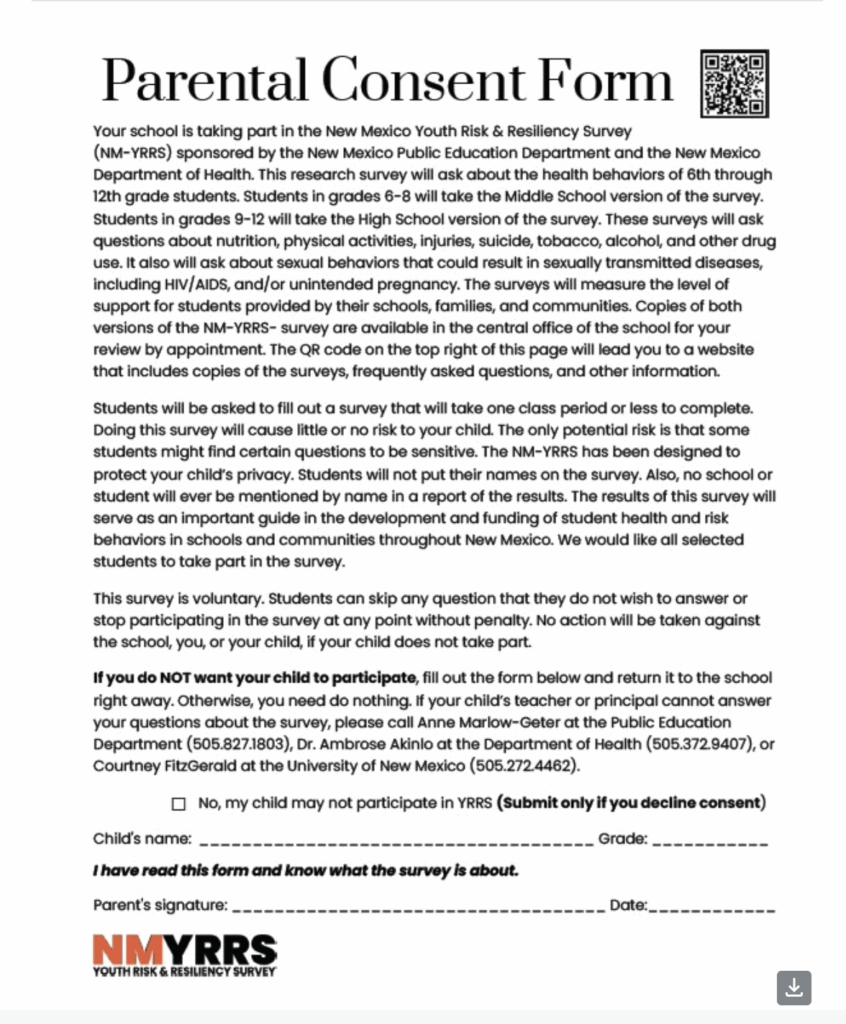
The opt-out form for the survey states:
Doing this survey will cause little or no risk to your child. The only potential risk is that some students might find certain questions to be sensitive. The NM-YRRS has been designed to protect your child’s privacy. Students will not put their names on the survey. Also, no school or student will ever be mentioned by name in a report of the results. The results of this survey will serve as an important guide in the development and funding of student health and risk behaviors in schools and communities throughout New Mexico. We would like all selected students to take part in the survey.
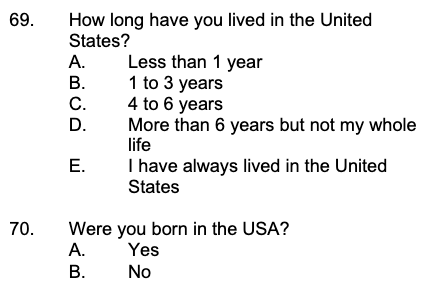
Below are questions from the middle school survey, given to 6-8 grade students:
Suicide:

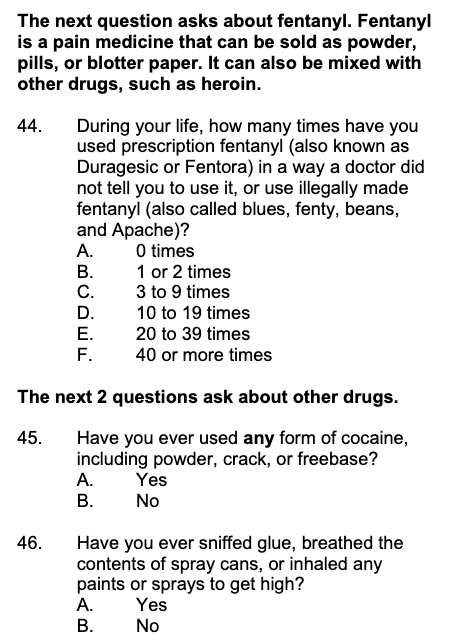
Drug use:

Sexual history:

Body perception:

Citizenship status:
Sexual orientation:

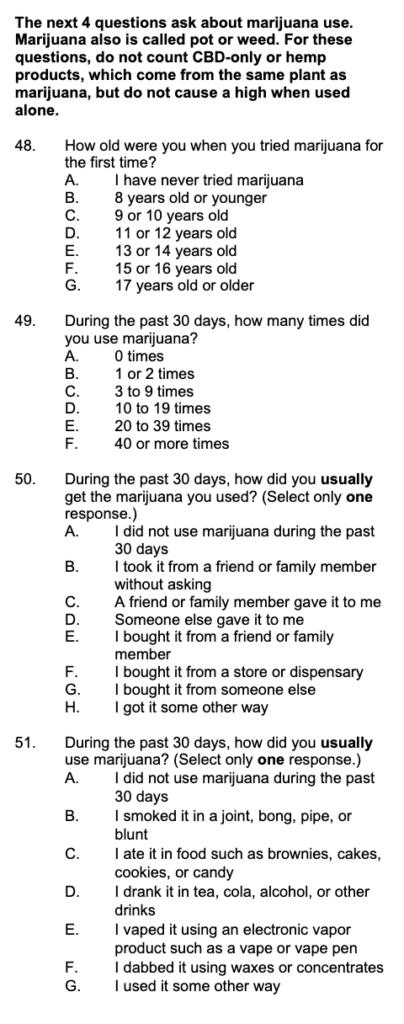
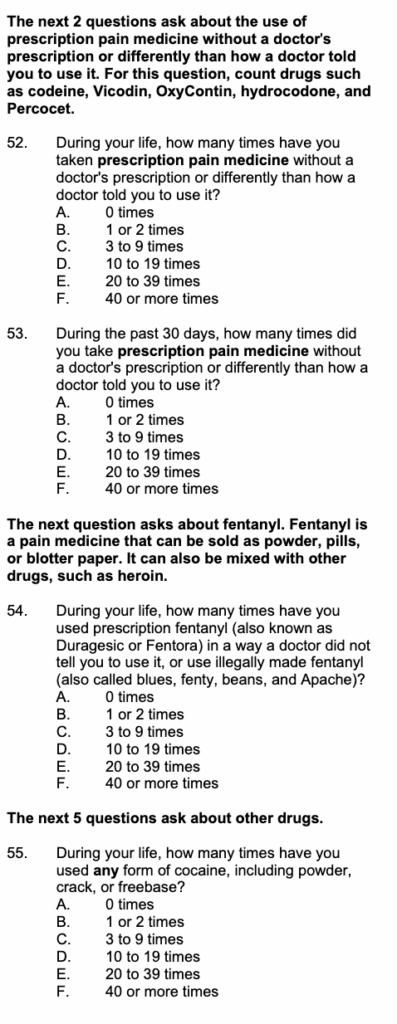
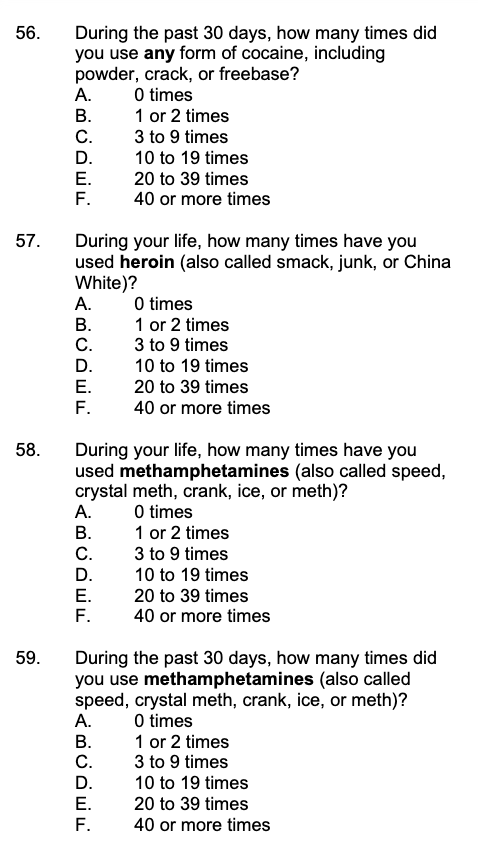
Below are questions from the high school survey, given to 9-12 grade students:
Suicide:

Drug use:
Sexual behavior, birth control and sexual assault:
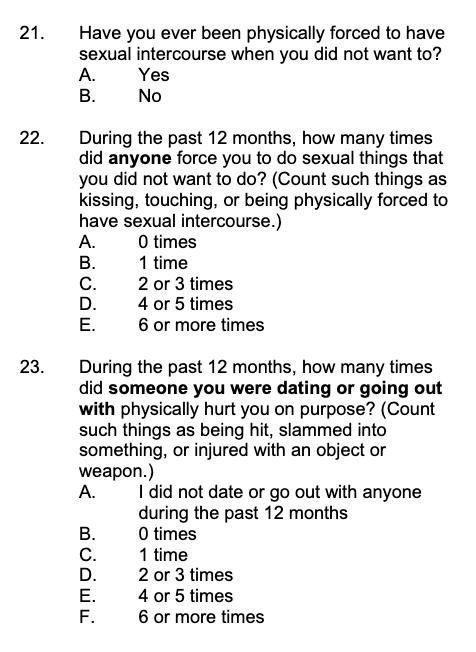
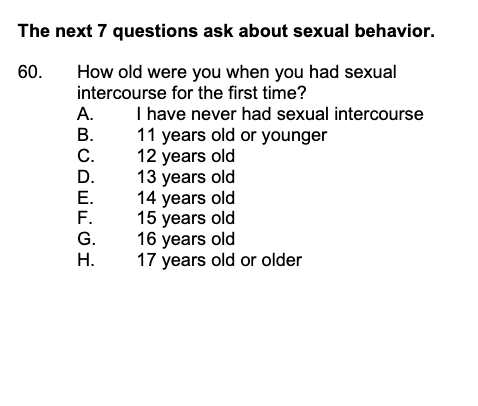
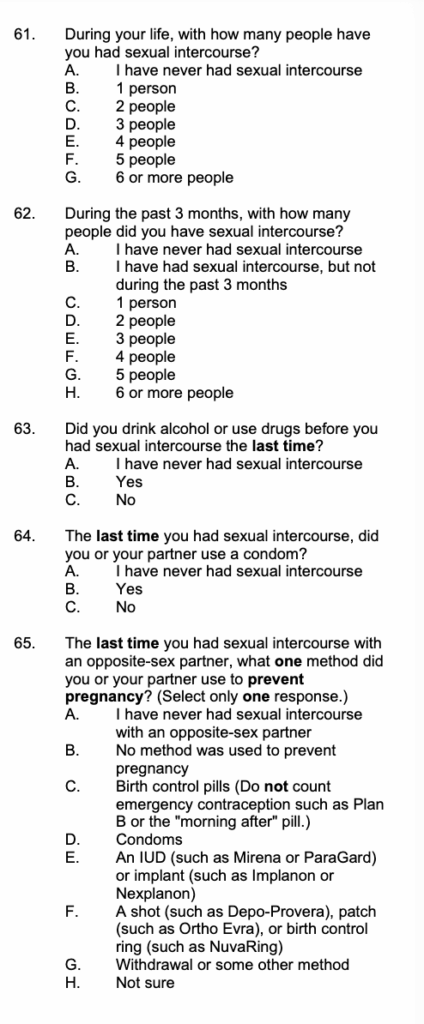
Sexual orientation and gender identity:

Citizenship status:

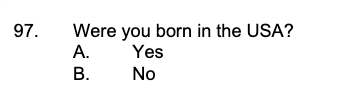
Mental health:

Stay Informed