


LiberatED: Santa Rosa City Schools
Incidents
- Issues
- Ethnic Studies
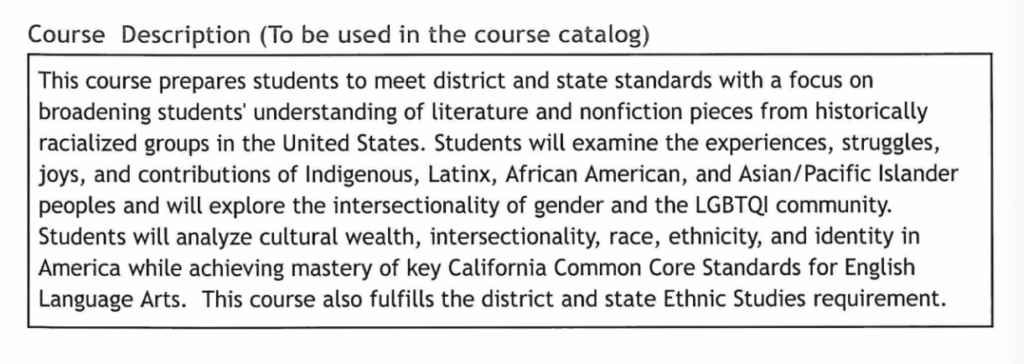
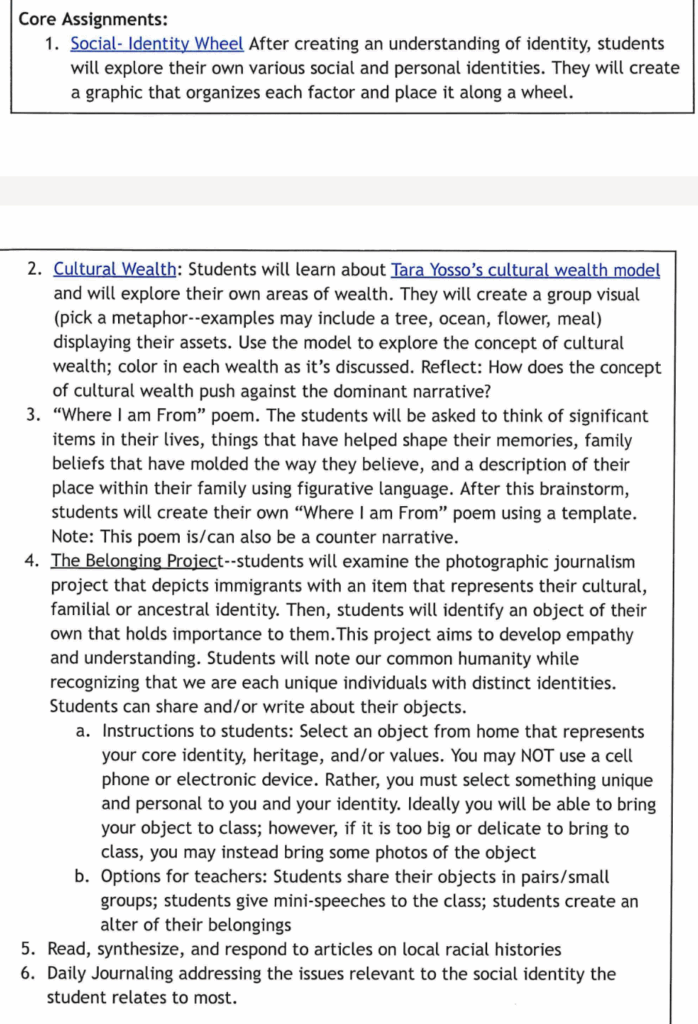
Santa Rosa City Schools (SRCS) in California proposed and approved an ethnic studies course that satisfies 10 English credits with learning outcomes aimed at instructing students to: “think independently and critically about issues of race, ethnicity, and power in American society,” “learn more about the experiences and histories of marginalized ethnic groups in the United States” and “explore and learn about how power and privilege has impacted the experiences of marginalized ethnic groups.”
SRCS’ school board voted in July 2020 to make ethnic studies a graduation requirement for the class of 2025. The State of California also passed legislation mandating ethnic studies statewide for high school students starting with the class of 2029-2030.
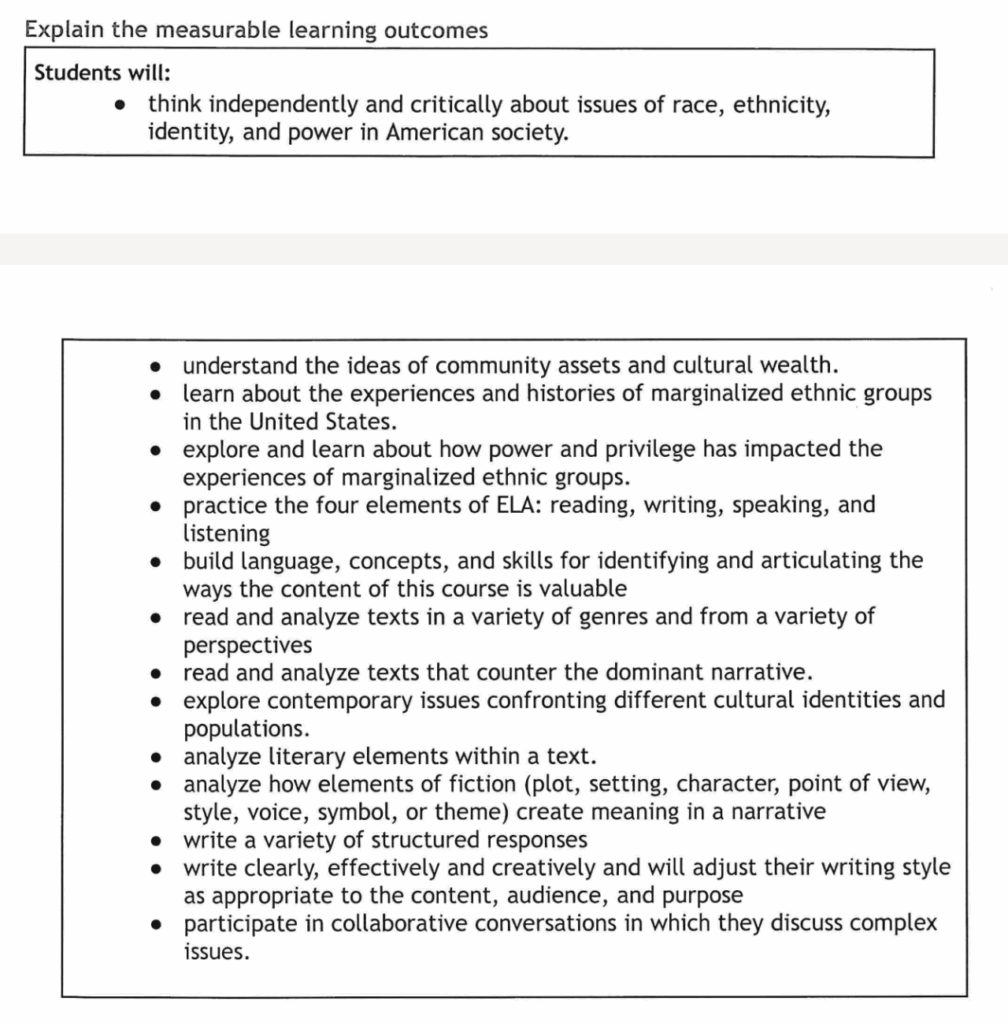
The course description states that it will prepare students: “to meet district and state standards with a focus on broadening students’ understanding of literature and nonfiction pieces from historically racialized groups in the United States. Students will examine the experiences, struggles, joys, and contributions of Indigenous, Latinx, African American, and Asian/Pacific Islander peoples and will explore the intersectionality of gender and the LGBTQI community.”
Students will analyze: cultural wealth, intersectionality, race, ethnicity and identity in America while achieving mastery of California Common Core Standards for English Language Arts.
The course overview states students will study “the history and current events related to race, ethnicity, identity, and gender, students will develop respect and empathy for individuals and groups of people locally, nationally, and globally to build self-awareness and empathy and foster active social engagement.”
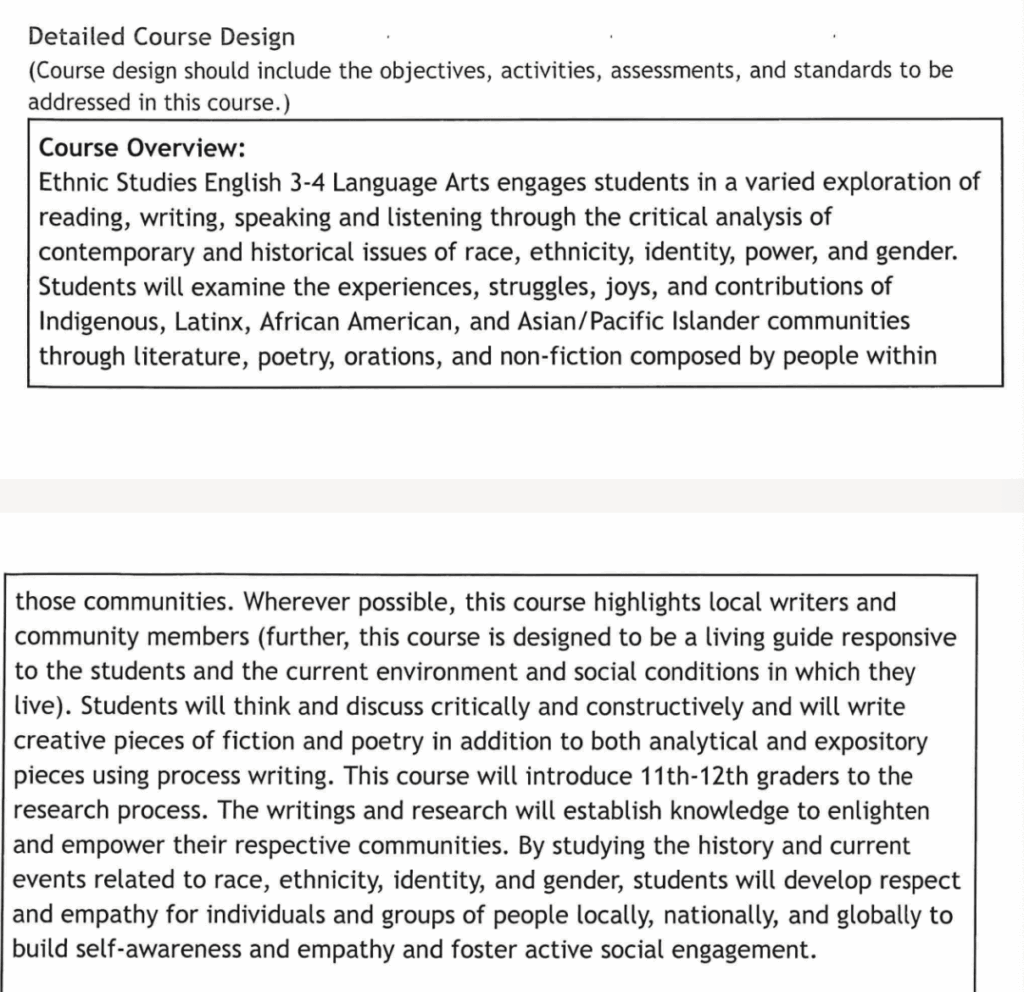
Essential questions addressed include:
“What is identity?”
“How do the structures and systems of the United States affect Latinx/Chicanx, Black, and Asian people?”
“What local affinity groups exist in our community?”
“How have our systems been constructed to position certain groups to maintain power?”
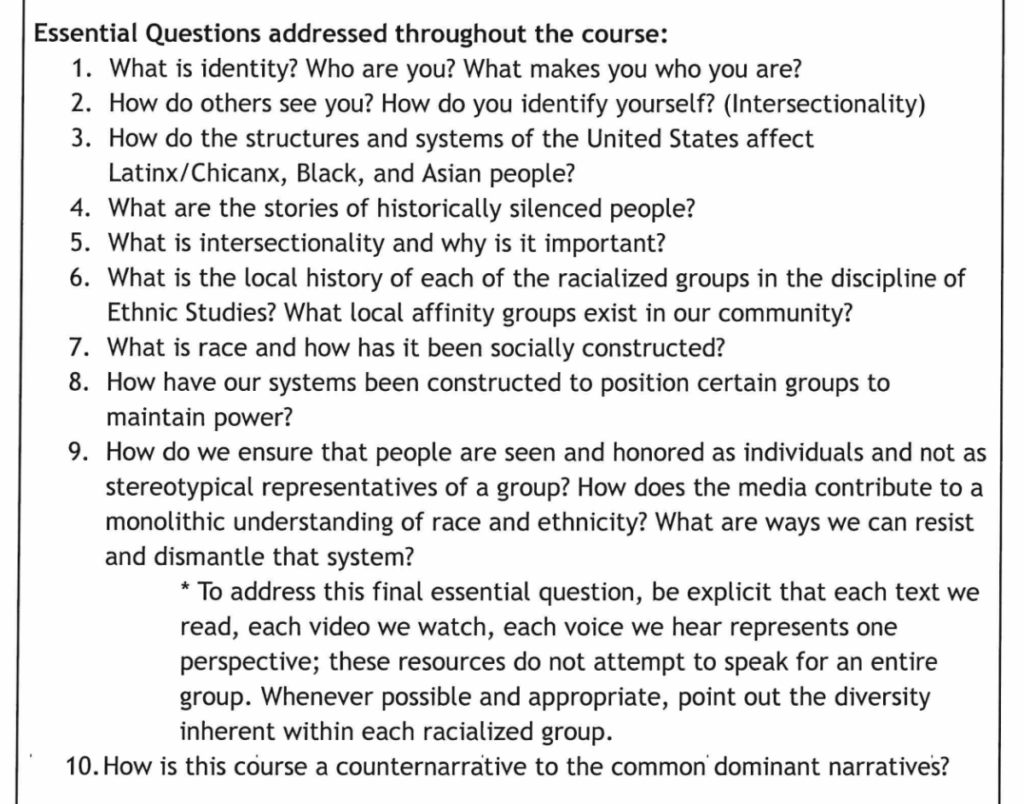
Unit 1: Race, Ethnicity, Identity in America, which “provides an introduction to the key terms of race, ethnicity, racism, stereotyping identity, and discrimination.”
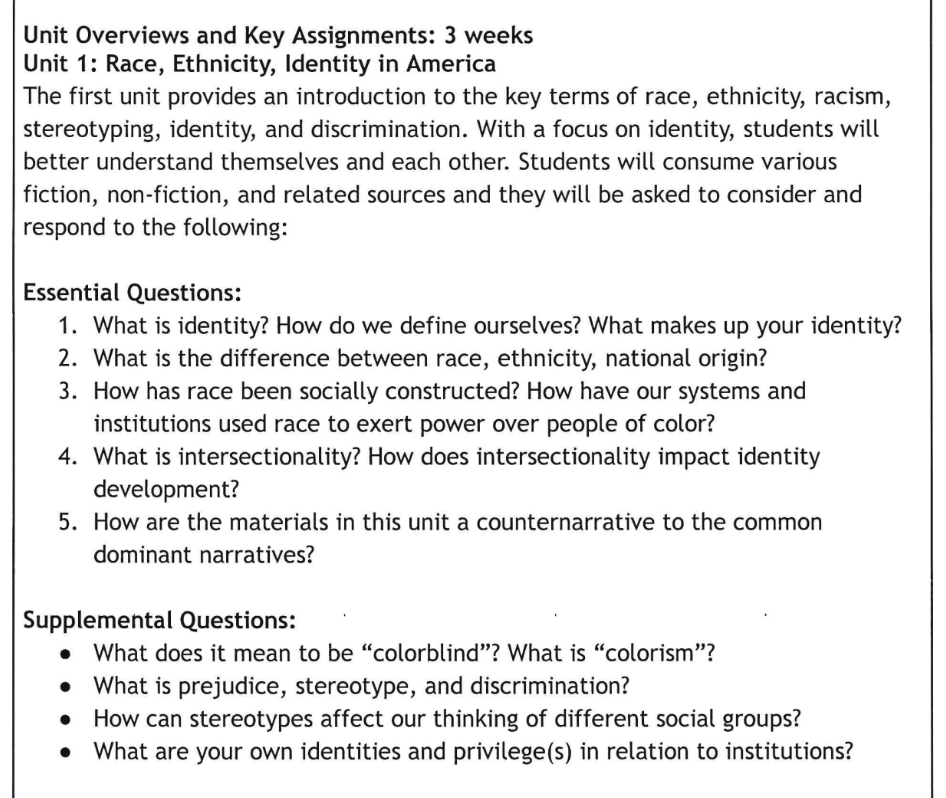
Assignments include: the Social-Identity wheel, Tara Yosso’s cultural wealth model and the Belonging Project.
Unit 2: Indigenous Studies, which explores “the experience of Indigenous Americans both historically and in terms of contemporary issues, as told by Native Americans.”
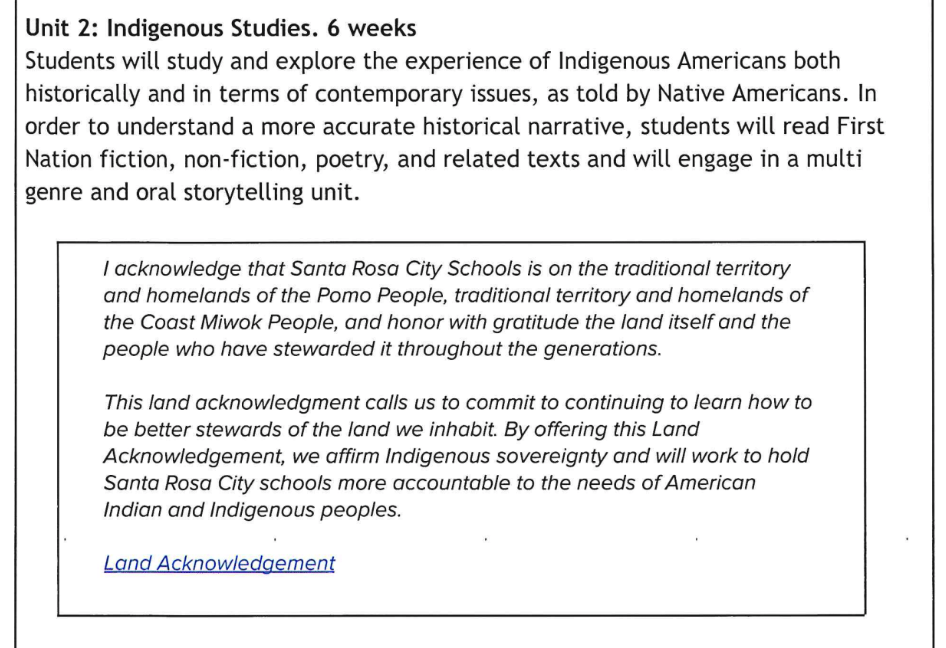
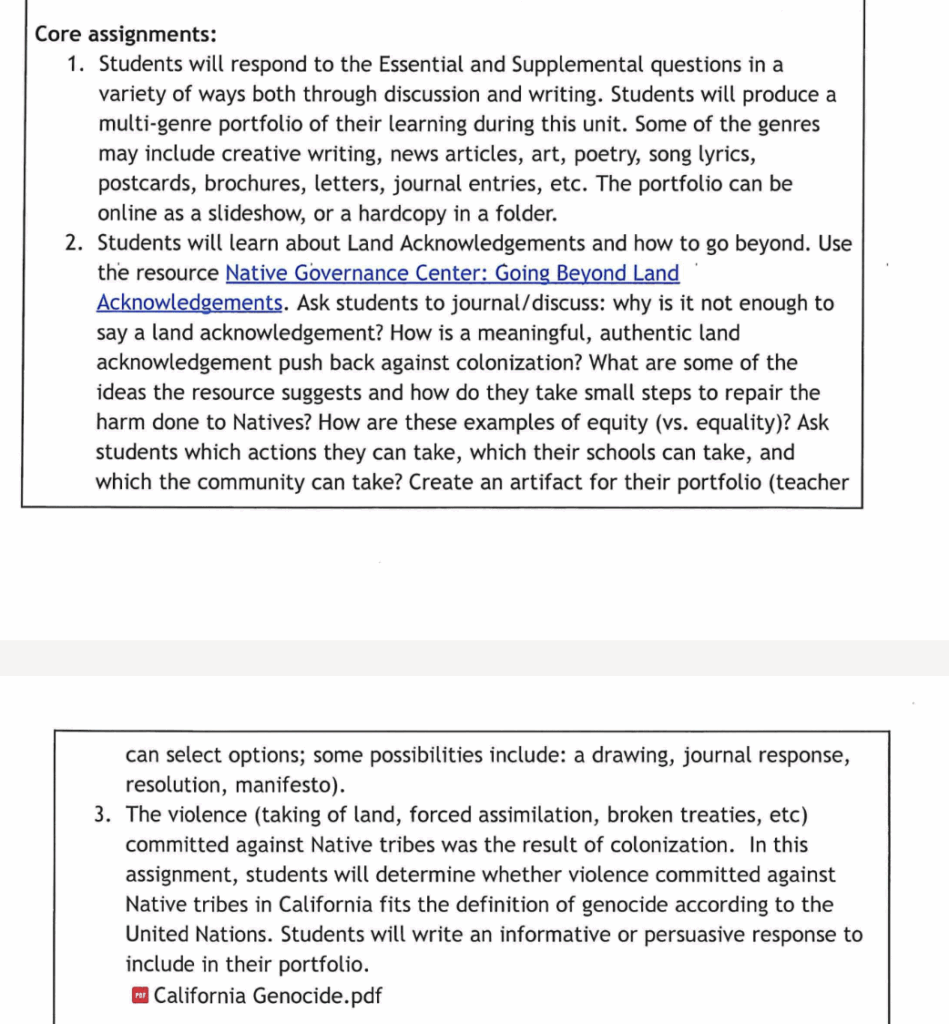
Assignments include land acknowledgements and a discussion about whether violence committed against Native tribes in California fits the United Nations’ definition of genocide.
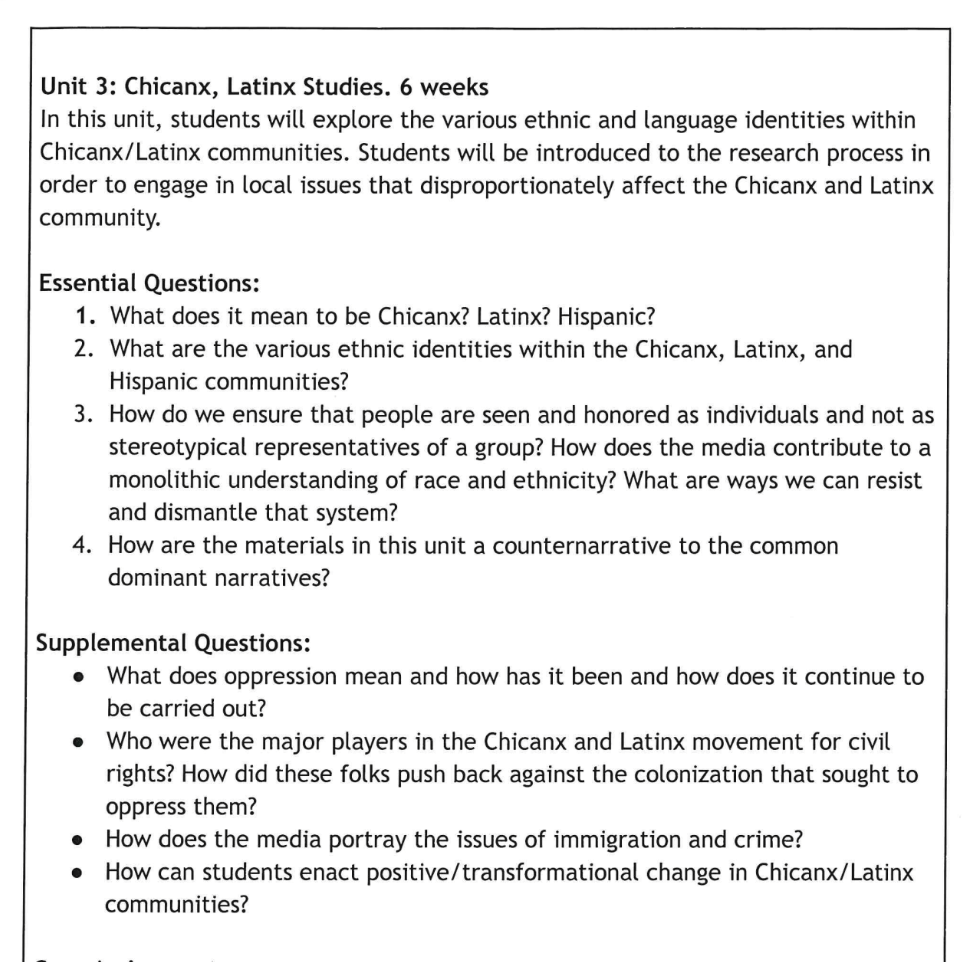
Unit 3: Chicanx, Latinx studies, in which students “explore the various ethnic and language identities within Chicanx/Latinx communities.”
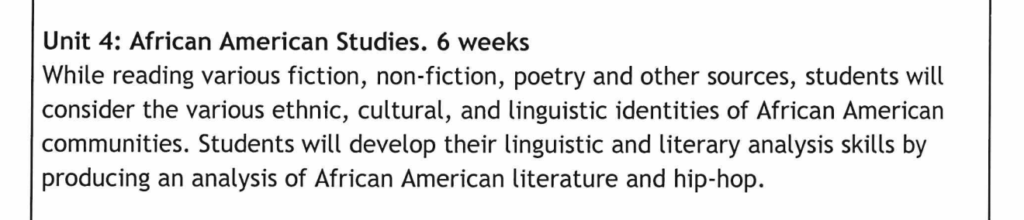
Unit 4: African American Studies, in which students will study “various ethnic, cultural, and linguistic identities of African American communities.”
Essential and supplemental questions include:
“What role does self-determination play in the African American community?”
“How did the various ethnic, cultural, and language identities within African American communities develop?”
“What role do the youth play in the modern Black Lives Matter movement?”
“How does the policing of young African Americans in the United States relate to the school-to-prison pipeline?”
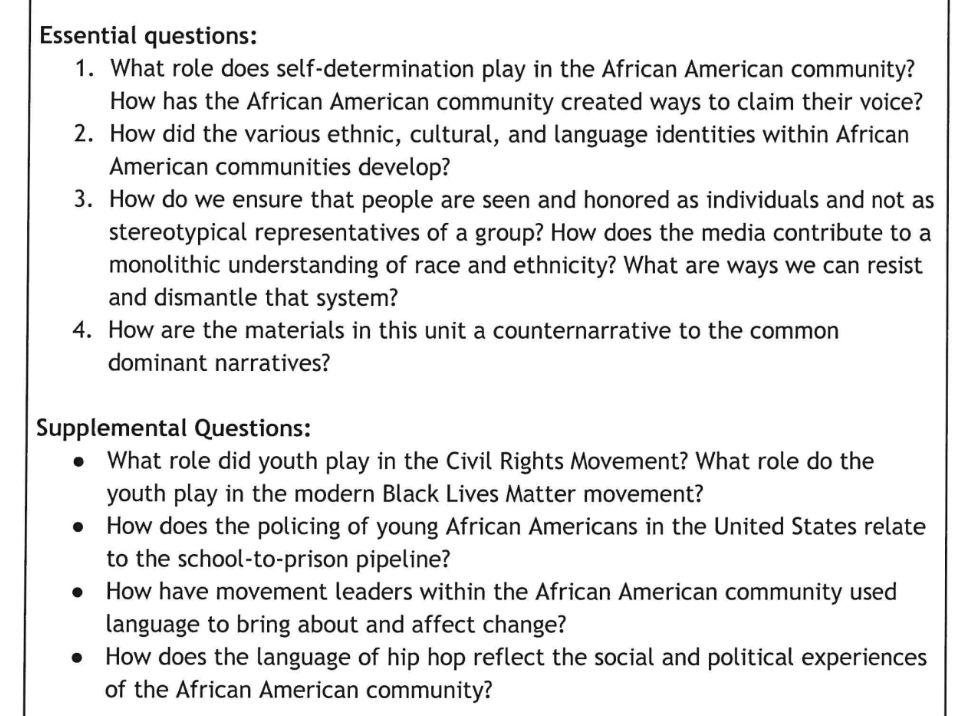
Suggested texts include the works of Malcom X and Angela Davis.
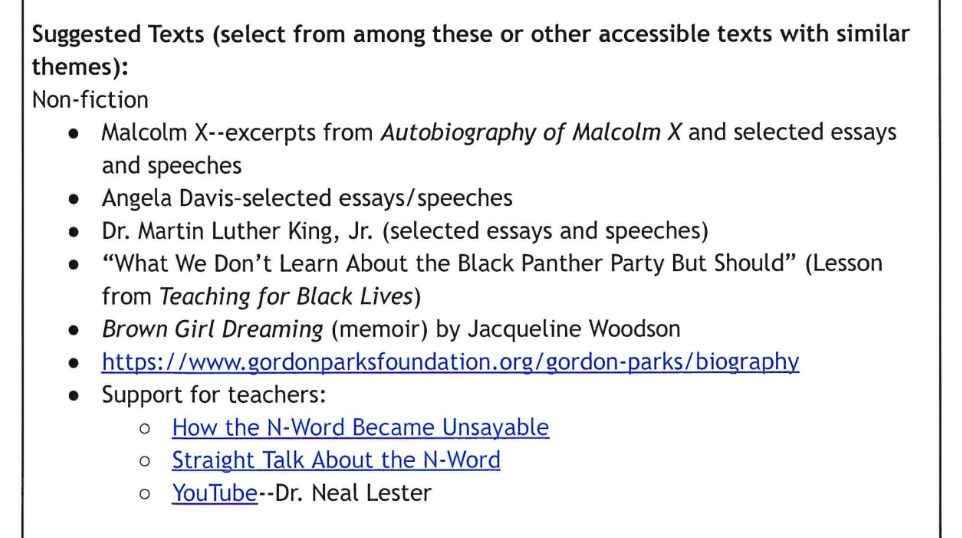
Unit 5: AAPI Studies, in which students “read indigenous Asian and Pacific Islander stories, origin stories, and poem” and “examine the joys and challenges of the AAPI community.”
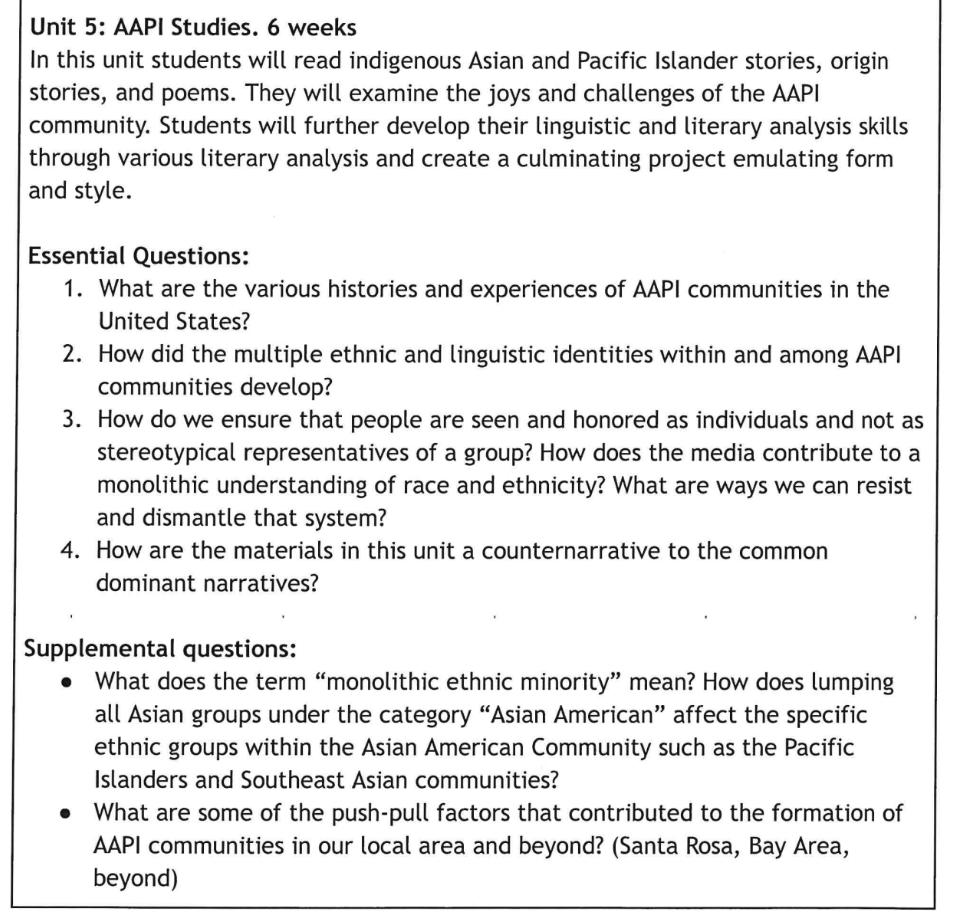
Unit 6: Gender Studies, in which students will “study and explore current events surrounding gender identity, roles, stereotypes, and discrimination,” as well as “the pressing issues of the LGBTQIA+ community. Students will read current events relating to these issues and they will explore forms of activism.”

Questions to be considered include:
“How do systems of power and privilege disproportionately affect some communities?”
“What are microaggressions?”
“What is patriarchy, sexism, and homophobia?”
“What are biases? Implicit biases? Where do biases come from and which ones are socially accepted?”
“Who are the people/groups with power and privilege? Have the groups/people/individuals changed over time? Which groups or identity categories are newly affected?”
“How does heterosexism discriminate against the LGBTQIA+ community and how have people organized for representation LGBTQIA+ rights?”

Assignments include:
Asking students to write journal entries about how their “lived experiences” have informed their biases about gender, an analysis about inclusive representation in advertising and the examination of “the coverage of women and men occupying the same spaces.”
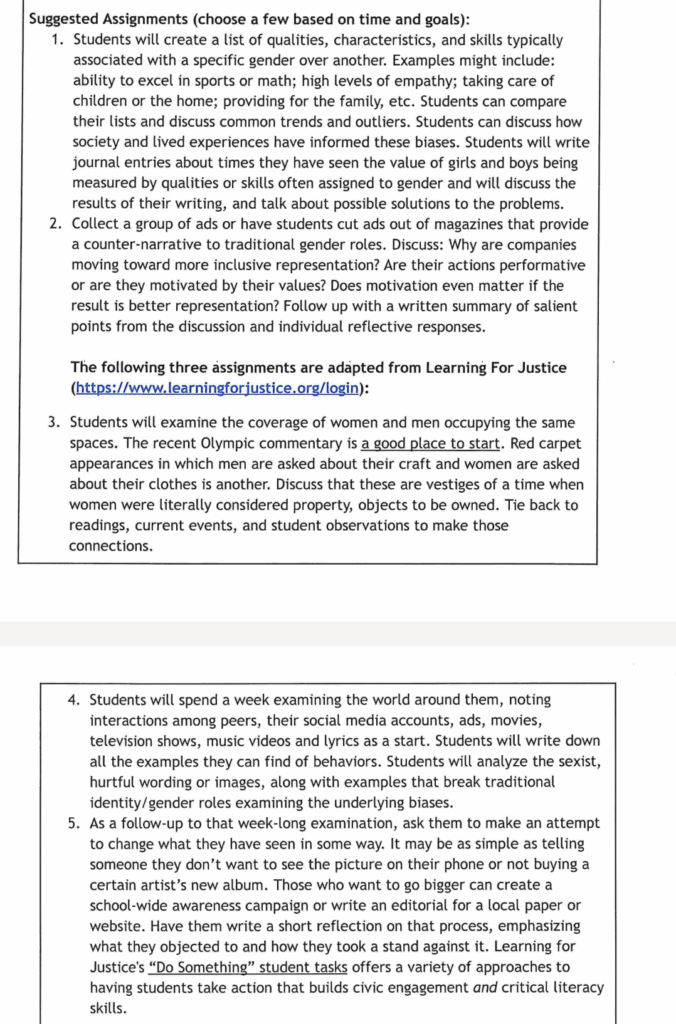
One assignment asks students to spend a week “examining the world about then, noting interactions among peers, their social media account, ads, movies, television shows, music videos and lyrics … to analyze the sexist, hurtful working or images, along with examples that break down traditional identity/gender roles examining the underlying biases.”
Then, in a follow-up assignment, students are asked to “make an attempt to change what they have seen in some way.” Options include creating a school-wide awareness campaign or writing an editorial for a local paper or website.
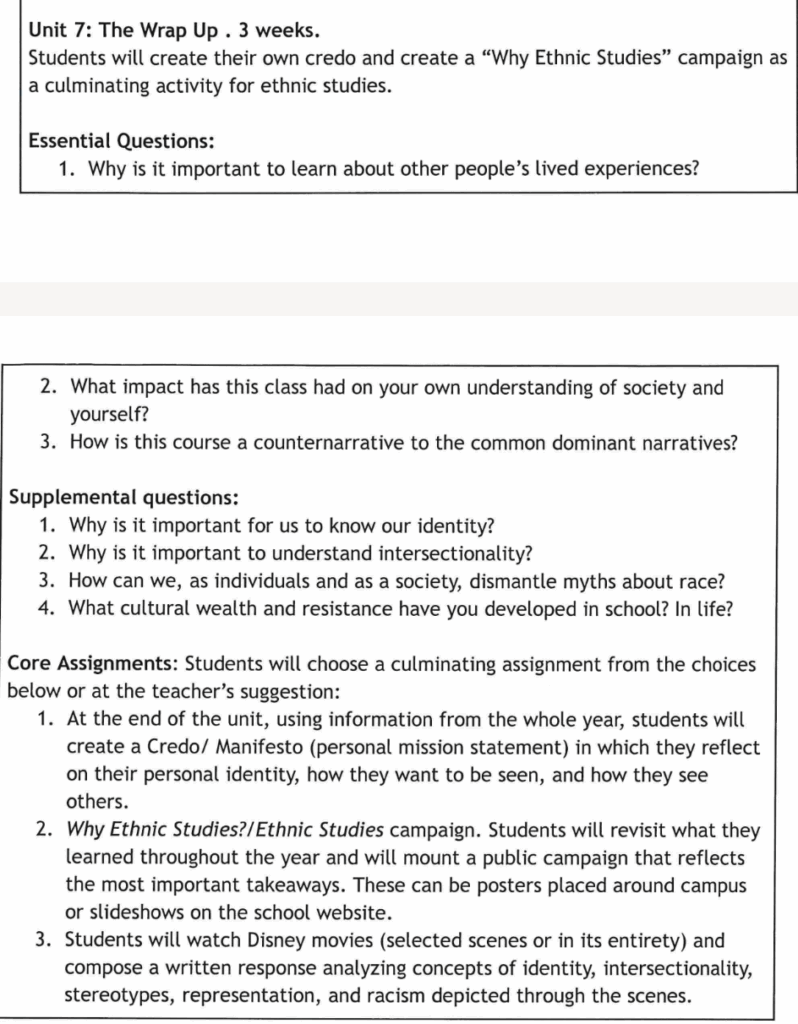
Unit 7: The Wrap Up, which includes:
A project where students are assigned with creating a “Credo” or “Manifesto (personal mission statement)” in which they reflect their personal identity, how they want to be seen and how they see others.
A “Why Ethnic Studies” campaign, serving as a culminating activity publicly displaying what they learned in a year.
Students will also watch Disney movies and “compose a written response analyzing concepts of identity, intersectionality, stereotypes, representation, and racism depicted through the scenes.”
Stay Informed