




African American Studies class at Round Rock ISD criticizes policing and legal systems, requires students to fill out “social identity wheel”
Incidents
Parents Defending Education received documents via public records request detailing the curriculum and development of Round Rock ISD’s African American Studies course. The course, titled “Advanced Ethnic Studies: African American Studies,” was offered as an elective during the 2023-2024 school year to 9-12 grade students. It is also listed in the course catalog for the next academic year, 2024-2025.
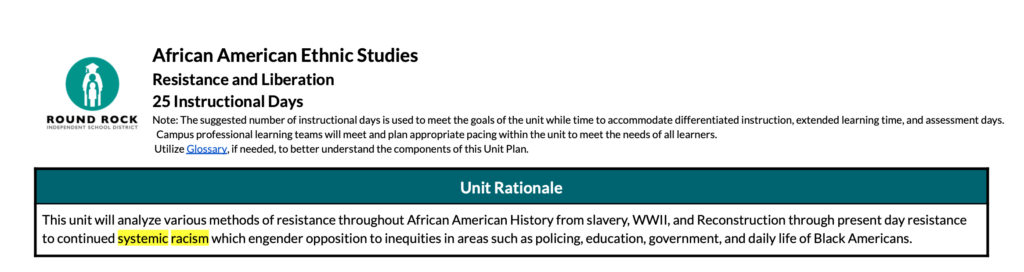
While much of the curriculum focuses on the historical experiences of African Americans, accusations of contemporary “systemic racism” are found throughout the curriculum as well. The “Unit Rationale” included on a unit map for a 25-day unit on “Resistance and Liberation” includes “analyz[ing] various methods of resistance…to continued systemic racism which engender opposition to inequities in areas such as policing, education, government, and daily life of Black Americans.”
Similarly, a unit map for a 17-day unit on “Systems, Power, Oppression” includes a learning goal for students to be able to “describe the contemporary formal and informal systems that perpetuate disenfranchisement of African Americans.”

A lesson plan for the unit focused on the “Prison Industrial Complex” links to a report from The Sentencing Project called “The Color of Justice: Racial and Ethnic Disparity in State Prisons” which claims that “Truly meaningful reforms to the criminal justice system cannot be accomplished without acknowledgement of its racist underpinnings.” The report also recommends “eliminat[ing] mandatory prison sentences for all crimes,” “require[ing] prospective and retroactive racial impact statements for all criminal statues,” and “decriminaliz[ing] low-level drug offenses.”

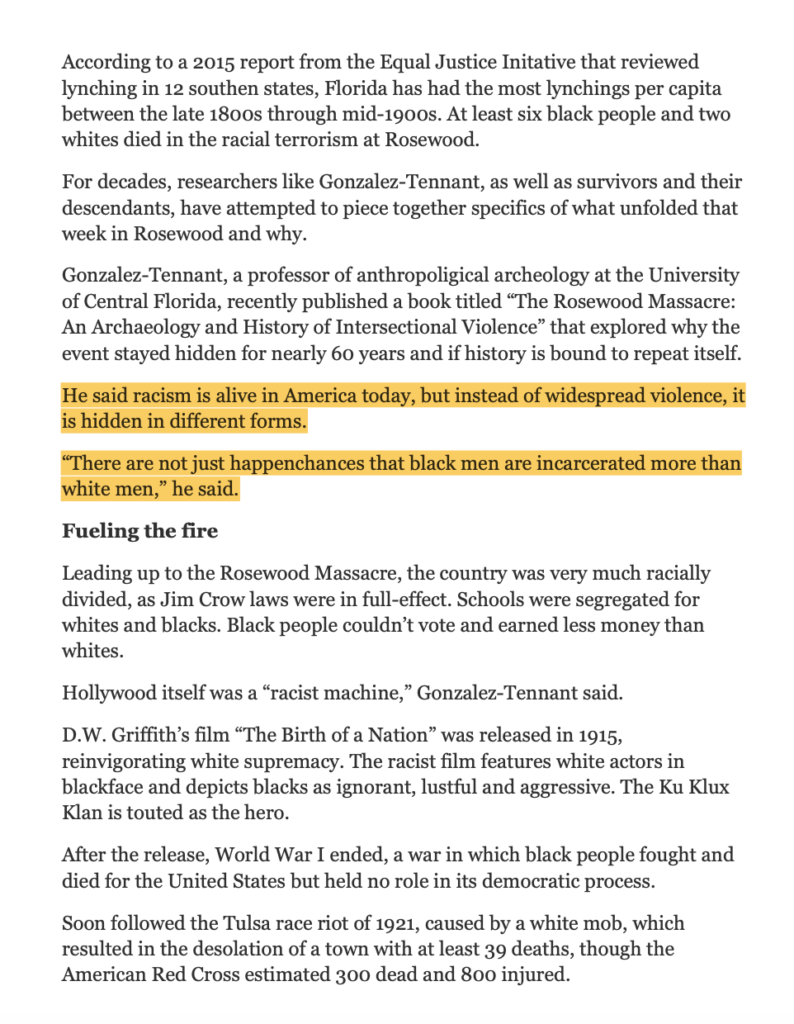
Several lessons about historical “Black Massacres” also allege that modern policing and legal systems have racist underpinnings. A lesson entitled “Black Massacres: Rosewood,” about 1923 mob violence that caused the deaths of many black residents of Rosewood, Florida, includes references to an interview with Edward Gonzalez-Tennant, who researched the event. The interview, however, focuses on the present: “He said racism is alive in America today, but instead of widespread violence, it is hidden in different forms. ‘There are not just happenchances that black men are incarcerated more than white men,’ he said.”
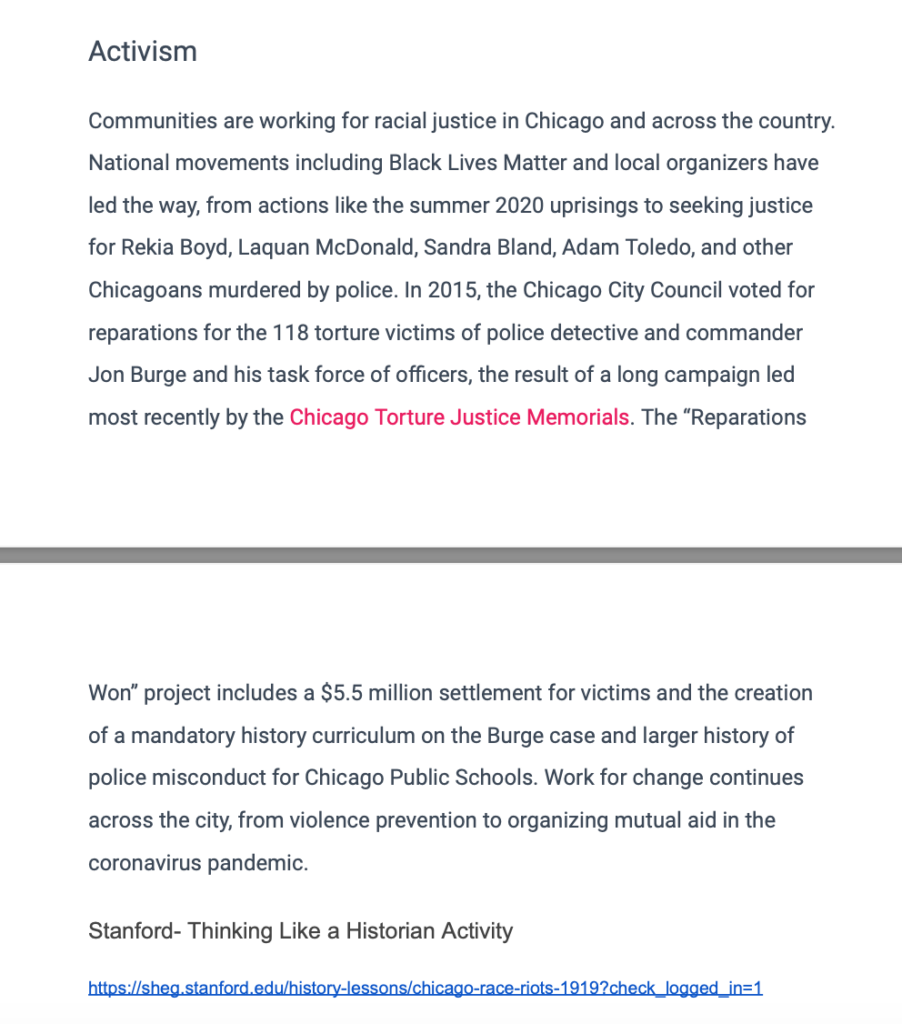
Likewise, a lesson about the Chicago Race Riot of 1919 critiques modern policing and legal systems while promoting the 2020 George Floyd protests, saying,
“Communities are working for racial justice in Chicago and across the country. National movements including Black Lives Matter and local organizers have led the way, from actions like the summer 2020 uprisings to seeking justice for Rekia Boyd, Laquan McDonald, Sandra Bland, Adam Toledo, and other Chicagoans murdered by police. In 2015, the Chicago City Council voted for reparations for the 118 torture victims of police detective and commander Jon Burge and his task force of officers, the result of a long campaign led most recently by the Chicago Torture Justice Memorials. The “Reparations Won” project includes a $5.5 million settlement for victims and the creation of a mandatory history curriculum on the Burge case and larger history of police misconduct for Chicago Public Schools. Work for change continues across the city, from violence prevention to organizing mutual aid in the coronavirus pandemic.”
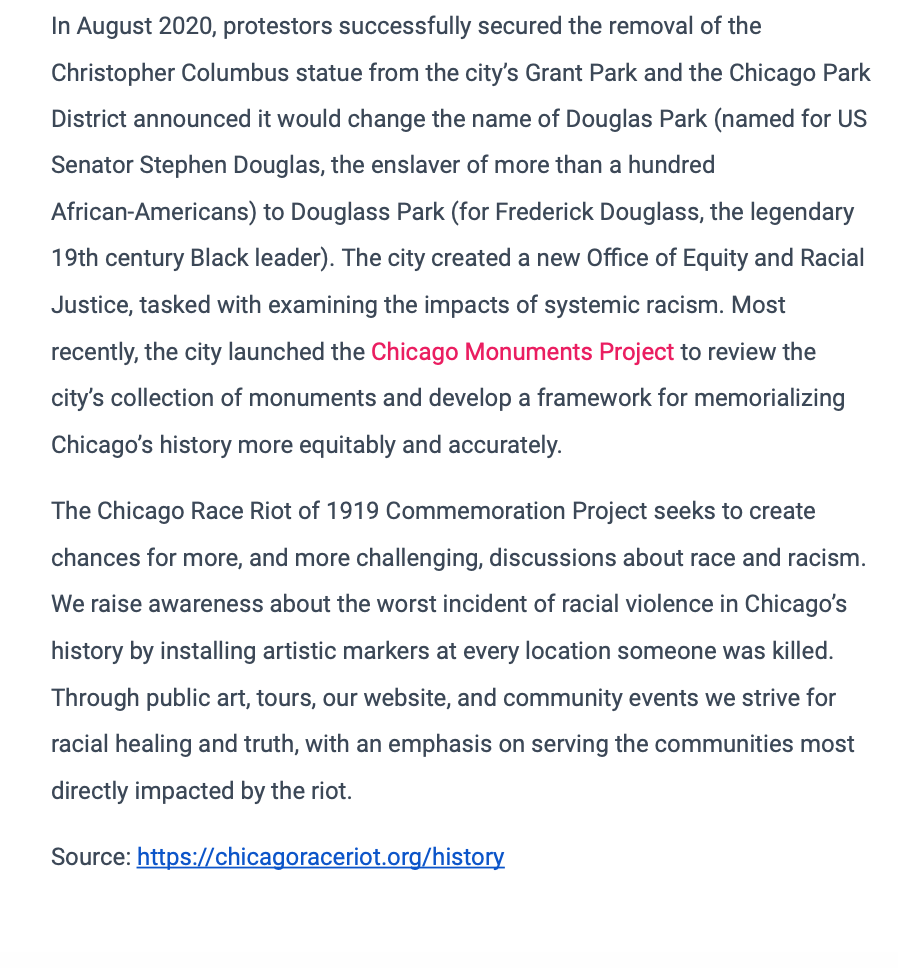
It also celebrates protestors “successfully secur[ing] the removal of the Christopher Columbus statue from the city’s Grant Park” and the city creating an “Office of Equity and Racial Justice, tasked with examining the impacts of systemic racism” in 2020.
The curriculum also includes a unit on “Origins, Identity, and Agency.” The learning goal for the unit is that “Students will be able to … explain intersectionality between race, nationality, gender, etc… analyze the significance of identity nomenclature relevant to African Americans… explain the effects of assimilation, stereotypes, and oppression on the lives of African Americans.” A lesson for the unit includes a video from the Southern Poverty Law Center that claims that a Muslim student and a student experiencing poverty are “members of marginalized groups; they don’t get to choose whether or not to think about their identities” while a white, middle-class student experiences “privilege” by ignoring “intersectionality.”

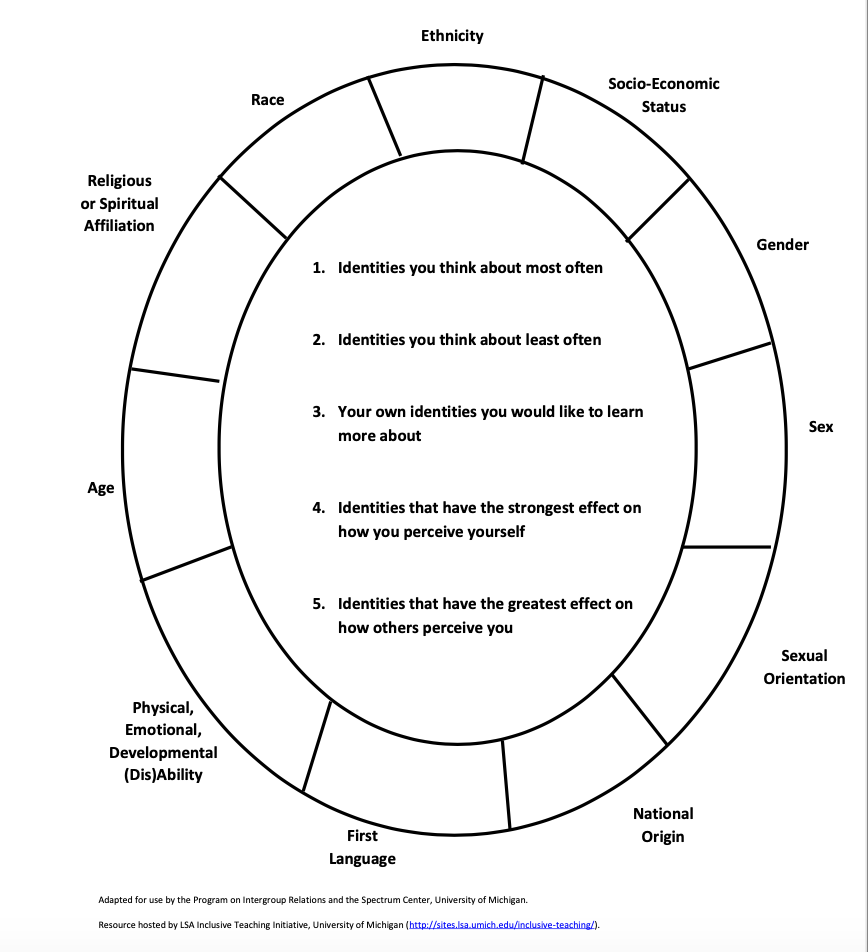
Students are also asked to fill out a “Social Identity Wheel” labeling their sexual orientation, gender identity, race, and economic status, among other categories. Students are then asked to draw the identity they think about most often, and discuss that identity and drawing with classmates.
In 2021, the state of Texas passed legislation that prohibits the teaching of discriminatory concepts in K-12 schools, including that:
“an individual, by virtue of the individual’s race or sex, bears responsibility for actions committed in the past by other members of the same race or sex; an individual should feel discomfort, guilt, anguish, or any other form of psychological distress on account of the individual’s race or sex; meritocracy or traits such as a hard work ethic are racist or sexist or were created by members of a particular race to oppress members of another race;” and “with respect to their relationship to American values, slavery and racism are anything other than deviations from, betrayals of, or failures to live up to, the authentic founding principles of the United States, which include liberty and equality.”
Stay Informed