



Sunrise Movement and Young Democratic Socialists of America published guides urging students to organize campus disruptions and overnight protests to advance political revolution
Investigations
SUMMARY
A document titled “Schools: Drop ICE Toolkit” reveals a campaign strategy directed towards students to “create a crisis for university admin” through an escalating effort built around winnable demands, combining broad outreach with nonviolent direct action, this guide aims to help students organize coordinated campaigns targeting university policies and partnerships.
The nine-page toolkit — produced by the American Association of University Professors, Sunrise Movement, Young Democratic Socialists of America, and the Workplace Justice Lab — urges students to mobilize against alleged university ties to businesses that support Immigration and Customs Enforcement (ICE). It includes campaign resources, goals, strategies, and detailed tactics for campus organizing nationwide.
KEY TAKEAWAYS
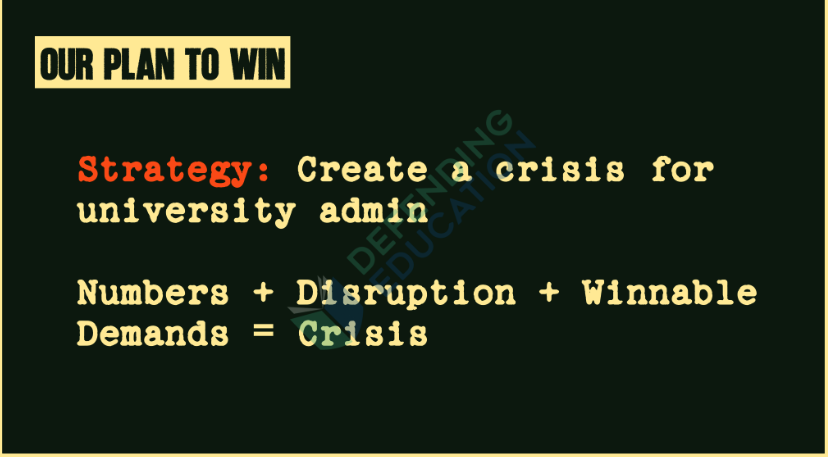
- The group’s “campaign strategy” is to “create a crisis for university admin through an escalating campaign, around winnable demands, that combines majoritarian outreach and tactics with non-violent direct action.”
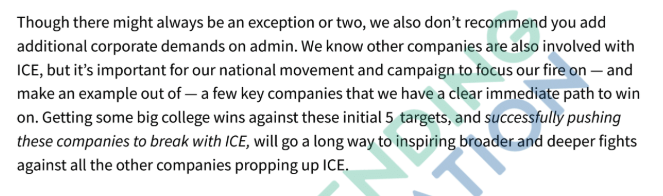
- The guide calls for focusing “fire on – and make an example out of – a few key companies that we have a clear and immediate path to win on.” It continues: “Getting some big college wins against these initial 5 targets, and successfully pushing these companies to break with ICE, will go a long way to inspiring broader and deeper fights against all the other companies propping up ICE.”
- The toolkit includes a list of over 2000 colleges and universities that have one or more of the “five targets – Hilton, Enterprise, Flock System, Target, and ICE Air Carriers” that the groups intend to engage in direct action against.
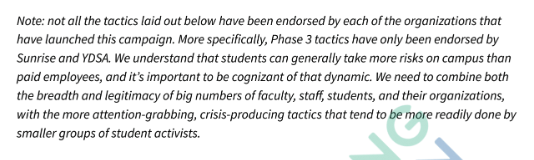
- Authors of the document state that they “understand that students can generally take more risks on campus than paid employees,” especially when it comes to “more attention-grabbing, crisis-producing tactics that tend to be more readily done by smaller groups of student activists.”
- “Mass Nonviolent Disruption,” tactics include “student sit-ins,” “no work, no school, no purchasing on May 1,” and “indefinite campouts until some demands are met.” It is noted that these tactics have only been endorsed by Sunrise Movement and YDSA.
- The organization Fight for the Future Education Fund, which is behind the “Flock Out” campaign, has received funding from organizations such as the Democracy Fund, Ford Foundation, Foundation to Promote Open Society, New Venture Fund, Omidyar Network Fund, and Rockefeller Philanthropy Advisors.
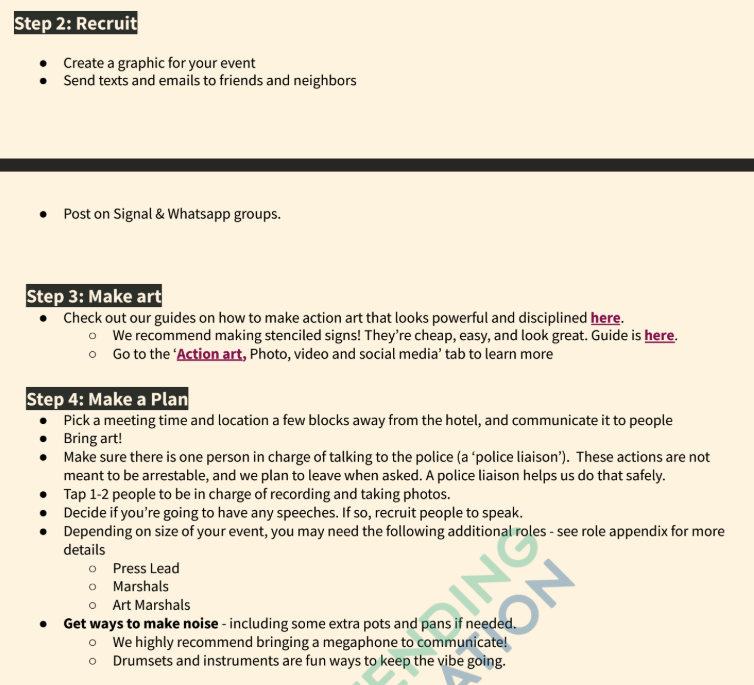
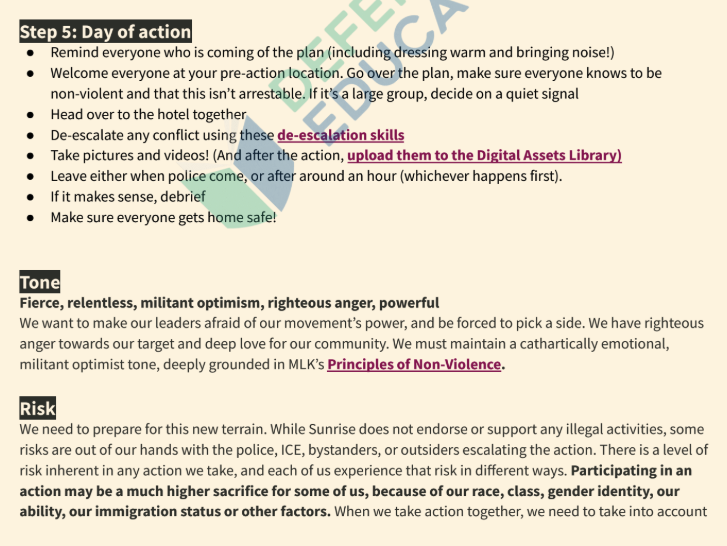
- A “Wide Awake Guide” instructs activists on how to facilitate direct actions at Hilton hotels that features all night noise disturbances at locations suspected of housing ICE agents.
SCHOOLS: DROP ICE TOOLKIT
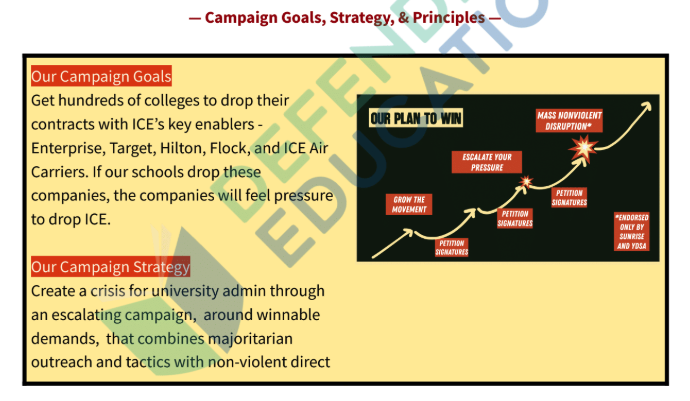
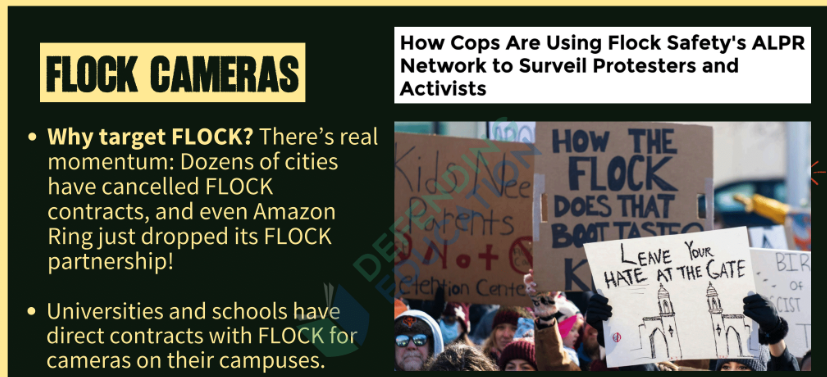
The “Schools” Drop ICE Toolkit” states that its “campaign goals” are to “get hundreds of colleges to drop their contracts with ICE’s key enablers – Enterprise, Target, Hilton, Flock, and ICE Air Carriers.” It adds that by dropping “these companies, the companies will feel pressure to drop ICE.”
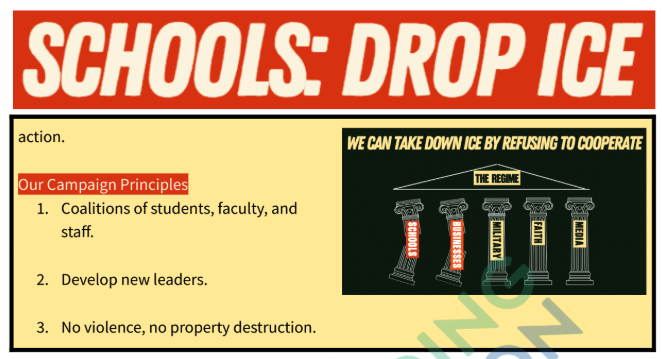
The “campaign strategy” is to “create a crisis for university admin through an escalating campaign, around winnable demands, that combines majoritarian outreach and tactics with non-violent direct action.”



Key Campaign Resources
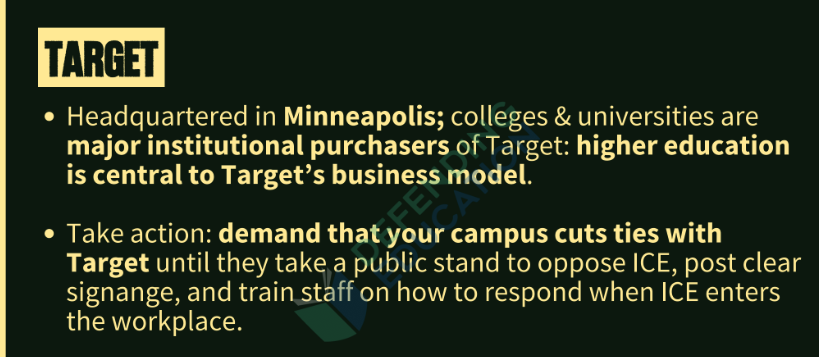
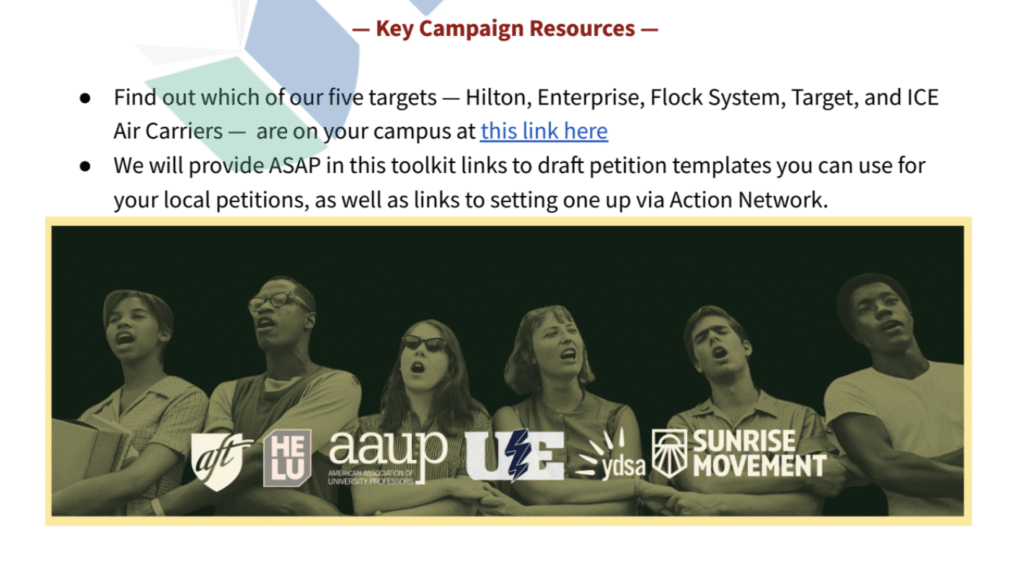
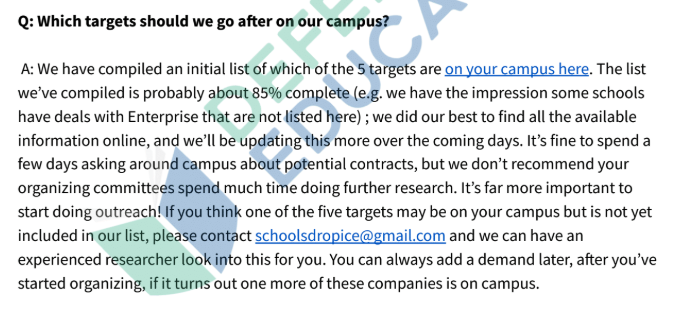
Linked in the toolkit is a “key campaign resource” spreadsheet listing over 2000 colleges and universities and whether that institution has any one of the “five targets – Hilton, Enterprise, Flock System, Target, and ICE Air Carries” on campus that the groups intend to engage in direct action against.
The toolkit states that activists should focus their “fire on – and make an example out of – a few key companies that we have a clear and immediate path to win on.” It continues: “Getting some big college wins against these initial 5 targets, and successfully pushing these companies to break with ICE, will go a long way to inspiring broader and deeper fights against all the other companies propping up ICE.”
Detailed Campaign Plan and Tactics
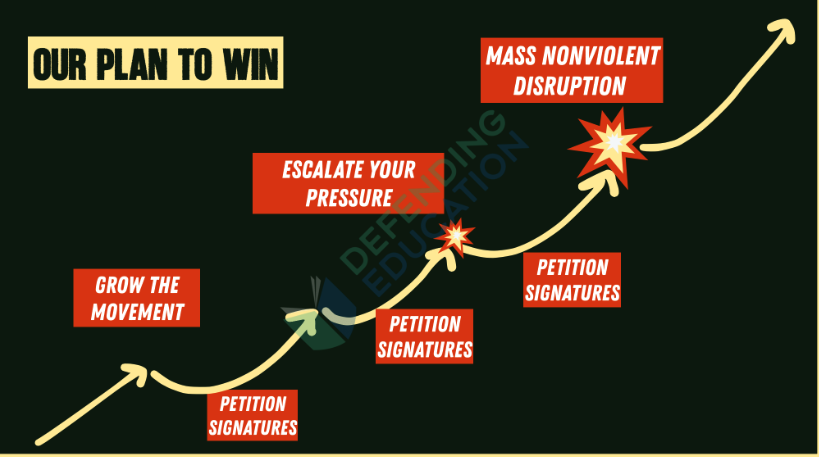
The “Detailed Campaign Plan and Tactics” includes several phases ranging from how to “grow your reach” to escalation and “mass nonviolent disruption.” The document also acknowledges that “not all tactics laid out below have been endorsed by each of the organizations.”
It also adds that they “understand that students can generally take more risks on campus than paid employees,” especially when it comes to “more attention-grabbing, crisis-producing tactics that tend to be more readily done by smaller groups of student activists.”
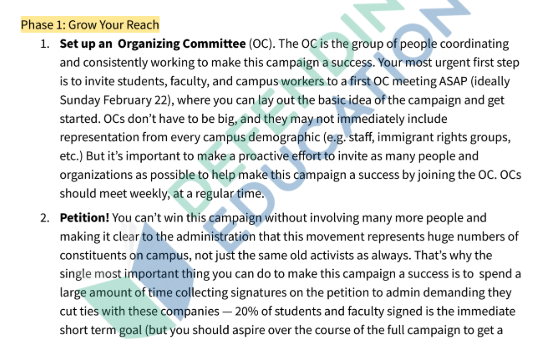
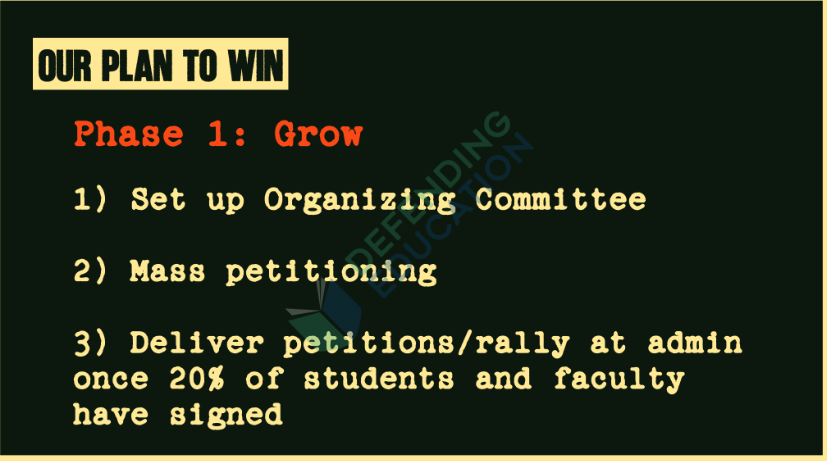
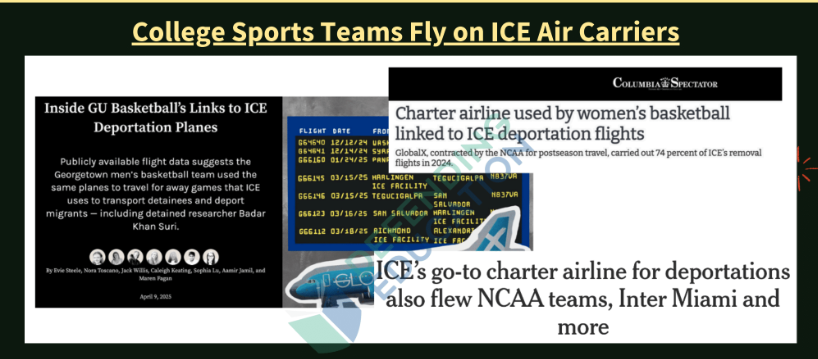
Also part of Phase 1 is a collection of petition signatures from students. Tactics include approaching students in classes, around campus, in the dining halls, dorms, and attempting to get athletics departments to refuse to use the companies for travel arrangements.

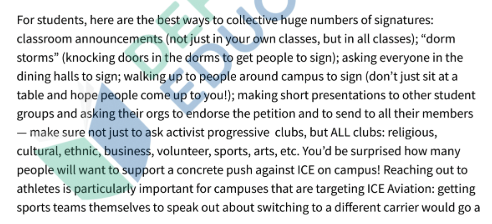
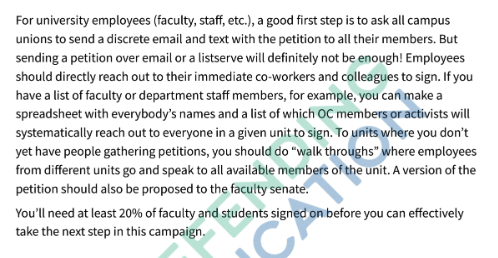
The document also advocates for university employees to “send a discrete email and text with the petition to all their [union] members” and/or create a “spreadsheet with everybody’s names and a list of which OC members or activists will systemically reach out to everyone in a given unit to sign.”
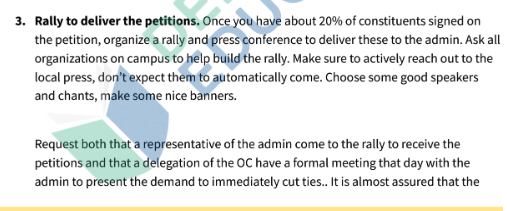
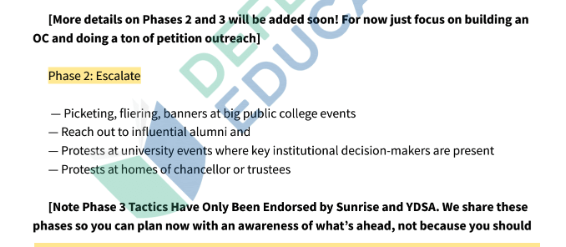
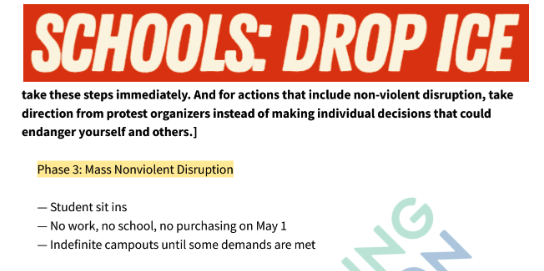
Phase 3, titled “Mass Nonviolent Disruption,” includes “student sit-ins,” “no work, no school, no purchasing on May 1,” and “indefinite campouts until some demands are met.” It is noted that these tactics have only been endorsed by Sunrise Movement and YDSA.
WIDE AWAKE GUIDE
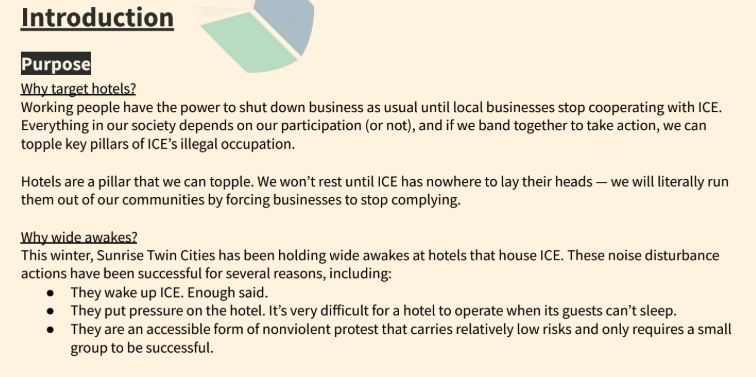
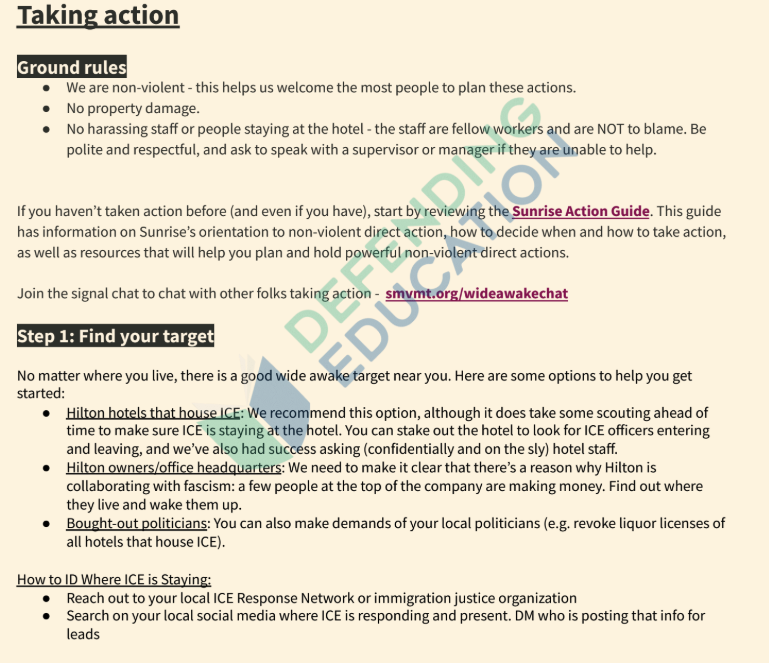
Another Sunrise Movement document titled “Wide Awake Guide” discusses how to facilitate campaigns at Hilton hotels to create “noise disturbances” throughout the night of any establishment believed to be housing ICE agents.
Our Demands
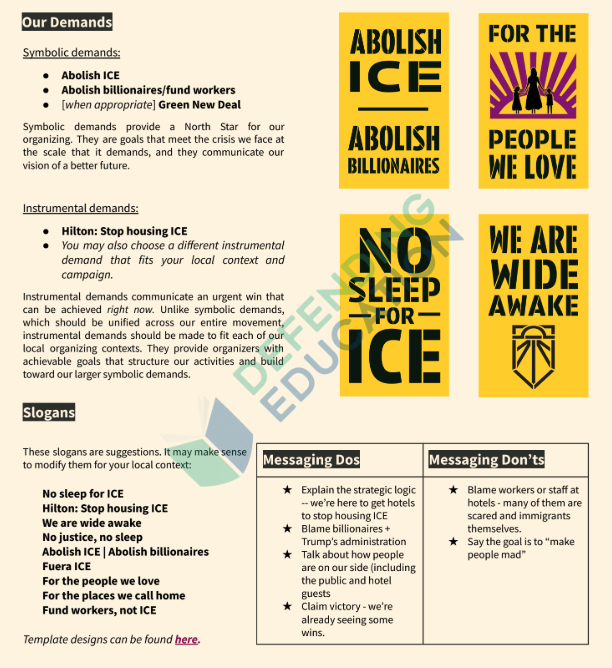
A section titled “Our Demands” states goals such as: “abolish ICE,” “abolish billionaires/fund workers,” and a “Green New Deal.” The section includes “instrumental demands” such as “Hilton: Stop housing ICE” and other “demands that fits” the activists “local context and campaign.”
Stay Informed