


New Mexico education documents for high school history and ethnic studies include climate change, intersectionality, and “January 6 insurrection” content
Investigations
SUMMARY
The New Mexico Public Education Department’s (NMPED) Instructional Scope (NMIS) documents for High School History and Ethnic studies feature content such as climate change, gender identity, intersectionality, power and privilege, the “Israeli-Palestinian conflict,” the “January 6 insurrection,” and leftwing groups such as Black Lives Matter, the Southern Poverty Law Center (SPLC), GLAAD, and Sunrise Movement. The NMIS also focuses on social justice movements including the “2020 racial justice protests,” “#MeToo movement,” and Indigenous Environmentalism.
The definition of “equity” used in the documents is “the assumption that all citizens have had different opportunities and experiences, and allocates the exact resources and opportunities needed to reach an equal outcome.”
KEY TAKEAWAYS
- The High School United States History NMIS includes content such as climate change, the “2020 racial justice protests,” Black Lives Matter, the “January 6 insurrection,” the “Israeli-Palestinian conflict,” and “Sunrise movement.”
- A standard in the High School United States History NMIS states that “students who demonstrate understanding can….explain what the 2021 insurrection at the Capital reflects about the state of our democracy.”
- The High School World History NMIS defines “equity” as the assumption “that all citizens have had different opportunities and experiences, and allocates the exact resources and opportunities needed to reach an equal outcome.”
- Students are taught to develop a “critical consciousness” mindset, which is the assumption that any disparities between identity groups is due the oppression of minorities and historically underrepresented groups.
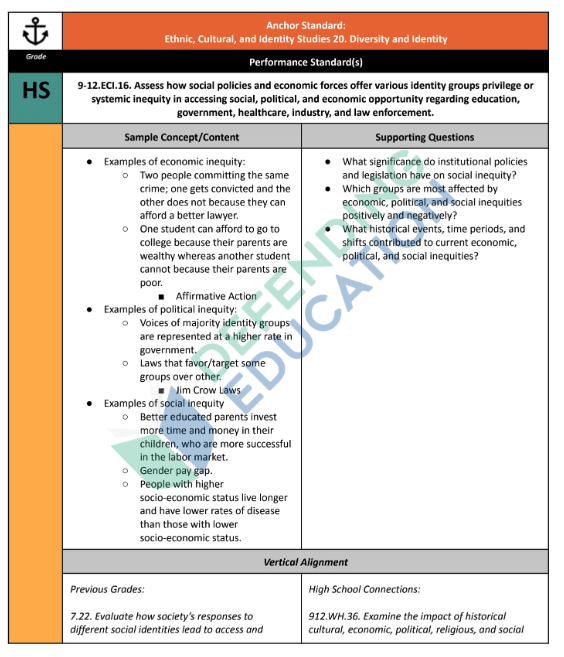
- The High School Ethnic, Cultural, and Identity Studies NMIS includes an example of “social inequity” that states that “better educated parents invest more time and money in their children, who are more successful in the labor market.”
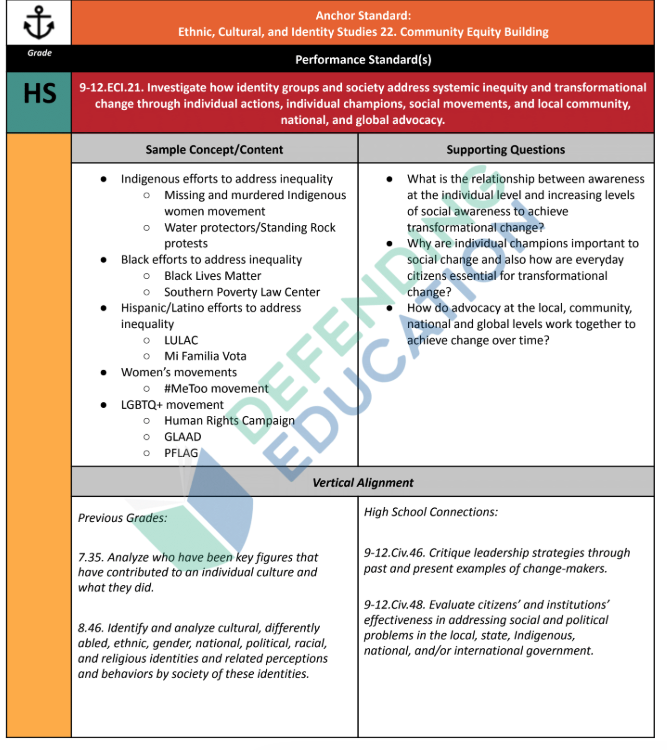
- The High School Ethnic, Cultural, and Identity Studies NMIS – “22. Community Equity Building” includes the study of leftwing “advocacy movements” such as Black Lives Matter, the Southern Poverty Law Center (SPLC), #MeToo movement, and GLAAD.
NEW MEXICO INSTRUCTIONAL SCOPE (NMIS)
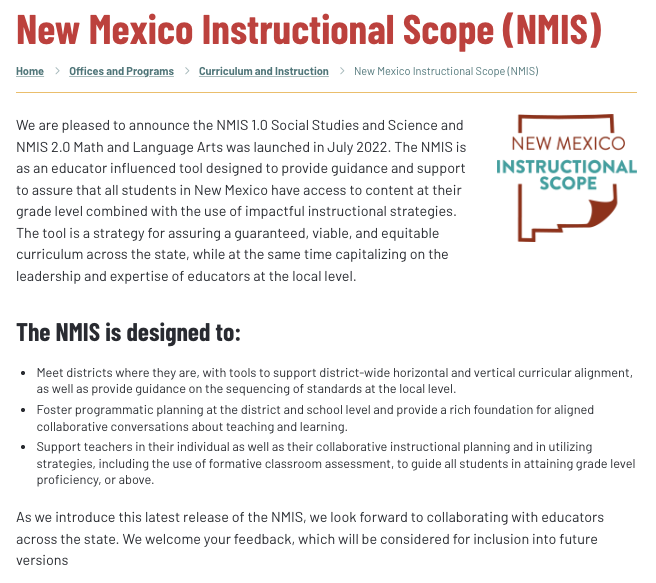
The New Mexico Instructional Scope (NMIS) is an “educator influenced tool designed to provide guidance and support to assure that all students in New Mexico have access to content at their grade level combined with the use of impactful instructional strategies.”
The NMIS is meant to create “curricular alignment,” provide “guidance on the sequencing of standards at the local level,” and “support teachers in their individual as well as collaborative instructional planning.”
While the NSIM is not strictly mandated for use, it serves as a primary guide for curriculum, pacing, and learning. Teachers are expected to use these tools, but are also encouraged to adjust the pacing and other adaptations to meet the specific needs of the students.
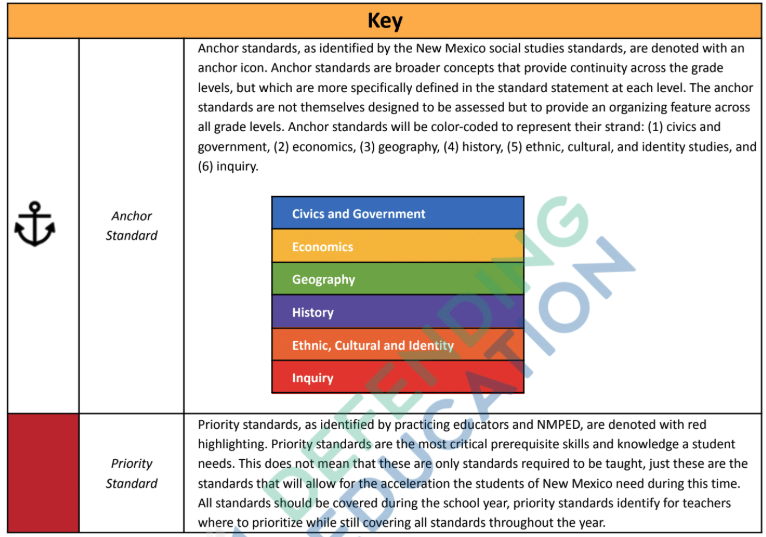
Each instructional scope includes both “anchor” standards and “priority” standards. Anchor standards are “broader concepts that provide continuity across the grade levels, but which are more specifically defined in the standards statement at each level. Priority standards are the “most critical prerequisite skills and knowledge a student needs.”
High School United States History
The High School United States History Instructional Scope includes developing a “critical consciousness” and features content such as climate change, the “2020 racial justice protests,” Black Lives Matter, the “January 6 insurrection,” the “Israeli-Palestinian conflict,” and “Sunrise movement.”
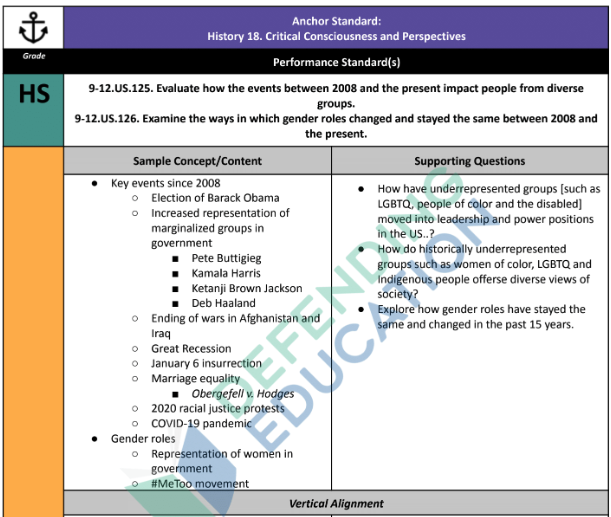
History 18. Critical Consciousness and Perspectives
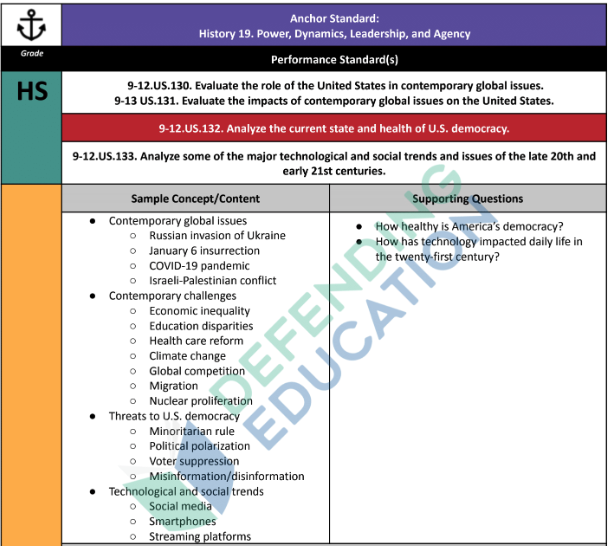
The anchor standard titled “History 18. Critical Consciousness and Perspectives” includes content such as “increased representation of marginalized groups in government,” the “ending of wars in Afghanistan and Iraq,” “2020 racial justice protests,” and the “January 6 insurrection.”
Standard supporting questions include “How have underrepresented groups [such as LGBTQ, people of color, disabled] moved into leadership and power positions in the US?” and “How do historically underrepresented groups such as women of color, LGTBQ and Indigenous people offer diverse views of society?”
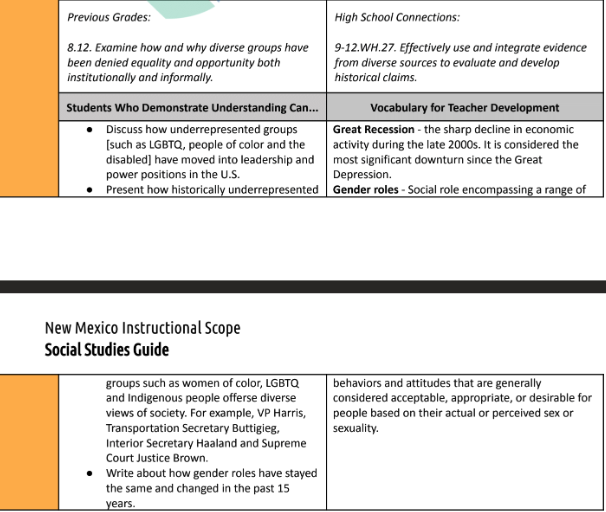
A “Bridge” question asks “Are there more opportunities for minorities today in the business realm?” and includes an example of an “Exemplar Student Response (ESR)” that states that “there is more opportunity today than there was back then, but that doesn’t mean that things are totally equal. Even though there are lots of Black owned businesses, the richest men in the country are still mostly white.”
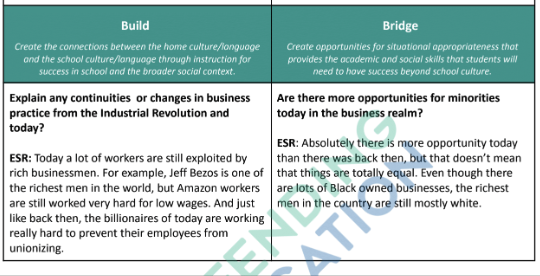
Ethnic, Cultural, and Identity Studies 22. Community Equity Building
The standard titled “Ethnic, Cultural, and Identity Studies 22. Community Equity Building” focuses on “how identity groups and society address systemic inequity” and to “evaluate the role of racial and social constructs in the structure and function of 21st-century U.S. society.”
Content for the standard includes “Occupy Wall Street,” “Black Lives Matter,” “#MeToo Movement,” “March for Our Lives,” the “TEA Party,” and “Sunrise movement.”
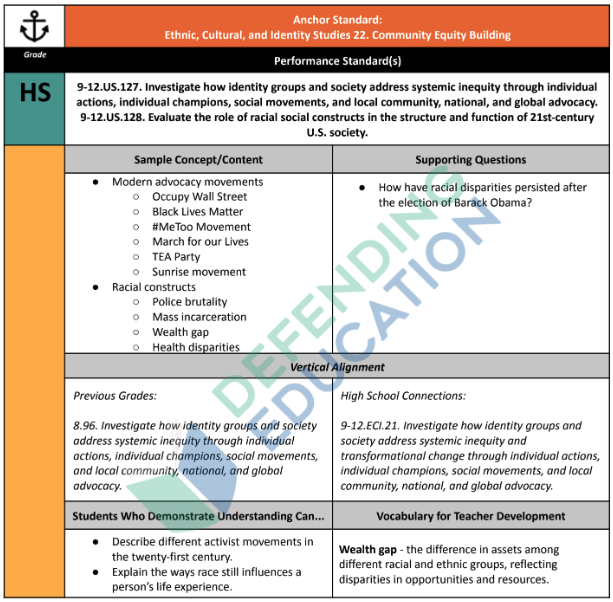
History 19. Power, Dynamics, Leadership, and Agency
The standard “History 19. Power, Dynamics, Leadership, and Agency” includes content such as the “January 6 insurrection” and the “Israeli-Palestinian conflict.” The section states that “students who demonstrate understanding can….explain what the 2021 insurrection at the Capital reflects about the state of our democracy.”
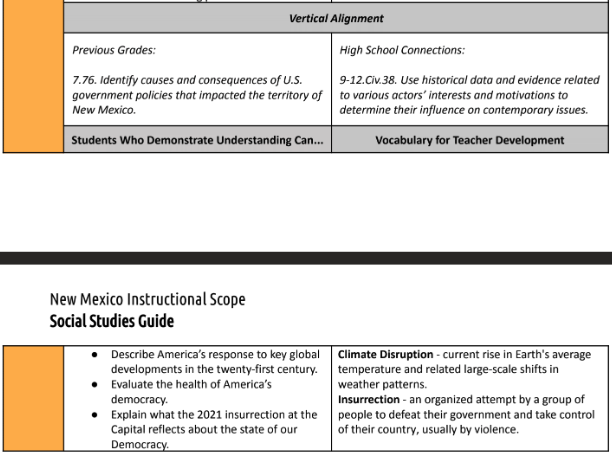
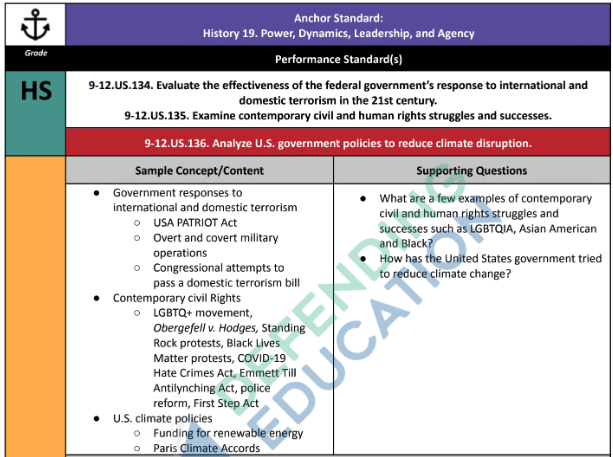
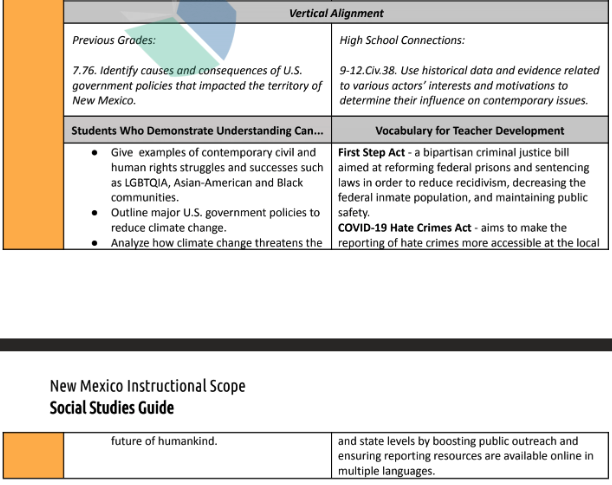
Another section under “History 19” focuses on the “federal government’s response to international and domestic terrorism in the 21st century” and examines “contemporary civil and human rights struggles and successes.” Content includes “Black Lives Matter protests,” “COVID-19 Hate Crimes Act,” and “U.S. climate policies.” The section states that “students who demonstrate understanding can…analyze how climate change threatens the future of humankind.”
High School World History
The High School World History Instruction Scope includes content such as “climate change,” “Indigenous Environmentalism,” and defines “equity” as the assumption “that all citizens have had different opportunities and experiences, and allocates the exact resources and opportunities needed to reach an equal outcome.”
Civics 4. Roles and Responsibilities of Civic Life
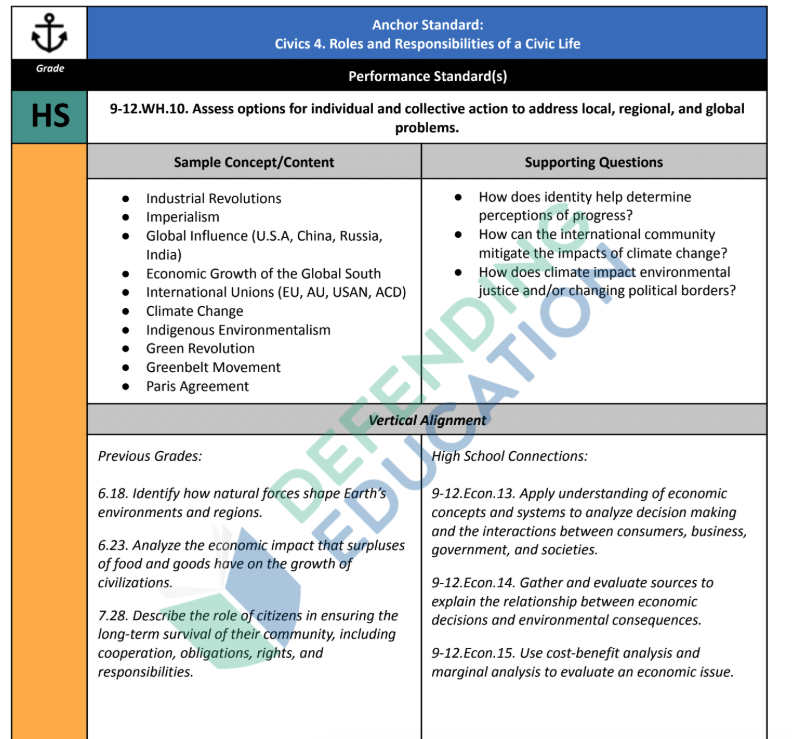
The standard “Civics 4. Roles and Responsibilities of Civic Life” includes content such as “climate change,” “Indigenous Environmentalism,” the “Green Revolution,” and asks students how “does climate impact environmental justice and/or changing political borders?”
History 17. Historical Thinking
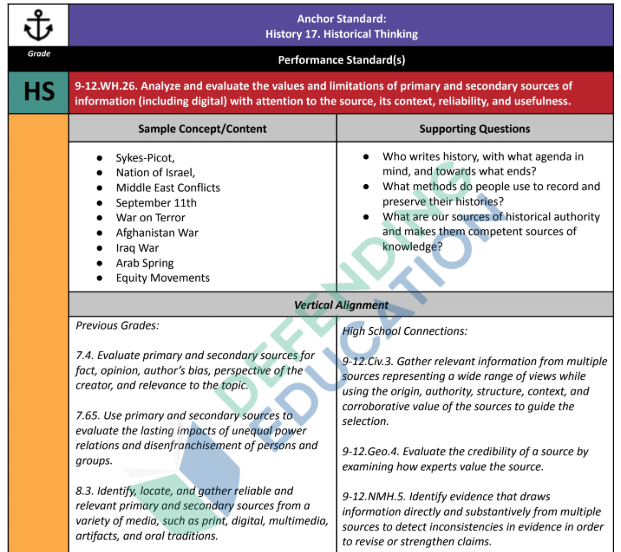
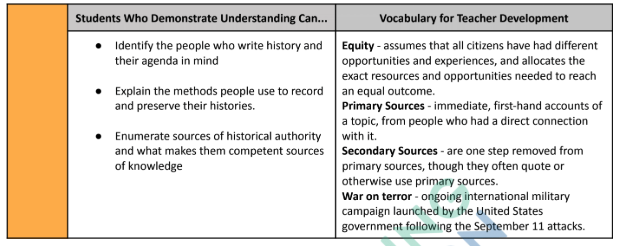
The standard “History 17. Historical Thinking” includes content such as “Sykes-Picot,” the “Nation of Israel,” and “Equity Movements.” The section defines “equity” as the assumption “that all citizens have had different opportunities and experiences, and allocates the exact resources and opportunities needed to reach an equal outcome.”
History 18. Critical Consciousness and Perspectives
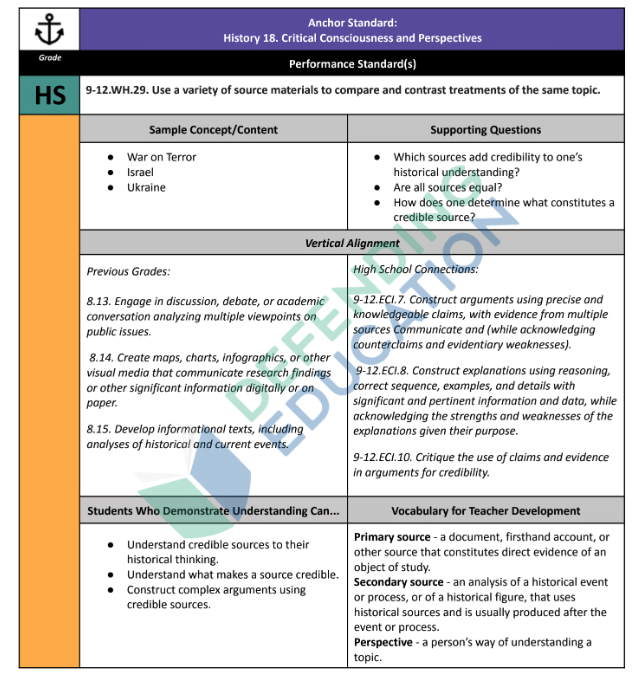
The standard “History 18. Critical Consciousness and Perspectives” includes content such as the “War on Terror,” “Israel,” and “Ukraine.” Supporting questions include “which sources add credibility to one’s historical understanding?” and “How does one determine what constitutes a credible source?”
High School World History Sample Task: 1945-Future: Global Interconnections Accelerate
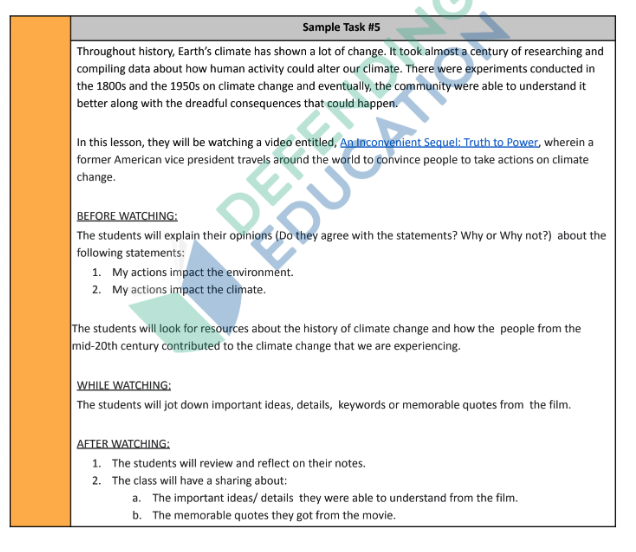
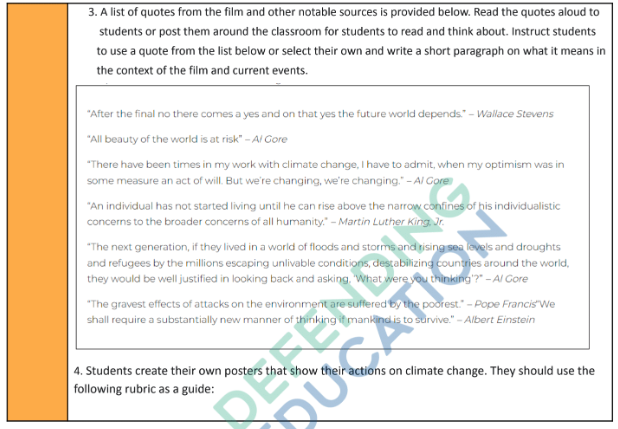
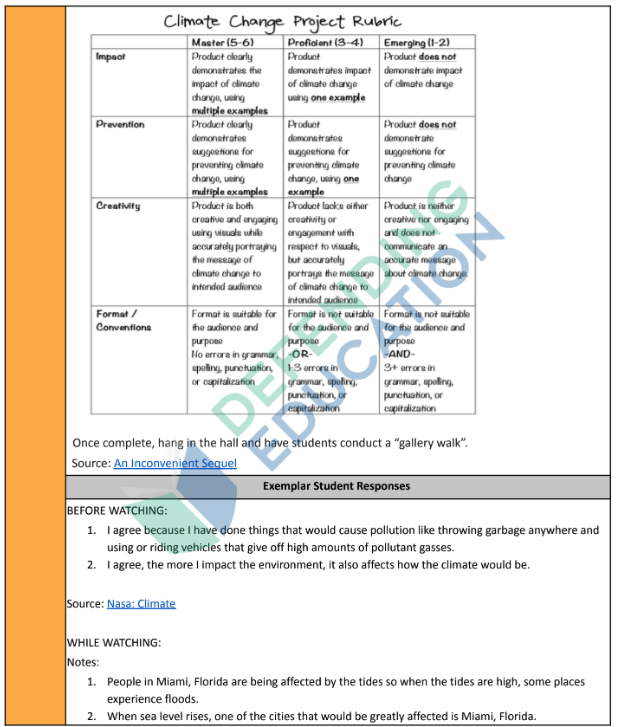
The “sample task” provided for the section titled “High School World History Sample Task: 1945-Future: Global Interconnections Accelerate” uses the 2017 film An Inconvenient Sequel: Truth to Power and has students “create their own posters that show their actions on climate change.”
Model exemplar student responses include the student agreeing “because I have done things that would cause pollution like throwing garbage anywhere and using or riding vehicles that give off high amounts of pollutant gases” and that “the more I impact the environment, it also affects how the climate would be.”
High School Ethnic, Cultural, and Identity Studies
The High School Ethnic, Cultural, and Identity Studies NMIS includes content such as “intersectionality,” “power and privilege,” “gender identity,” “economic, political, and social inequity,”
Ethnic, Cultural, and Identity Studies 20. Diversity and Identity
The standard “Ethnic, Cultural, and Identity Studies 20. Diversity and Identity” includes content such as identity, “privilege and oppression,” and asks students “How do specific group identities relate to societal power” and “stereotypes, discrimination, and prejudice?”
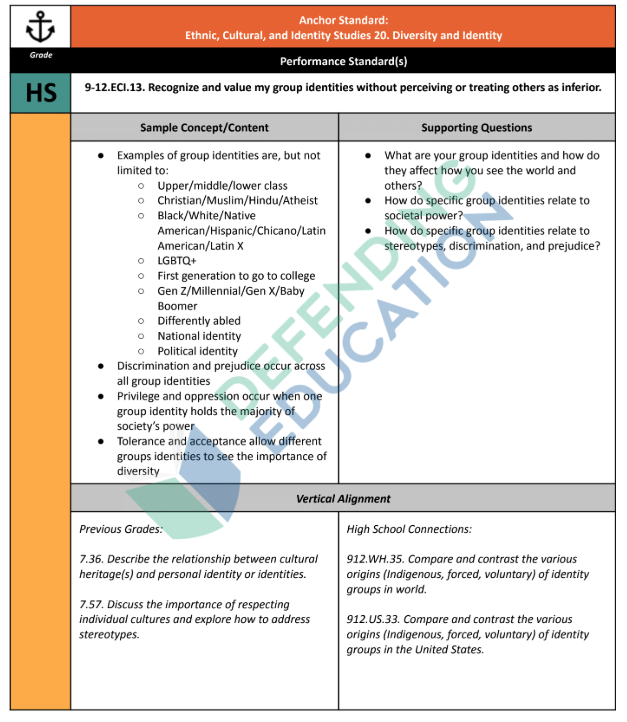
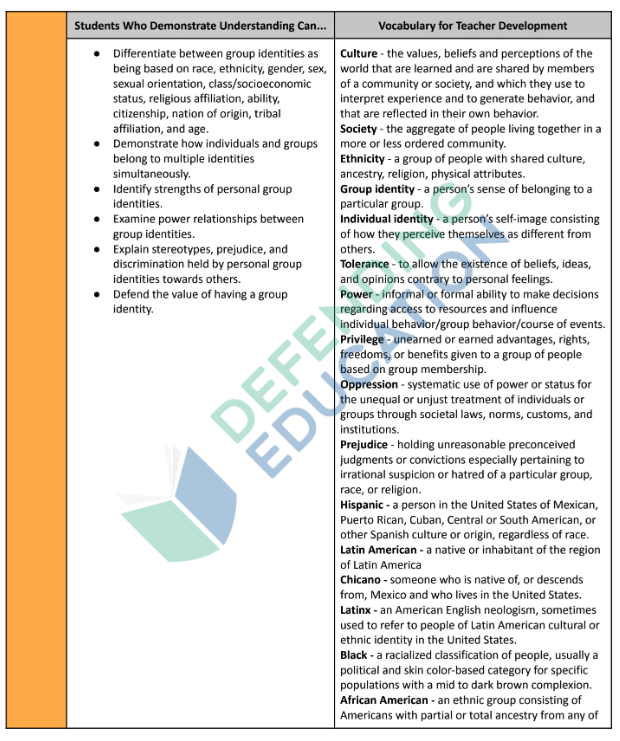
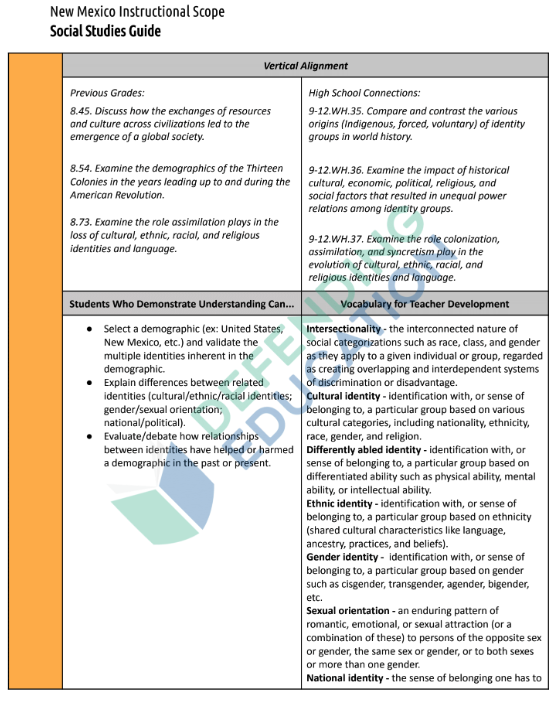
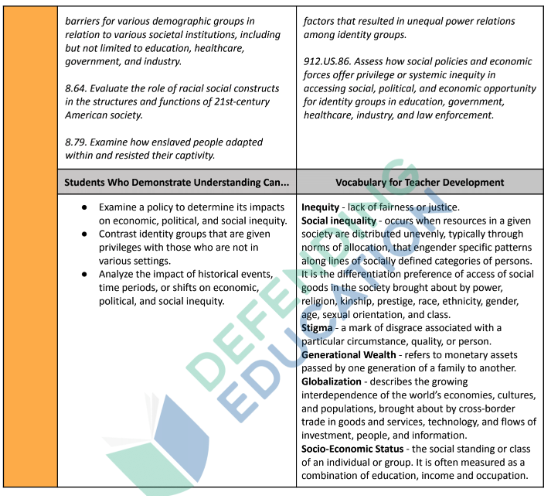
The standard also focuses on how “social polices and economic forces offer various identity groups privilege or systemic inequity in accessing social, political, and economic opportunity.” Under “social inequity,” the section lists as an example those who are “better educated parents invest more time and money in their children, who are more successful in the labor market.”
Ethnic, Cultural, and Identity Studies 22. Community Equity Building
The standard “Ethnic, Cultural, and Identity Studies 22. Community Equity Building” includes Black Lives Matter, the Southern Poverty Law Center (SPLC), #MeToo movement, and GLAAD. The section states that students who demonstrate understanding can…evaluate the success of different modern advocacy movements.”
Stay Informed