




The White River Valley Supervisory Union has an ‘Anti-Racism’ policy that promotes the tenets of Critical Race Theory (CRT), requires teachers & students to be trained to be anti-racists, establishes ‘Anti-Racist Hiring’ practices and introduces ‘alternatives to discipline’ to ‘reduce racial disparities in discipline and suspension.’
Incidents
SUMMARY
The White River Valley Supervisory Union, including its member school districts, has an “Anti-Racism” policy that promotes the tenets of Critical Race Theory (CRT), requires that teachers and students be trained to be anti-racists, establishes “Anti-Racist Hiring” practices, and introduces “alternatives to discipline” to “reduce racial disparities in discipline and suspension.”
ANTI-RACISM POLICY
Purpose
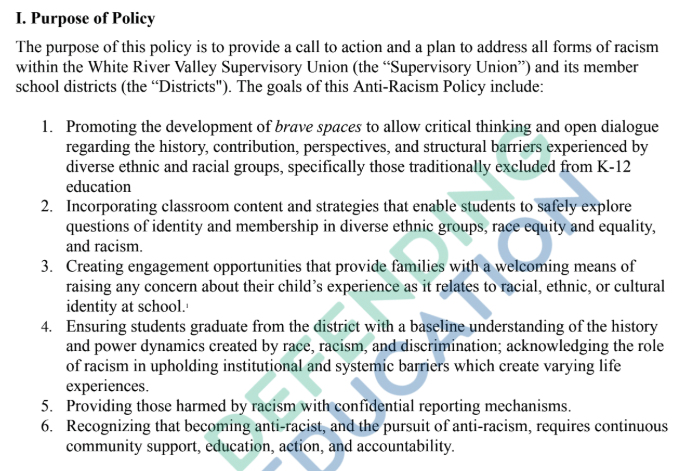
The Supervisory Union’s C30 – Anti-Racism Policy states that it is intended to “provide a call to action and a plan to address all forms of racism.” The goals of the policy include “promoting the development of brave spaces,” ensure that students “graduate from the district with a baseline understanding of the history and power dynamics created by race, racism, and discrimination; acknowledging the role of racism in upholding institutional and systemic barriers which create varying life experiences,” provide those “harmed by racism with confidential reporting mechanisms,” and to recognize that “becoming anti-racist, and the pursuit of anti-racism, requires continuous community support, education, action, and accountability.”
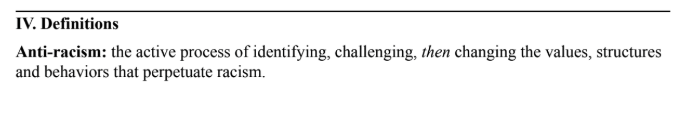
The policy defines “anti-racism” as the “active process of identifying, challenging, then changing the values, structures and behaviors that perpetuate racism.”
Statement
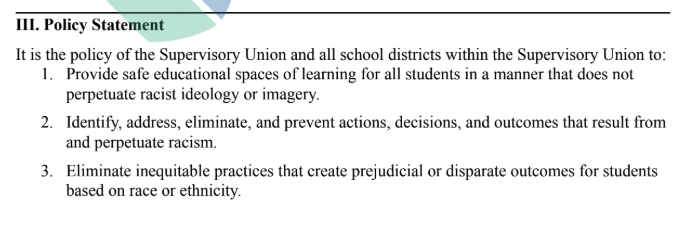
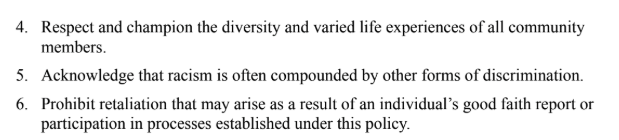
The policy statement calls for the Supervisory Union to “provide safe educational spaces of learning for all students in a manner that does not perpetuate racist ideology or imagery,” “identify, address, eliminate, and prevent actions, decisions, and outcomes that result from and perpetuate racism,” “eliminate inequitable practices that create prejudicial or disparate outcomes for students based on race or ethnicity,” and acknowledges that “racism is often compounded by other forms of discrimination.”
The policy also requires the establishment of an Anti-Racist Committee, the creation of an Anti-Racist Statement, the development of “Anti-Racist Hiring Practices” that “proactively seek to recruit and hire diverse faculty and staff to their schools, with a focus on retention,” climate assessments, and “alternatives to discipline.”
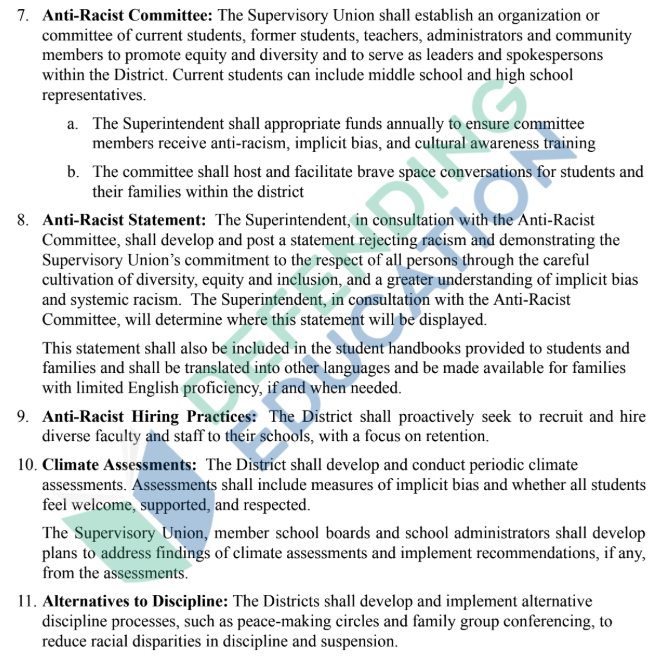
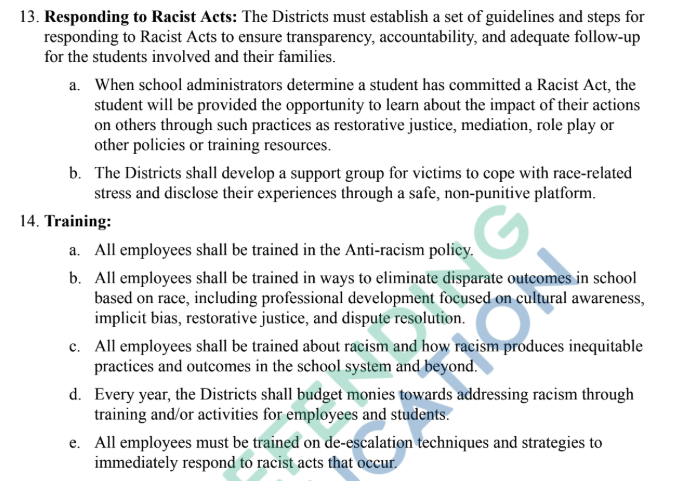
The policy also includes how Supervisory Union district’s are to respond to “racist acts” such as providing the “opportunity to learn about the impact of their actions on others through such practices as restorative justice, mediation, role play or other policies or training resources.”
The policy mandates that employees be “trained in ways to eliminate disparate outcomes in school based on race, including professional development focused on cultural awareness, implicit bias, restorative justice, and dispute resolution.” Employees will also be “trained about racism and how racism produces inequitable practices outcomes in the school system and beyond.”
Stay Informed