


San Diego Unified School District’s ‘Equity and Belonging website’ promotes programs and resources that include 28 sexual orientations and 9 gender identities; commits to “dismantling systems of oppression”
Incidents
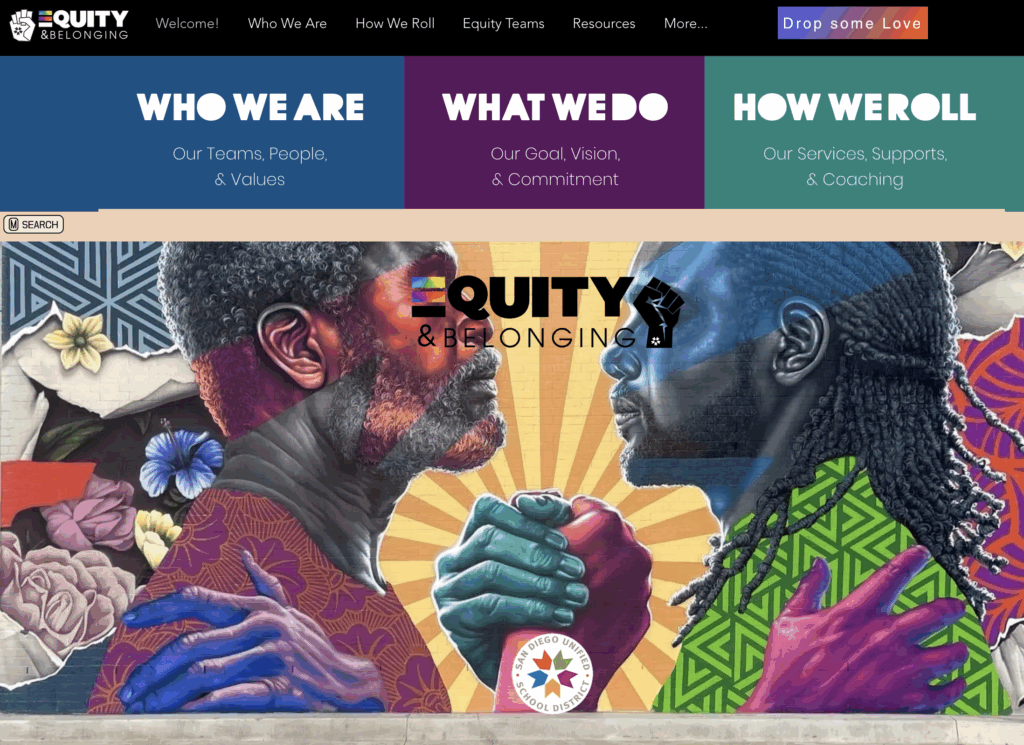
San Diego Unified School District’s (SDUSD) Equity & Belonging website lays out the policy position of the district on gender, race and immigration.
The California school district provides resources to students, parents and teachers, including resources from the Zinn Education Project, Black Lives Matter and GLSEN. SDUSD, through the “Equity Collective,” states that it “is committed to dismantling systems of oppression and inequity.”
“We will create equitable and inclusive schools that ensure students have what they need to be successful in school and life,” the website reads. “Working towards equity as a district requires proactive and continuous investment in historically marginalized groups who have endured centuries of systemic oppression.”
As part of an “FAQ for Educators and Families,” SDUSD states that LGBTQ+ inclusive curriculum is necessary because “homophobia, heterosexism, and transphobia are present in many of our schools and communities.”
In response to whether elementary school students are “too young to be introduced to this topic” they state: “Name-calling and using anti-gay and anti-trans slurs starts as early as kindergarten, 1st, and 2nd grades. At a very young age, children have already been introduced to information about LGBTQIA+ people, which is often based on misinformation and negative stereotypes.”
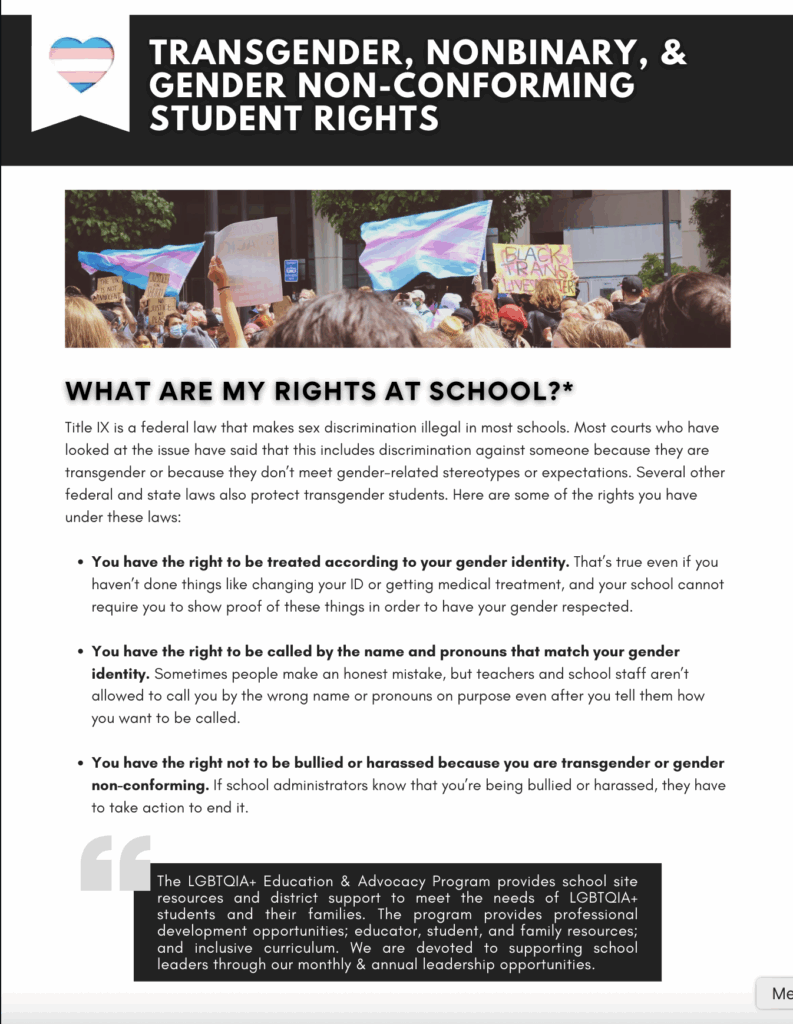
In response to Title IX, SDUSD asserts that “most courts who have looked at the issue have said that this includes discrimination against someone because they are transgender or because they don’t meet gender-related stereotypes of expectations.” However, the 2024 Biden-era Title IX regulations, which interpreted “sex discrimination” to include gender identity, have since been vacated nationwide
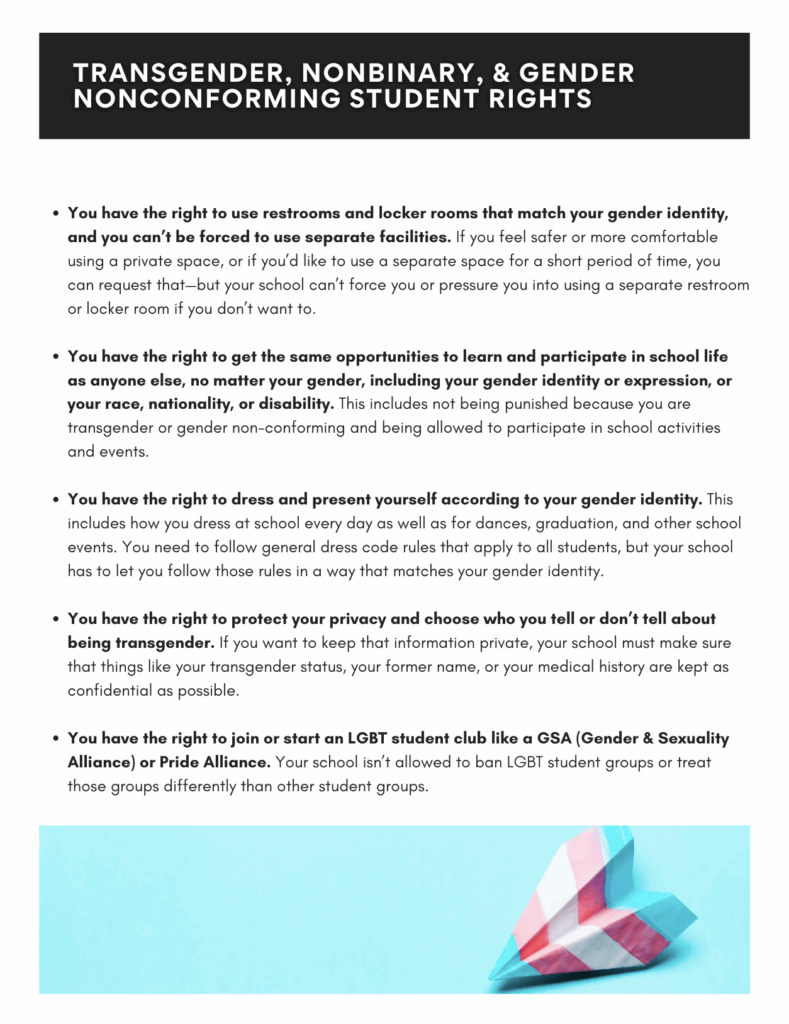
They also cite federal and state laws that protect transgender students and give them the right to:
- Be treated according to your gender identity
- Be called by the name and pronouns that match your gender identity
- Use restrooms and locker rooms that match your gender identity, and state you can’t be forced to use separate facilities
- Dress and present yourself according to your gender identity
- Protect your privacy and choose who you tell or don’t tell about being transgender
Suggested lessons include topics like “Trans kids in the Boy Scouts,” the “Lavender Scare” and “Don’t Ask, Don’t Tell.” Other suggested resources come from the Human Rights Campaign’s “Welcoming Schools” program and Gay, Lesbian & Straight Education Network (GLSEN).
SDUSD also created the “Responding to Resistance” guide for “responding to challenging conversations around LGBTQIA+ Education and Advocacy,” which argues that what is required by the community is a “metaphorical band-aid rip.”
“Once you do, you’ll recognize that for your small amount of discomfort, you are engaging in allyship in a way that literally saves lives,” SDUSD claims. “Silence can no longer be our default. We can ALL become more knowledgeable by researching and investing time into our own self-education.”
In response to religious concerns about LGBTQ education, SDUSD states that “students need to be affirmed for who they are” and that they are “simply referring to people from a wide variety of communities who exist in our largest society AND within our school community.”
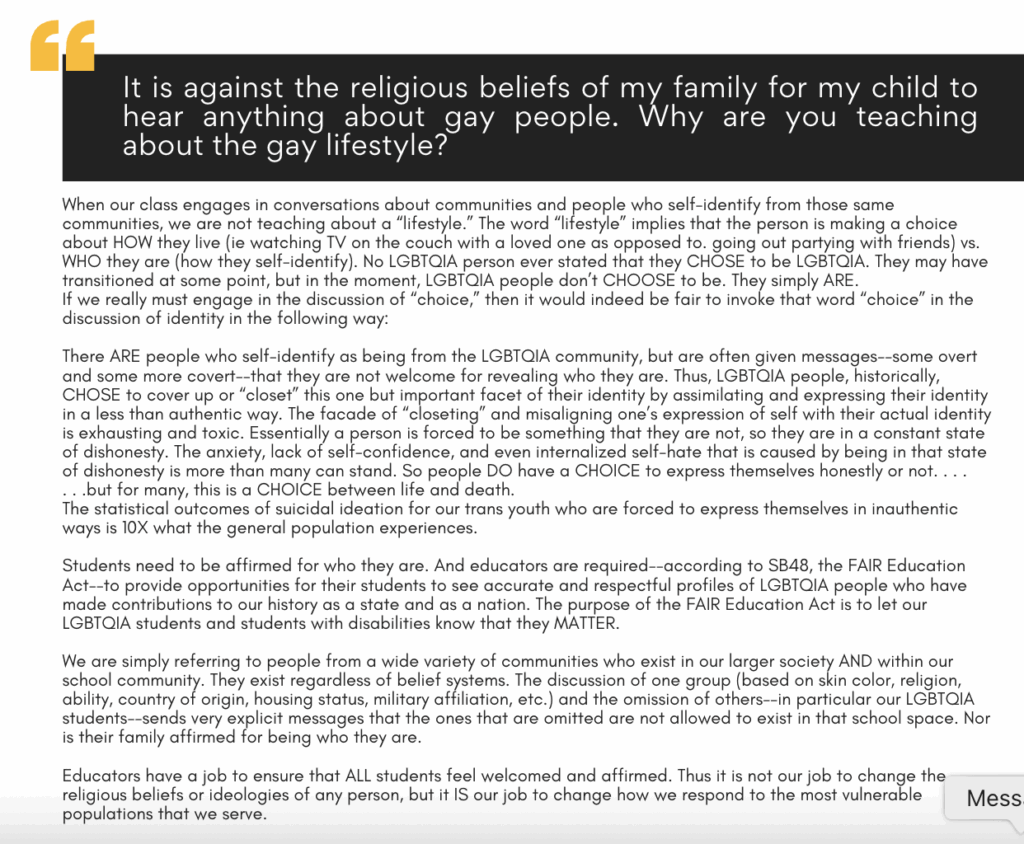
In response to a question about why people should use a student’s preferred pronouns, SDUSD says it “want[s] to validate each student’s identity so as to decrease the current dismal statistics around bullying, suicide and homicide.”
“It is worth noting that all people can occasionally slip … especially with using pronouns that are not what we’re accustomed to using with a given student,” the guidance reads. “Specifically, this would be an extraordinary opportunity for the person who made the mistake — educators and students alike — to offer a brief apology (no extensive fanfare, please), commit to being careful, and easing back into whatever conversation was happening before the deadnaming or misuse of pronoun happened.”
If educators refuse to use a student’s preferred name and pronouns, SDUSD states that the educator could be subject to discipline.
Another resource is the #TruthBeTold Messaging Guide from the 2021 National Days of Action, which was co-sponsored by Black Lives Matter and the Zinn Education Project. The messaging guide, published by the African American Policy Forum, discusses Critical Race Theory and intersectionality. One part states: “One of the biggest lies in this coordinated disinformation campaign is that critical race
theory is about labeling individual people ‘racist'” and “Once a fringe element outside of mainstream politics, far right extremist strategies now
occupy the center of power within the GOP.”
On the resources page of the website, topics include “Equity & Belonging,” “Ethnic Studies,” “Restorative Justice Practices” and “Youth Advocacy,” which discuss racism, homophobia, sexism, anti-bias tools, implicit bias, racial microaggressions, anti-ableism, “liberationist pedagogy” and “culturally responsive pedagogy,” to name a few.
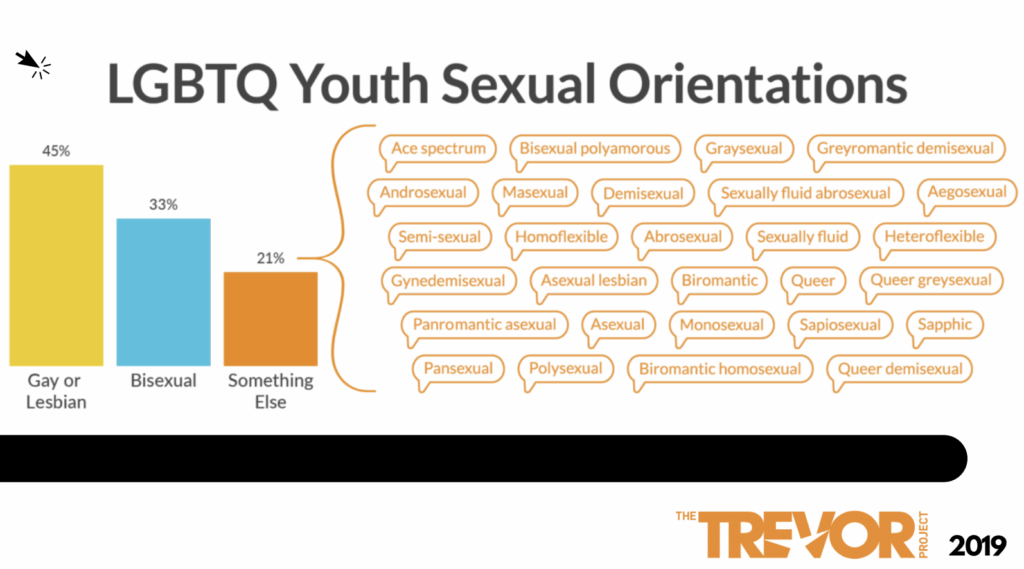
The LGBTQIA+ Terminology-Student Panel Welcome slides detail terms like third-gender, agender and genderfluid.
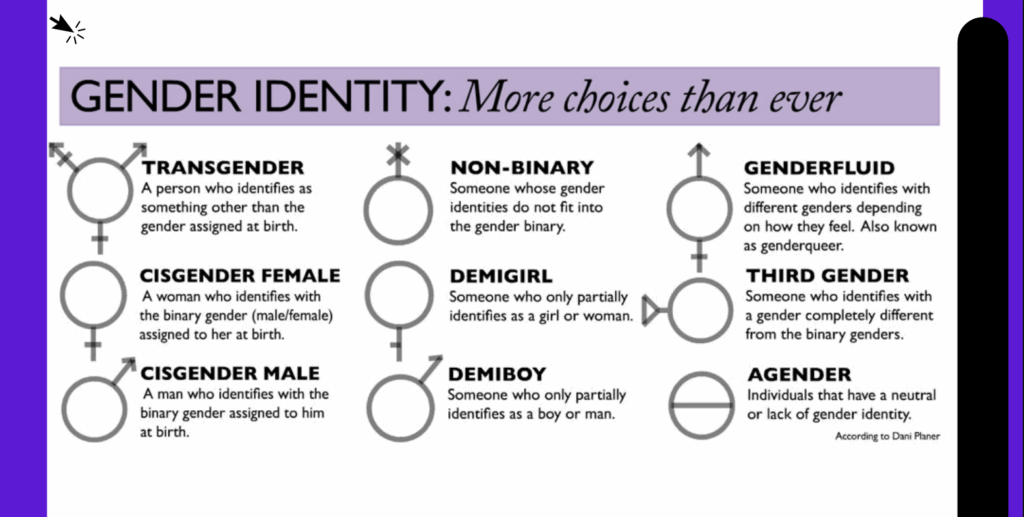
Another slide details the percentages of youth sexual orientations, which appears to be produced by The Trevor Project.
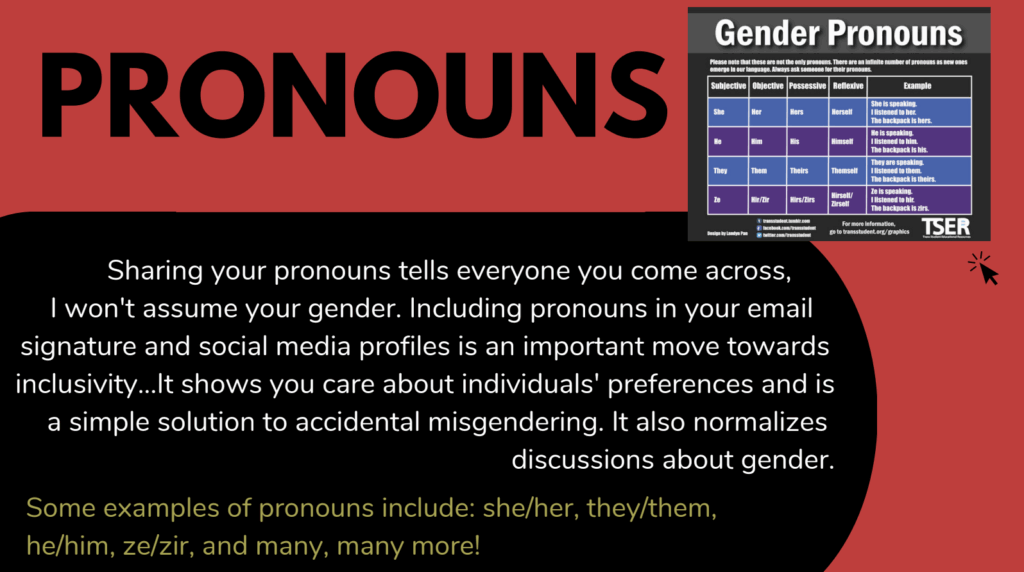
The slides about pronouns explain that “sharing your pronouns tells everyone you come across, I won’t assume your gender.”
“Including pronouns in your email signature and social media profiles is an important move towards inclusivity … It shows you care about individuals’ preferences and is a simple solution to accidental misgendering. It also normalizes discussions about gender,” the slide reads. “Some examples of pronouns include: she/her, they/them, he/him, ze/zir, and many, many more!”
As part of its “Post Election Support Series,” for “Teaching about Race & Racism,” SDUSD links to resources from the Zinn Education Project, the National Education Association, the Center for Racial Justice in Education and the Smithsonian’s Educator Tools for Teaching about Race. The Zinn Education Project’s “Teaching People’s History” cites readings by progressive activist and author Bettina Love, ACLU lawyer and trans rights activist Chase Strangio and Critical Race Theory scholar Kimberlé Crenshaw.”
It also discusses the “right-wing website The Daily Wire” and its goals “to incite harassment and speak fear” in response to their criticism of the Zinn Education Project’s Pledge to Teach Truth.
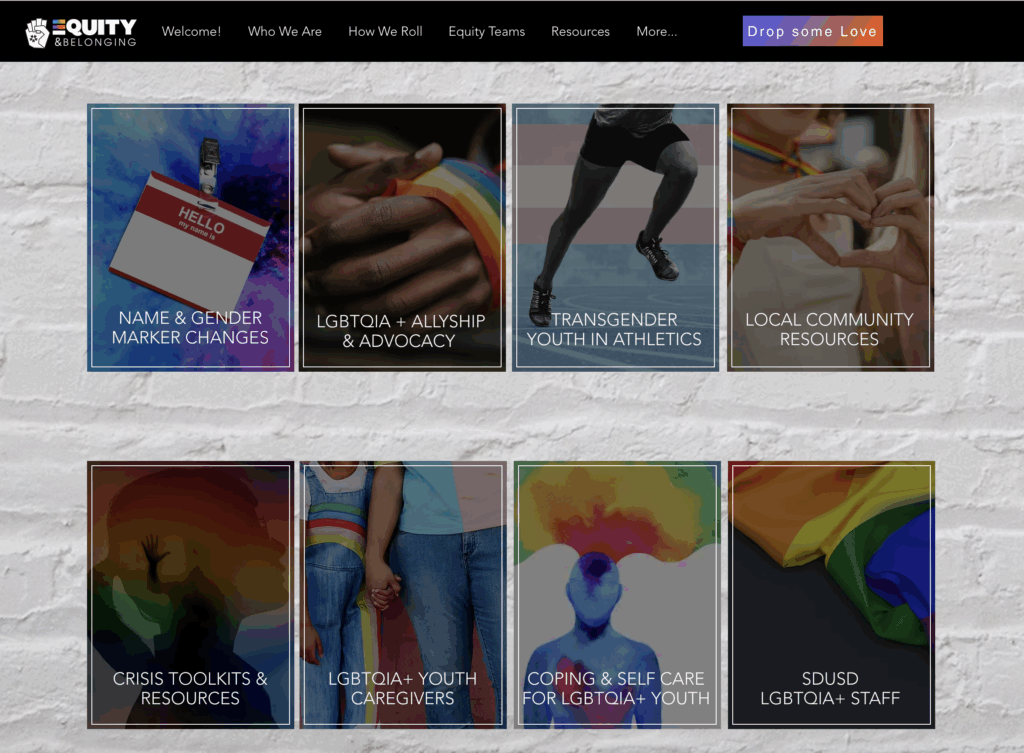
The “Coping & Self Care for LGBTQIA+ Youth” page, which is also part of the “Post Election Support Series,” includes a resource for “Coping with Intense Emotions Around the Presidential Election” that links to a Trevor Project webpage no longer available. Another links to a “Gender Affirming Health Care” guide by the LGBTQ+ Healthcare Directory.
The “Transgender Youth in Athletics” section links to a GLSEN resource about gender affirming and inclusive athletics participation and a Gender Diverse Youth Sport Inclusivity Toolkit.
Some resource categories in the “LGBTQIA+ Allyship & Advocacy” section include the Human Rights Campaign’s “Guidebook for Action,” “Being an LGBTQ+ Ally” and GLSEN’s “Allyship in Action Guide.”
The “Name & Gender Marker Changes” section walks through the process of name and gender changes and the LGBTQ+ Inclusive Curriculum includes the “Trans-Affirming School Project Guide,” “Developing LGBT Inclusive Classrooms” and “Teaching LGBTQ+ History.”
Stay Informed