



Oswego District 308’s Equity Roadmap: elementary-high School equity trainings with “privilege” lists, prioritizing recruitment and advancement of “diverse” staff; led by Director who called Charlie Kirk a “modern day Klans man”
Incidents
SUMMARY
Through several Freedom of Information Act requests shared with Defending Education by a concerned parent, we uncovered Oswego District 308’s equity roadmap, with plans to continue through 2026.
In September 2025, two Oswego 308 employees faced backlash over social media posts celebrating or justifying political violence, prompting parent complaints and assurances from the superintendent. However, both staff members remain employed. The controversy unfolded alongside extensive, taxpayer-funded DEI initiatives, spanning equity trainings for students and staff; student trainings where kids were separated based on racial background; partnerships centered on “critical consciousness;” and district policies explicitly committing to anti-racism, marginalized identities, and culturally responsive pedagogy through 2026.
FACULTY CONTROVERSY
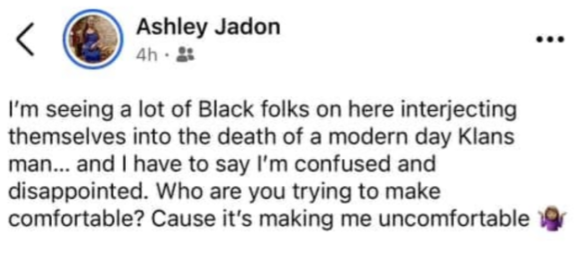
The district’s K-8 Assistant Superintendent and Director of Equity and Engagement came under fire in September 2025. On Facebook, using the name “‘Ashley Jadon,'” she wrote in reference to Charlie Kirk, “‘I’m seeing a lot of Black folks on here interjecting themselves into the death of a modern day Klans man… and I have to say I’m confused and disappointed. Who are you trying to make comfortable? Cause it’s making me uncomfortable.’”
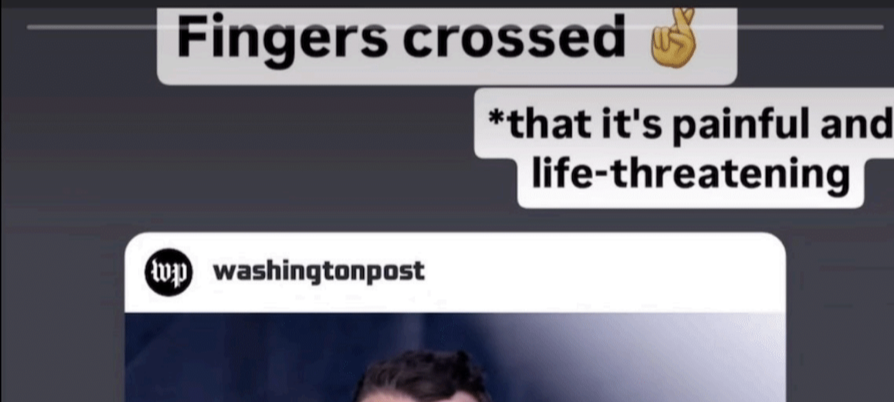
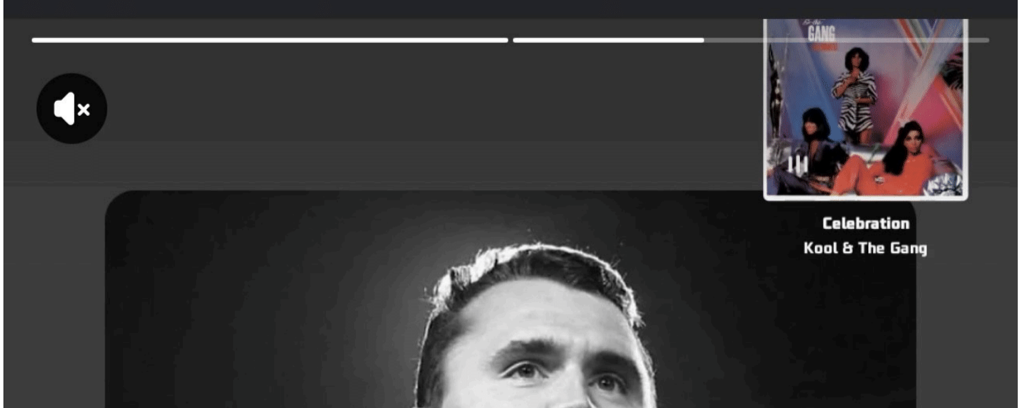
Another faculty member, a swim coach and special education teacher, posted a story series to Instagram shortly after Charlie Kirk was shot. He wrote, “Fingers crossed” “*that it’s painful and life-threatening.” Once Kirk was pronounced dead, this teacher posted another story with the song “Celebration” attached.
Multiple parents sent emails to the district’s superintendent raising concerns about the social media posts by both individuals. One response from the superintendent read, “While I cannot discuss specific personnel matters publicly, I can assure you that this matter will be reviewed through our appropriate channels in accordance with our policies and procedures. Our commitment to maintaining professional standards and ensuring a safe, respectful learning for all students remains our highest priority.”
In a separate reply to one parent, the superintendent wrote, “While all staff members have constitutional rights to personal expression outside of their professional duties, when posts potentially violate board policy, we investigate through established procedures.”

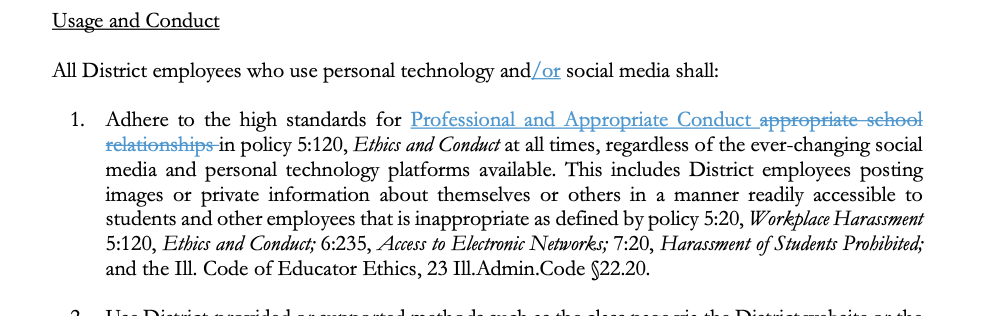
Pertinent policies for Oswego faculty members, referenced on the district’s website, call on employees to ” Demonstrate a high level of professional judgment.” Both faculty members remain in their roles as of 2026. Additionally, the district requires that all employees who use personal technology and/or social media must adhere to the standards for Professional and Appropriate Conduct at all times.
EQUITY TRAININGS
District 308’s 2025 Annual Report Summary on DEI, obtained via FOIA, revealed that students from elementary through high school participated in trainings related to “Personal and Instructional dimensions of equity.” For elementary students, this included “the Cultivating Genius cohort training for the 5 Pursuits of Learning.”

“Cultivating Genius” refers to the 2020 book by Gholnescar Muhammad, a “leading voice for equity, anti-racism, and culturally and historically responsive teaching.” The book itself is a “historically responsive literacy framework” that highlights pedagogy that “honor the histories, identities, and literary practices of all youth from diverse cultures, and especially those who have been traditionally underserved in schools.” The framework in the book is “grounded in the history of Black literary societies.”
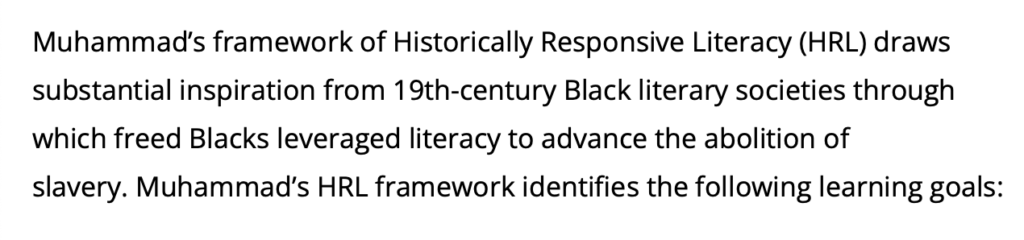
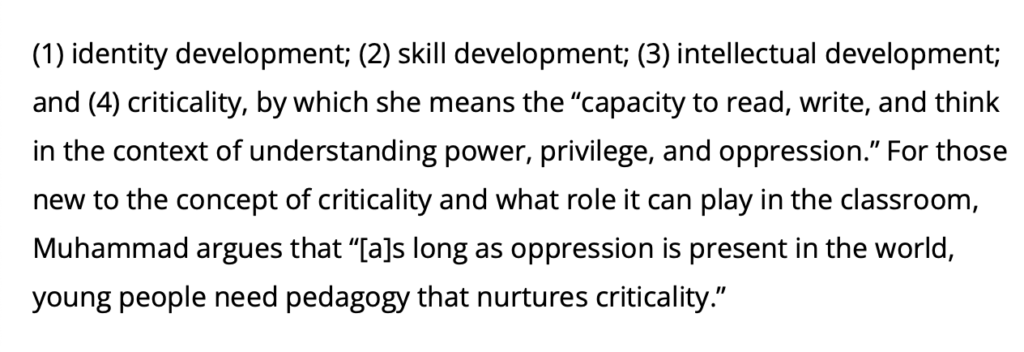
Muhammad argues that youth literacy is inextricably linked to oppression: “‘[the] capacity to read, write, and think in the context of understanding power, privilege, and oppression.'” Furthermore, one of the “5 Pursuits of Learning” includes “criticality.” For Muhammad, this means: “‘[A]s long as oppression is present in the world, young people need pedagogy that nurtures criticality.'”
Elementary staff also received at least two trainings during the school year.
FOIA investigation results revealed that one middle school’s student equity assemblies, which took place during Student Support Time, were segregated based on racial background. Parents were not notified in advance. They were notified three days after the first meeting took place with a smaller group.
Following her meeting with students, the equity director wrote, “This week was my 1st encounter with students from marginalized groups. There is something to be said about a group of students who come together with similar identities and backgrounds, and the confidence it builds within them.”
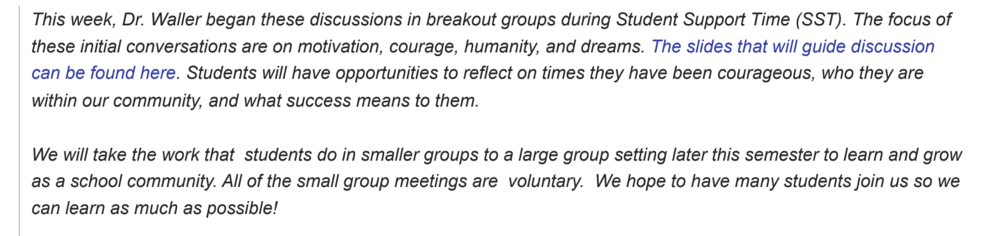
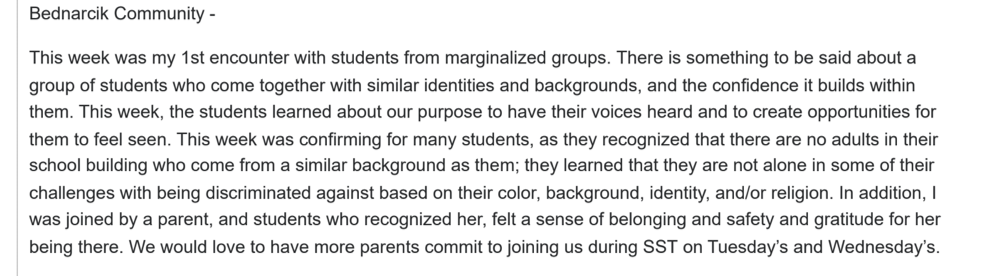
The equity director continued, sharing that her next meeting would be with students “who identify as White” in order to “encourage empathy and allyship” and “explain the purpose of the other small groups.”

According to the equity report, “Junior High engaged in at least two trainings throughout the year” related to “Personal and Instructional dimensions of equity.” Moreover, middle school students received two equity trainings. High school core departments also held “specific content/equity training.” In addition to specific training, high school students also received Lunch & Learn opportunities centered on “LGBTQ+, Microaggressions, Ramadan.”

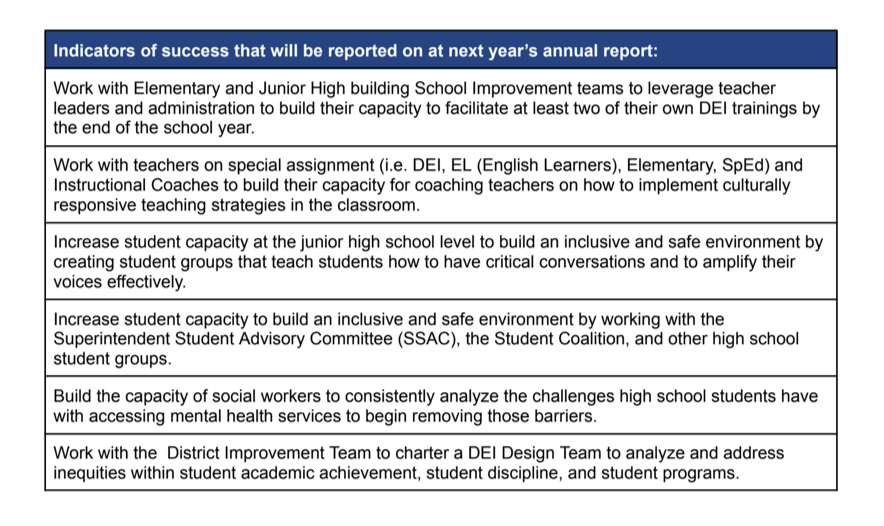
This report also revealed the district’s plans for evaluating success in 2026. The success indicators include: more DEI trainings in the elementary and middle school, more culturally responsive teaching strategies in the classroom, and the creation of a DEI Design Team “to analyze and address inequities within student academic achievement, student discipline, and student programs.”
Additionally, at the end of the report, in a subsection titled “Support for Student Learning,” the district reinforces the importance of prioritizing the safety of students who come from historically marginalized backgrounds. The section reads, “Our school environments are challenging with today’s political climate … This is causing an influx of negative and harmful experiences for ALL students, but especially students who identify with historically marginalized backgrounds.”
The paragraph continues, “Our district serves a majority of students who come from historically marginalized backgrounds, thus we need to prioritize their safety to be successful in school.”

The closing section shares that Oswego 308 will partner with other districts and Waubonsee Community College to host their first “Student DEI Conference.”

EQUITY FRAMEWORK
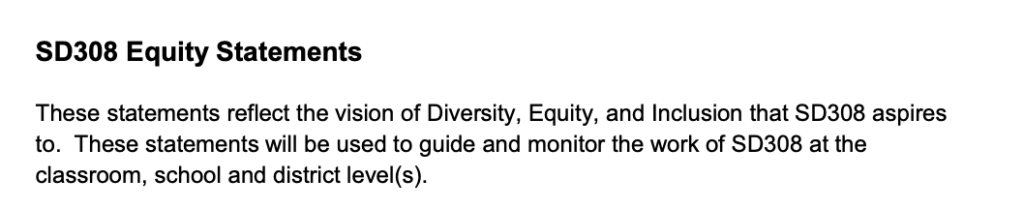
Another section of the report emphasizing “Our Journey to 2026” reiterates the importance of equity. Under “Support for Student Learning,” the first goal is to: “Center equity in our policies and programs by amplifying student voice and acting on District Equity Statements.'”
The “District Equity Statements” include “Curriculum,” “Racism,” “Marginalized Identities,” “Recruitment and Retention of Staff,” “Student Voice,” “Professional Development,” “Climate for Learning,” “Policy,” and “Community Partnerships.” Under the “Racism” section, the policy reads, “We will acknowledge the existence of racism in our schools and community. We will address injustices that lead to racial inequities and work to educate and change behaviors to ensure an inclusive and equitable school community.”

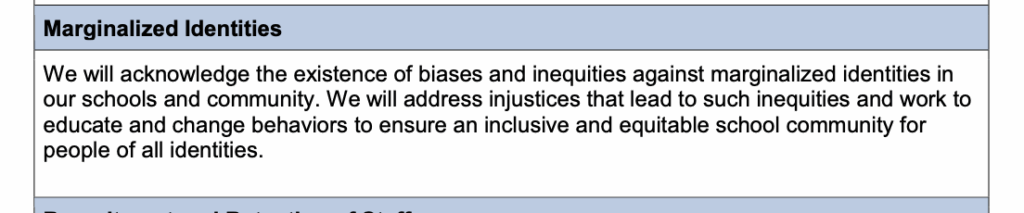
The section on Marginalized Identities reads, “We will acknowledge the existence of biases and inequities against marginalized identities in our schools and community. We will address injustices that lead to such inequities and work to educate and change behaviors to ensure an inclusive and equitable school community for people of all identities.”
The following section titled “Recruitment and Retention of Staff” acknowledges that the district will “prioritize the recruitment, retention, and advancement of administrators and staff with diverse backgrounds…”

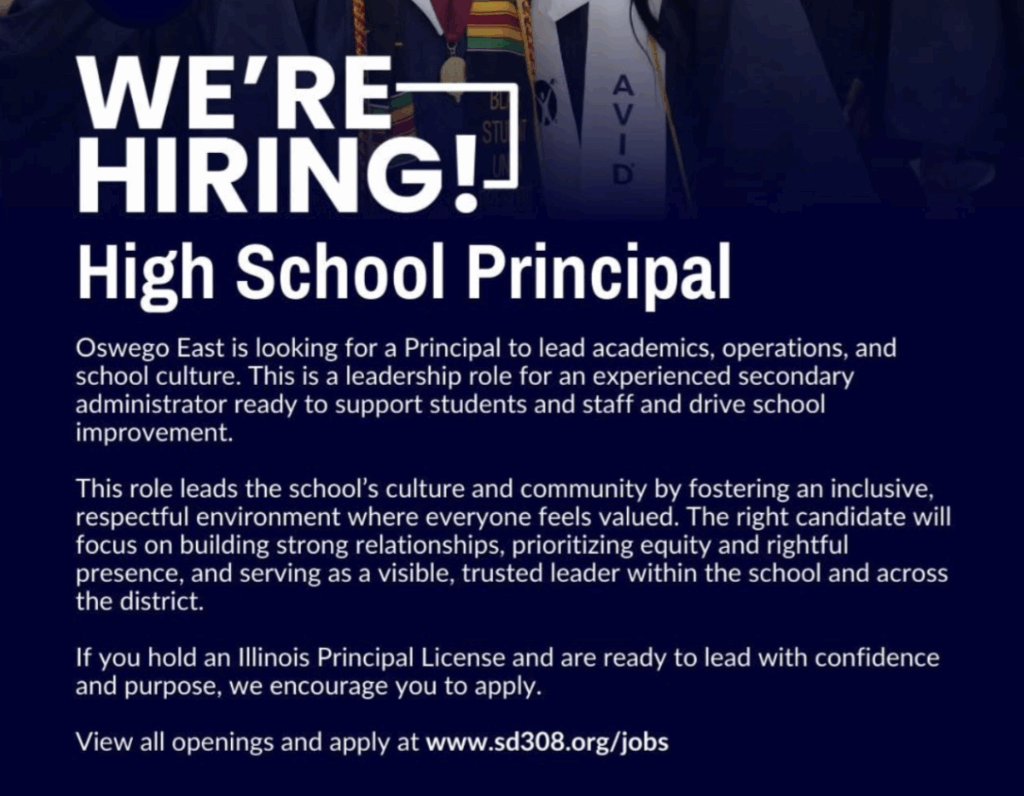
A previous job posting from the district affirmed its commitment to equity, asking for a high school principal who would prioritize “equity and rightful presence.”
EQUITY PARTNERSHIPS
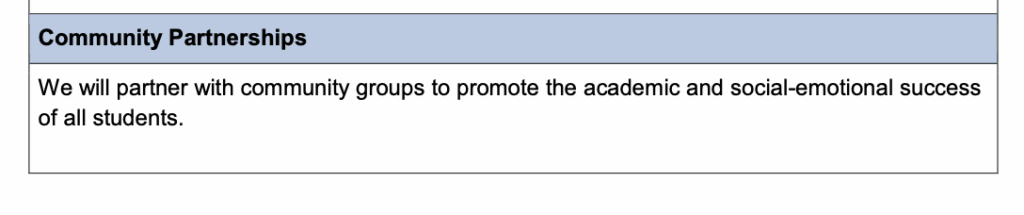
The section on “Community Partnerships” reads, “We will partner with community groups to promote the academic and social-emotional success of all students.”
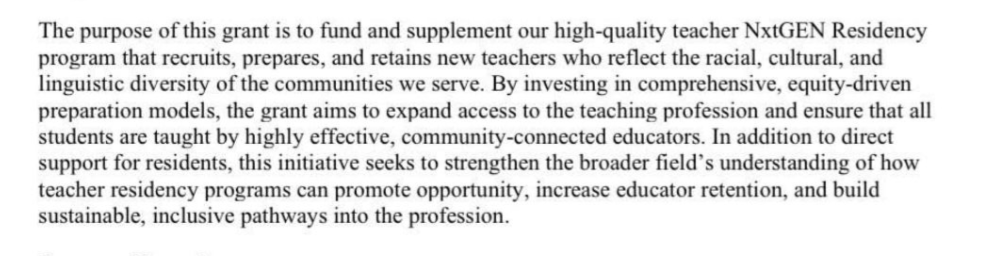
One community partnership in the district is with the National Center for Teacher Residencies (NCTR), carrying out the NXTGen Residency program. This program “recruits, prepares, and retains new teachers who reflect the racial, cultural, and linguistic diversity of the communities we serve.” The program hopes to recruit and retain more diverse teachers, because “we [the district] recognize a pressing need to close this representation gap.”
The document read, “we are advancing the vision of the NxtGEN Residency program: a community-embedded pipeline that attracts, prepares, and retains diverse, mission-aligned educators.”

This grant was in the amount of $75,000.

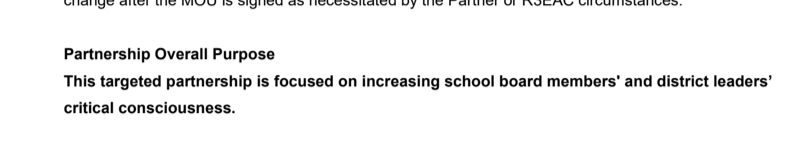
Beyond these initiatives, Oswego 308 underwent another partnership with the Midwest & Plains Equity Assistance Center from October 2023 to March 2024. The overall purpose, according to the “Memorandum of Understanding,” was to increase “school board members’ and district leaders’ critical consciousness.”

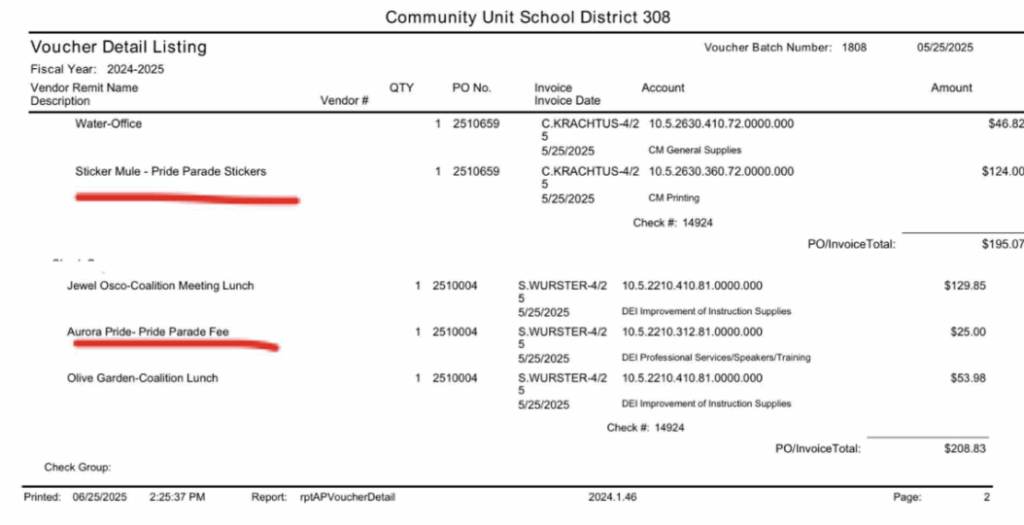
During the timeframe of the partnership, the district spent taxpayer dollars on “DEI Improvement of Instruction Supplies” as well as “DEI Professional Services.” Specific items included “Pride Parade Stickers” as well as another item reading “Aurora Pride – Pride Parade Fee.”
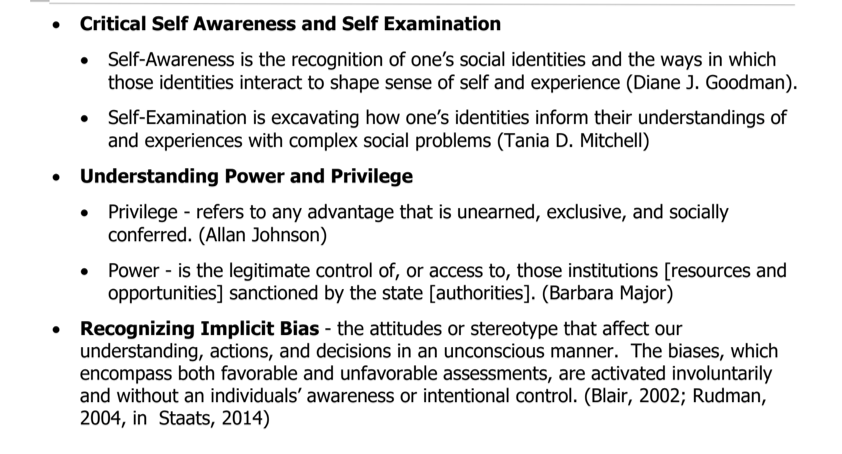
One of the trainings held for district personnel and students titled “Understanding and Disrupting Microaggressions through Critical Awareness in the School Community” consisted of a “critical consciousness” session, through which participants could examine their identities, understand their privilege, and recognize implicit biases.
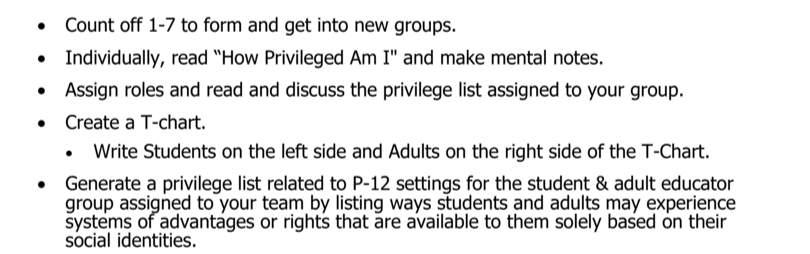
Participants were then asked to read “How Privileged Am I” and rank their privilege in a group of students and educators.
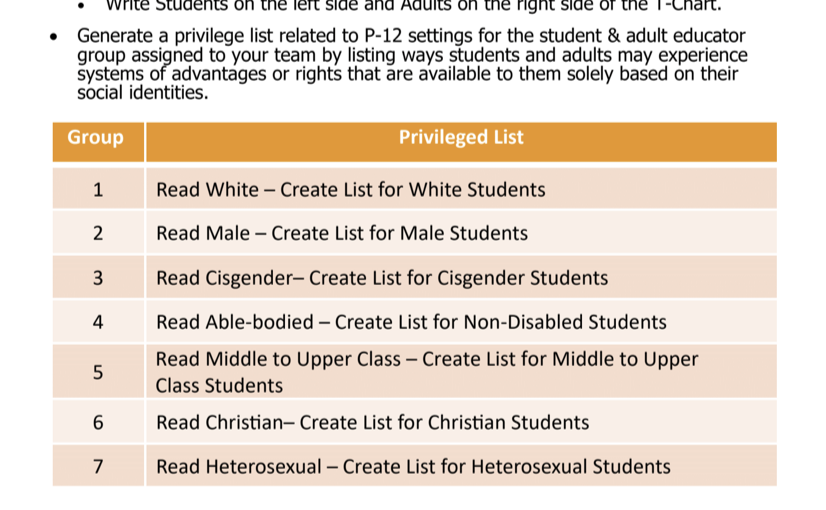
Privilege referred to students who were “White,” “Male,” “Cisgender,” “Able-bodied,” “Middle to Upper Class,” “Christian,” and/or “Heterosexual.” Teams were then asked to generate a list of ways those on the “Privileged List” experience “advantages or rights … solely based on their social identities.”
This agency operates in multiple states, carrying out professional learning opportunities and other assistance projects to state and local educational agencies.
Stay Informed