




National Education Association’s upcoming “Advancing LGBTQ+ Justice and Transgender Advocacy” training includes employee transition guides, promotes a “Race Class Gender” narrative and claims opponents use “strategic racism” and transphobia that “harm us all”
Incidents
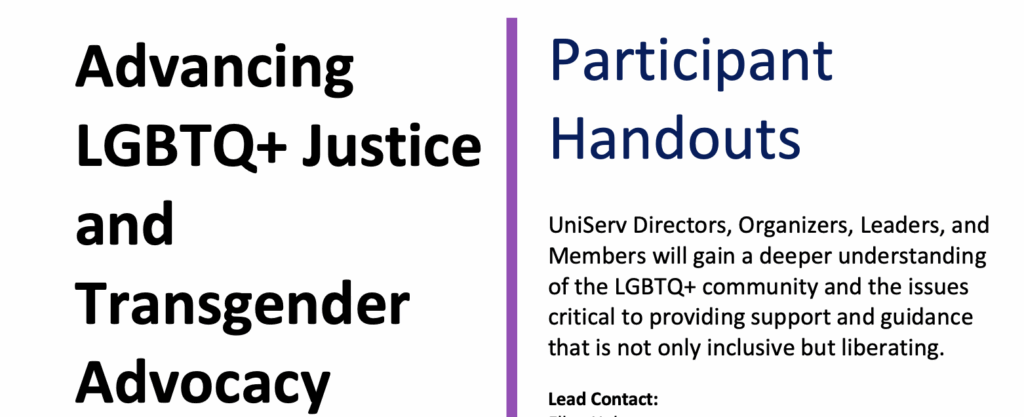
The National Education Association (NEA) – made up of more than 3,000,000 educators, staff, parents, and other stakeholders – will host an “Advancing LGBTQ+ Justice and Transgender Advocacy” training as part of its 2025-26 Focus Academy. This training is scheduled for December 2 to 4, 2025, and aims to provide “support and guidance that is not only inclusive but liberating.”
The goals of the training session include, but are not limited to, “dismantling systems of privilege and oppression as it relates to LGBTQ+ educators and students” and “deepen[ing] skills and strategies to confront implicit bias, micro-aggressions and stereotypes”.
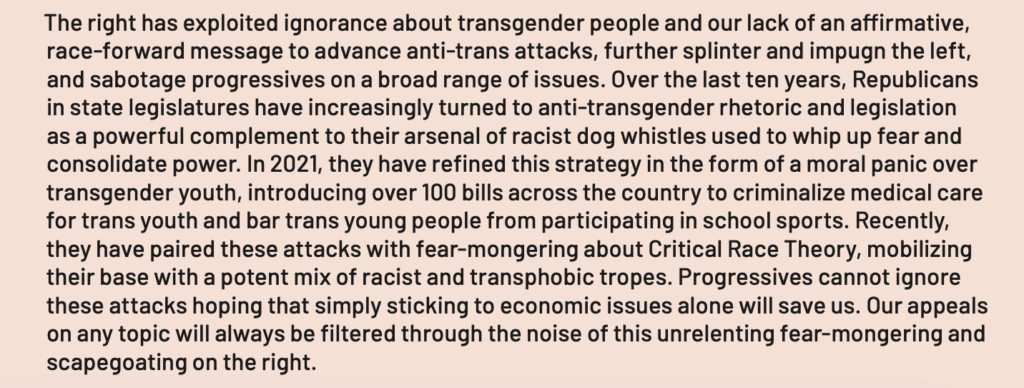
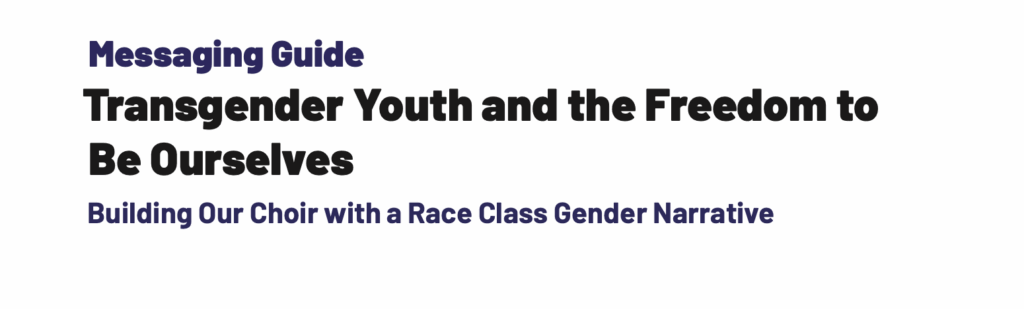
A section in the Participant Handout titled “Messaging Guide / Transgender Youth and the Freedom to Be Ourselves / Building Our Choir with a Race Class Gender Narrative,” calls out “Republicans” and “their arsenal of racist dog whistles … mobilizing their base with a potent mix of racist and transphobic tropes.”
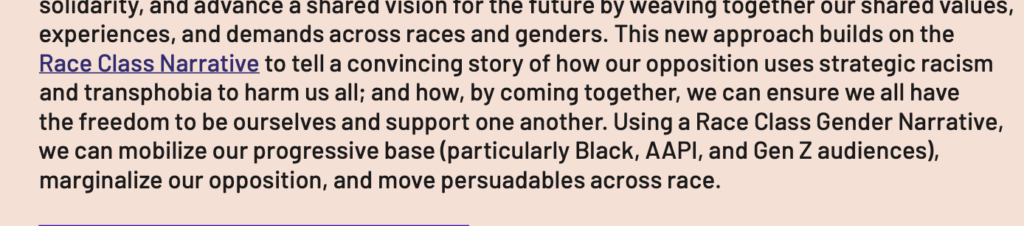
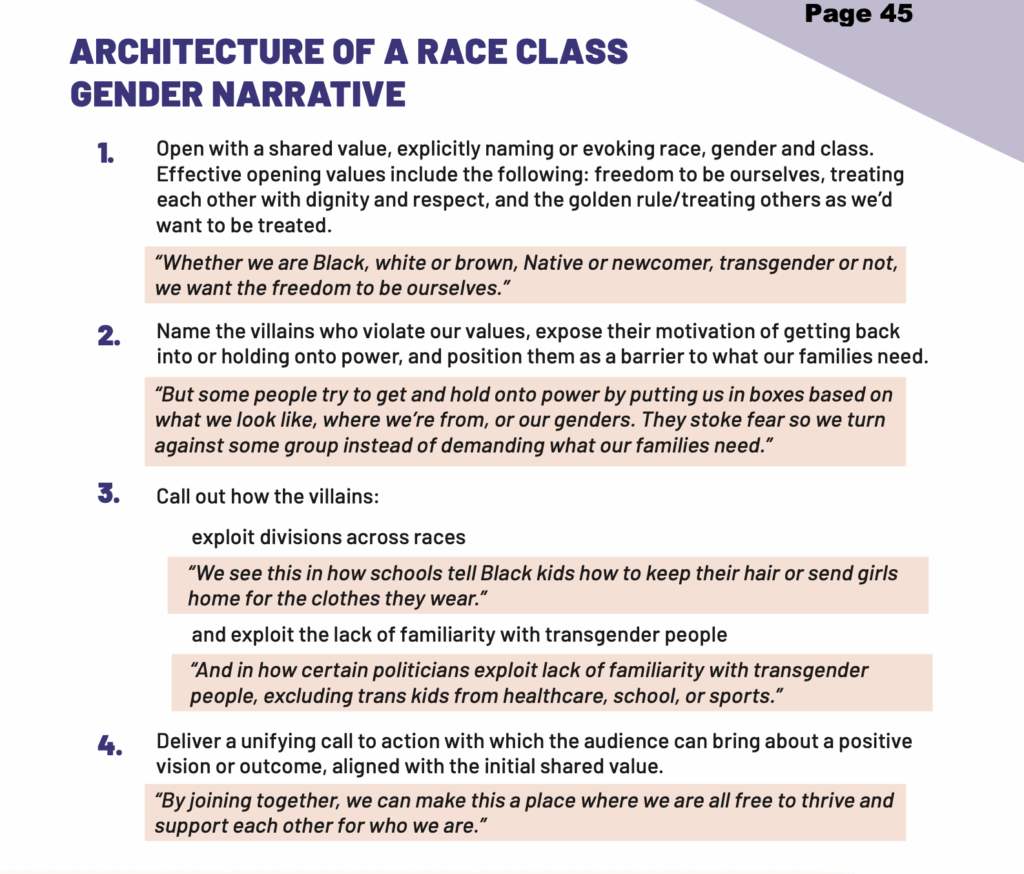
The NEA asks its participants to use a “Race Class Gender Narrative” to “tell a convincing story of how our opposition uses strategic racism and transphobia to harm us all.”
Within this framework, the NEA provides information on how to craft a “Race Class Gender Narrative,” offering examples and “explicitly naming or evoking race, gender, and class,” as pictured below:
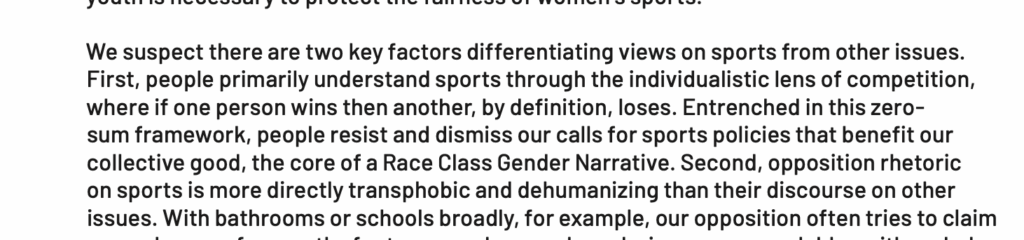
The NEA then utilizes the “Race Class Gender Narrative” in the context of women’s sports, citing that the opposition uses the “physicality of the issue to directly spout dehumanizing stereotypes.”
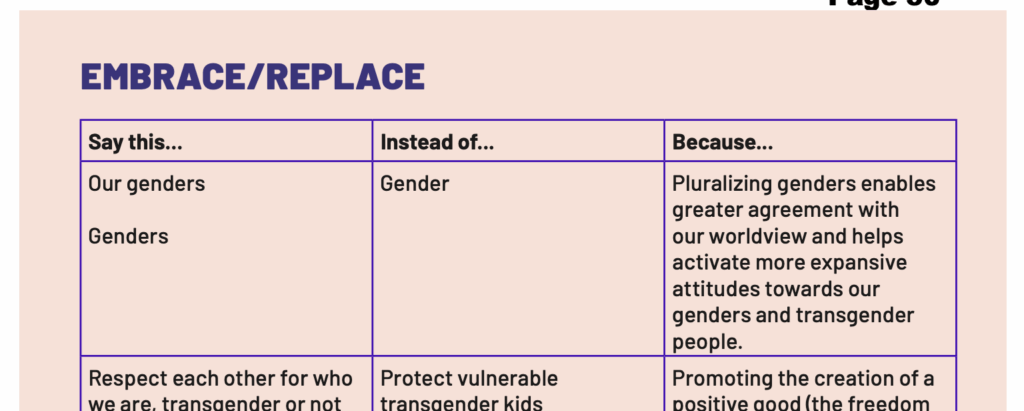
In the following section in the training titled “Embrace/Replace,” the NEA promotes the pluralization of gender, arguing teachers should say “our genders” and “genders” instead of “gender” in order to “activate more expansive attitudes towards our genders and transgender people.”
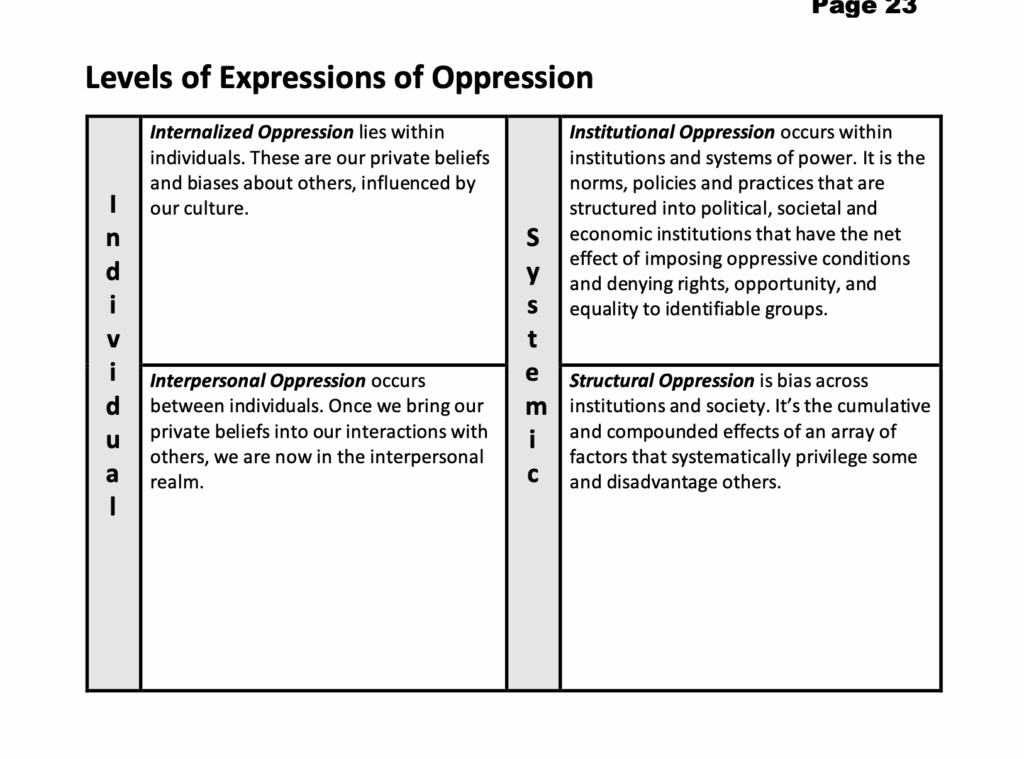
In a section titled “Expressions of Oppression,” the NEA discusses four levels of oppression: structural oppression, institutional oppression, internalized oppression, and interpersonal oppression. After this explanation, the training presents 10 scenarios of oppression and asks participants to assign a category of oppression to each.
The training document also includes Cornell University’s “Transgender Guide to Transitioning & Gender Affirmation in the Workplace,” which outlines how employees can “transition” and provides sample Transition Plans and a “Sample Employee Transition Announcement Email.”
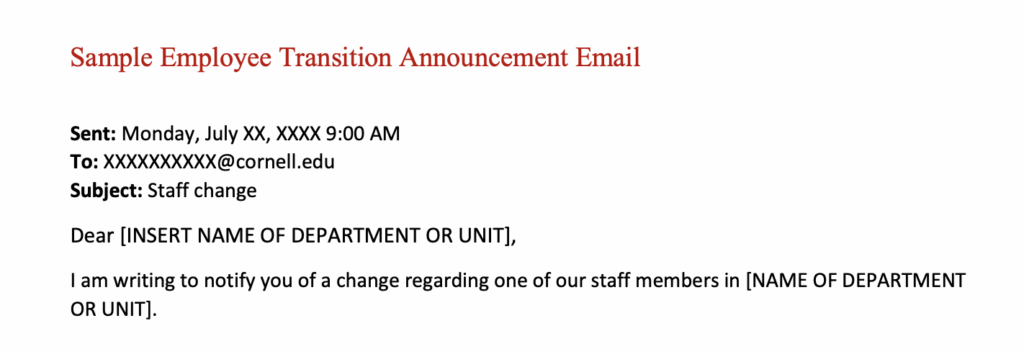
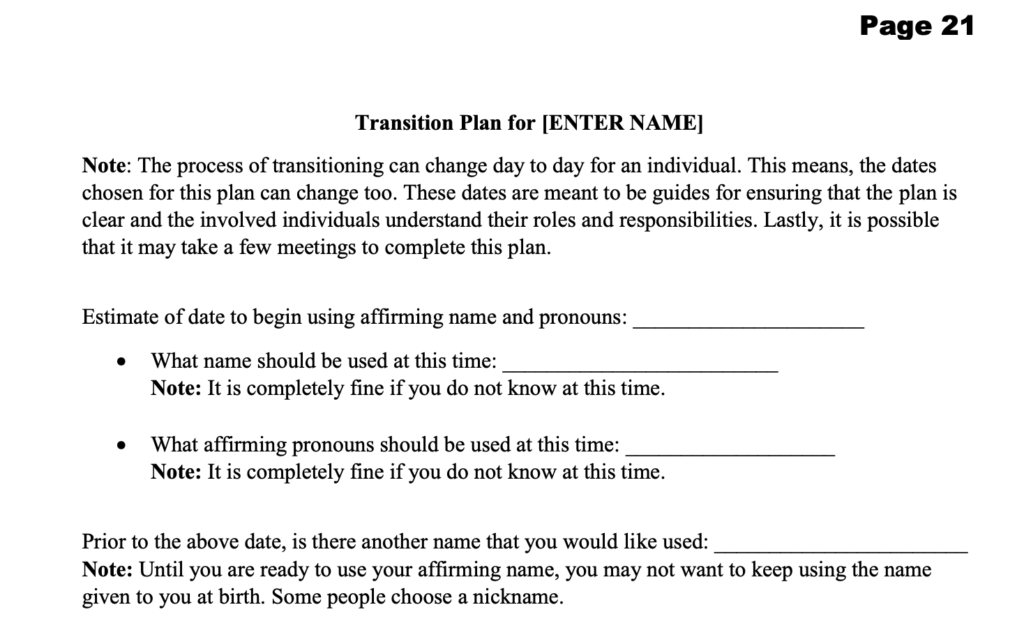
In this same handout document, the NEA discusses the importance of pronouns, asking participants to be the first in a given setting to share their pronouns.
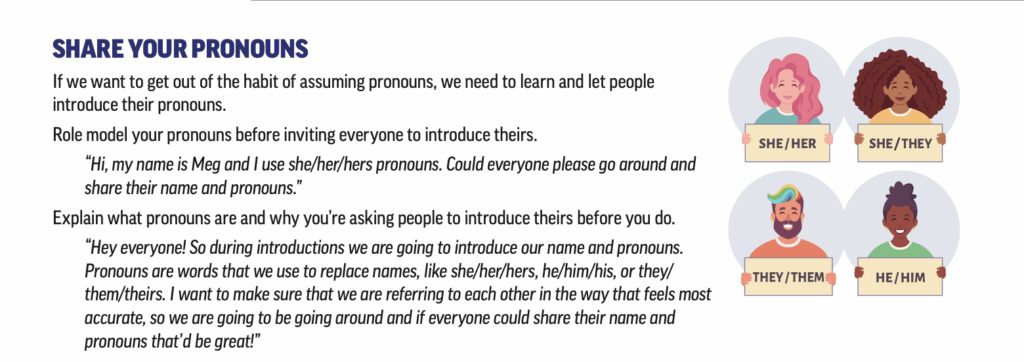
The NEA continues, explaining that pronouns are important tools to avoid gender assumptions. The NEA suggests that participants be vigilant about including their pronouns on any identification, even suggesting that participants purchase pronoun pins if they can’t alter their identification badge.

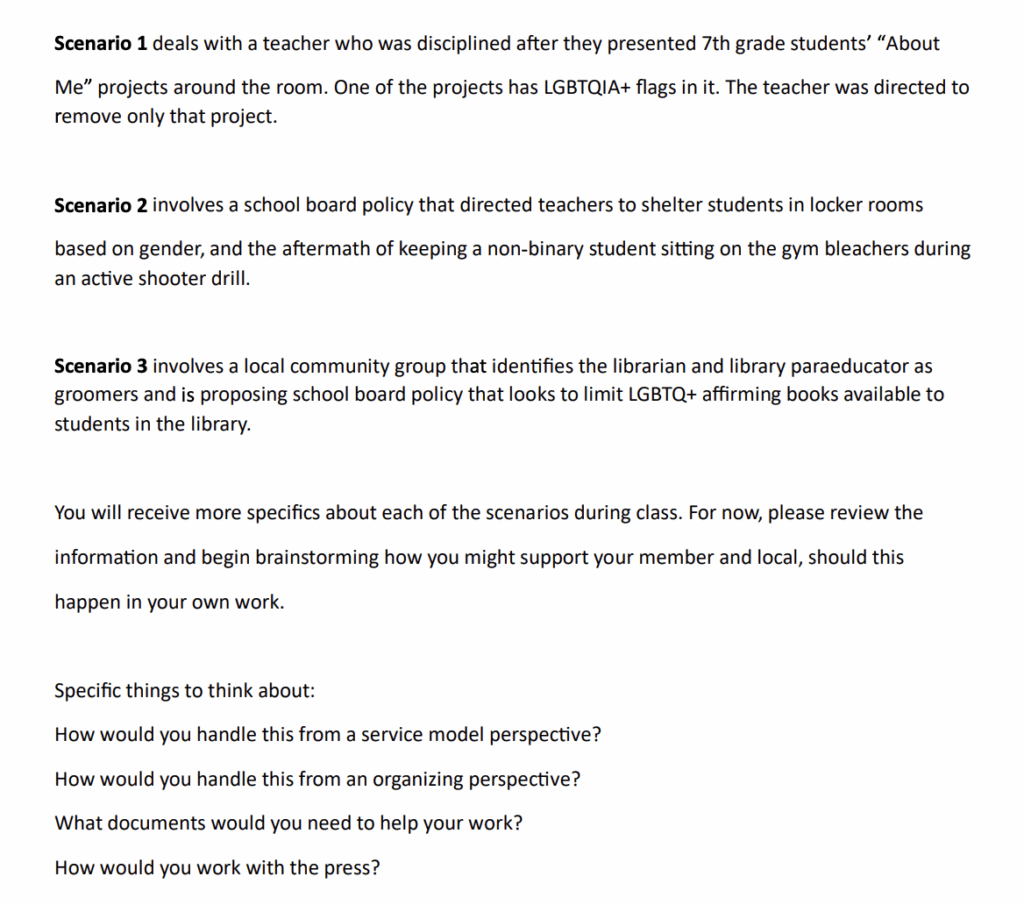
The training materials conclude with three LGBTQ+ scenarios for participants to read and develop possible solutions for. These scenarios include:
We have documented more details (with the full PDF) about the NEA’s Race, Class, and Gender Justice materials here.
Stay Informed