




National Education Association’s “Bargaining for the Common Good” Racial Justice Guide Asks For Prioritizing Hiring and Promoting Educators of Color, Less Testing and More Ethnic Studies, All While Calling Out “Far-Right Politicians” for “actively working” to “dismantle” democracy
Incidents
The National Education Association–the largest labor union in the United States, comprising 3,000,000 educators, staff, administrators, and other stakeholders–published a “Bargaining for the Common Good Racial Justice Guide” teaching its members about the importance of “common good” demands and campaigns centering racial justice.
According to the NEA, Bargaining for the Common Good, is “A bargaining strategy where educators and their unions join together with parents and other stakeholders to demand change that benefits not just educators, but students and the community as a whole.”
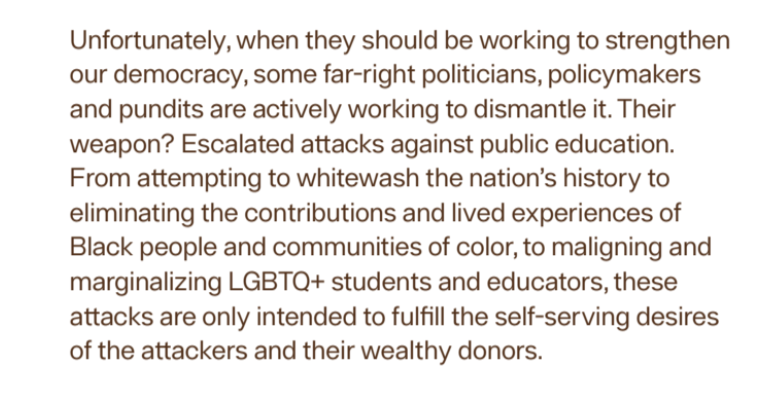
In the foreword to this guide, the NEA calls out “far-right politicians” who are “actively working” to “dismantle” democracy through attacks on public education. The NEA continues, stating that attacks on education from the right “are only intended to fulfill the self-serving desires of the attackers and their wealthy donors.”
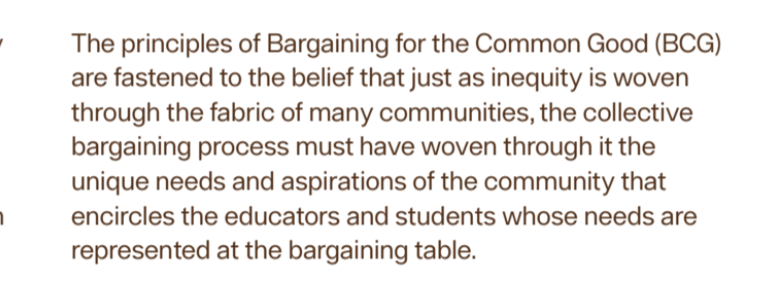
The NEA then states that the BCG principles are founded in the beliefs that “inequity is woven through the fabric of many communities” and “systemic patterns of racial inequity and injustice” hinder students, educators, and schools on the whole.
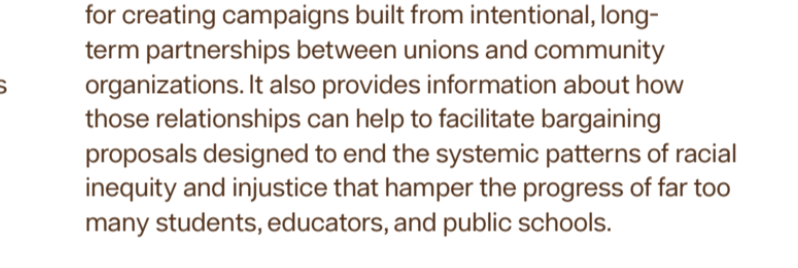
In response to these “systemic” challenges, the NEA shows that union members are now “recognizing” their roles not only as workers but as key leaders in the community, responsible for collective bargaining, affecting policy, and organizing campaigns.
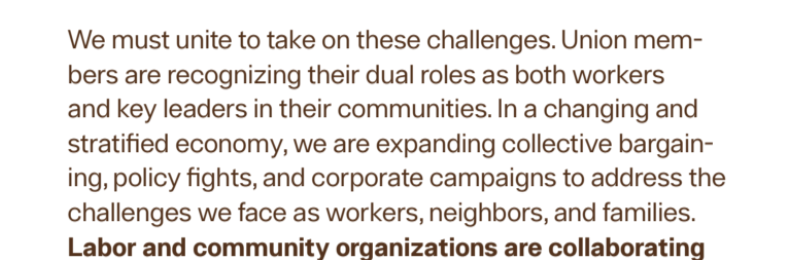
The NEA then reminds readers of the importance of these BCG campaigns, in order to “build power” and “address the crises we all face.” BCG puts racial justice at the forefront because “we must collectively confront structural racism to create a powerful, unified movement.”

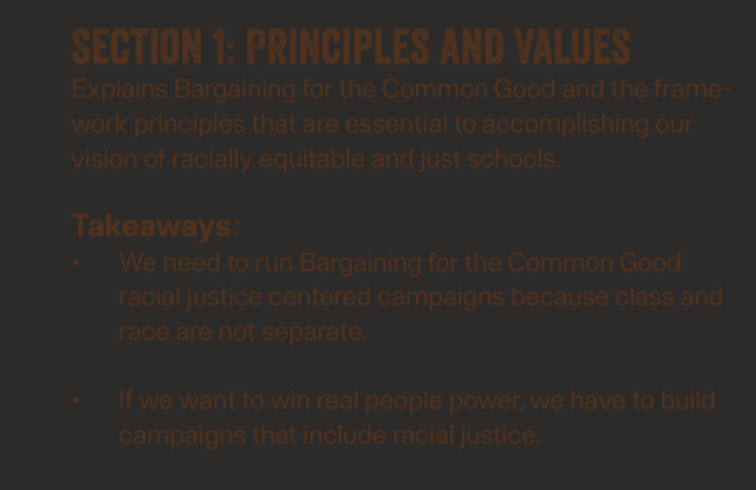
The following resource guide teaches readers about the components of a BCG campaign, in addition to offering tools and resources that can be used to facilitate a campaign. In Section 1, titled Principles and Values, tells readers about two takeaways:
-“We need to run Bargaining for the Common Good racial justice centered campaigns because class and race are not separate.”
-“If we want to win real people power, we have to build campaigns that include racial justice.”
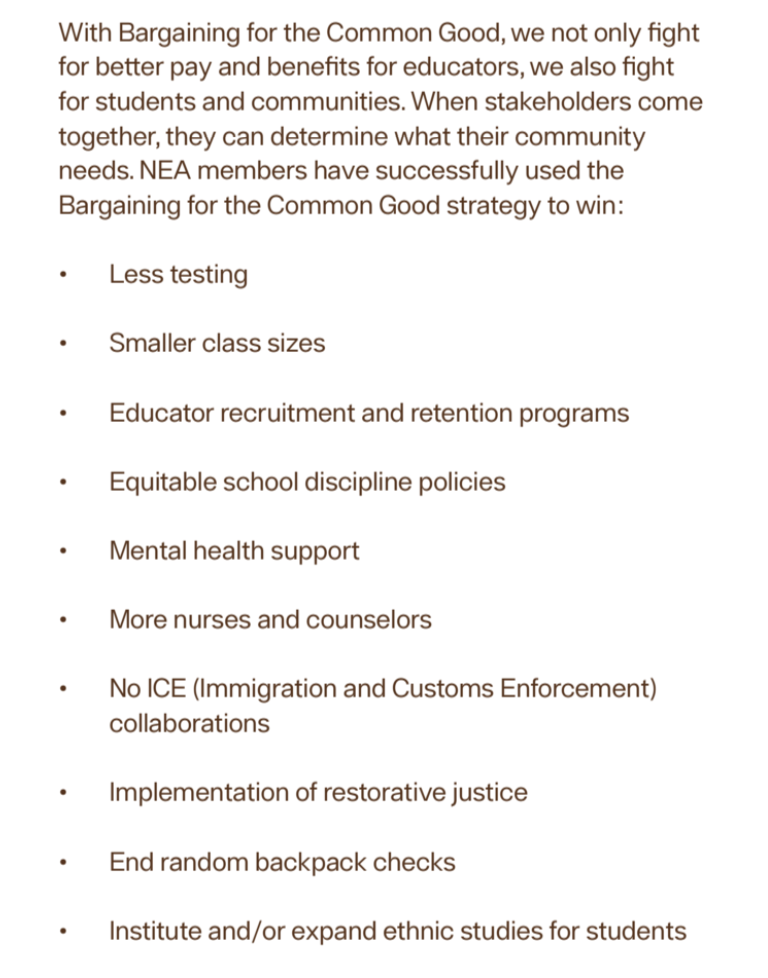
The NEA then reminds readers about the potential successes of BCG campaigning, including “wins” such as less testing, equitable school discipline policies, implementation of restorative justice, institute and/or expand ethnic studies for students, and end random backpack checks.
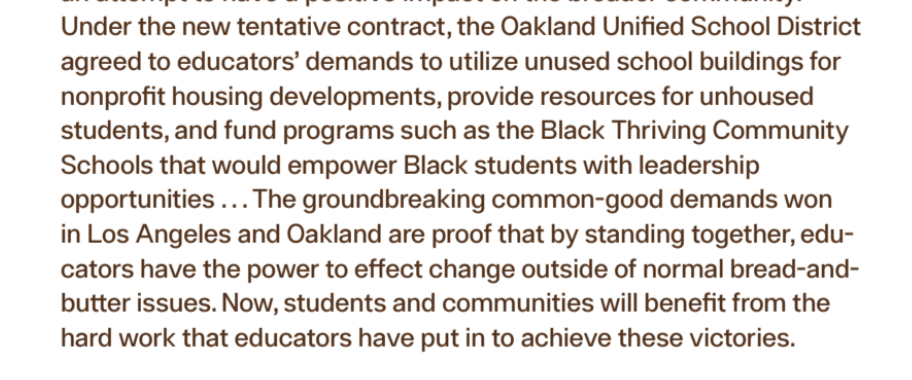
On the following page, the NEA provides a quote about the successes of common good demands in Oakland Unified School District. This includes offering more leadership opportunities for Black students through the Black Thriving Community Schools.
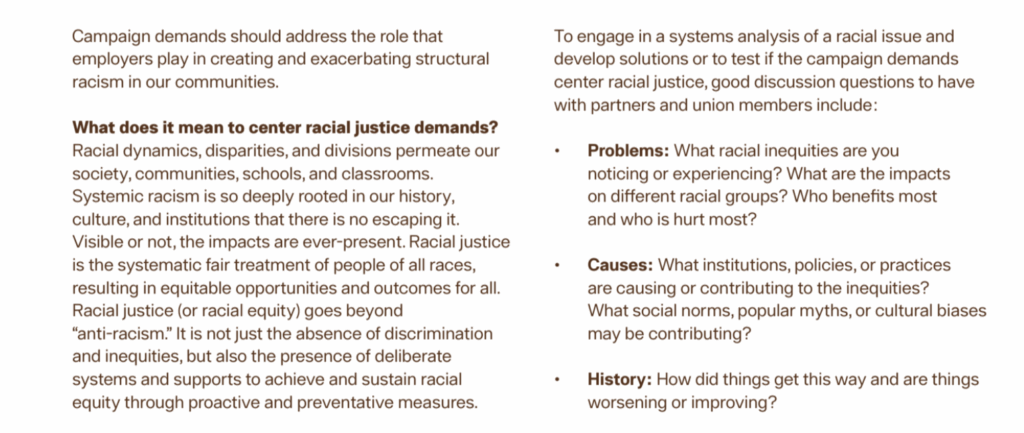
Section 2 of the Racial Justice guide leads with “Center Racial Justice in Your Demands.” The text then reads, “Campaign demands should address the role that employers play in creating and exacerbating structural racism in our communities.” The NEA reminds its readers that “Systemic racism is so deeply rooted in our history, culture, and institutions that there is no escaping it.”
(Campaigns are a foundational part of the NEA’s work: campaigning “which aims to help local communities and their partners address various issues of equity and racial justice in education”–is on the top priority list for the NEA, who hopes to support 500 more more campaigns in the next two years.)
In a list of Bargaining for the Common Good sample demands, the NEA provides suggestions including prioritizing hiring, retaining, and promoting educators of color. Other sample demands include the development of restorative practices in school and ensuring instruction plans are not conducted “through white, cis-hetero, ableist lenses.”


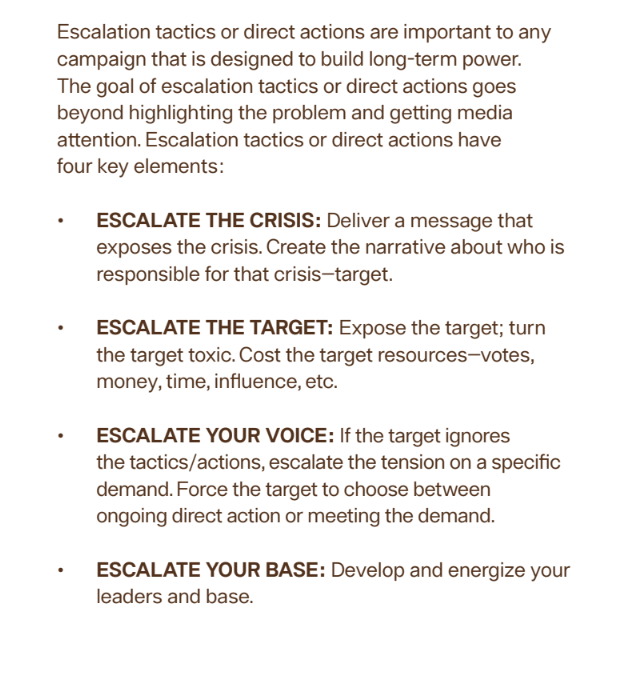
The following section teaches readers how to organize a campaign centered on racial justice. The NEA teaches its audience about mild forms of action–such as collecting union signatures and wearing a union button–as well as bold actions, such as strikes or civil disobedience. In this section, the NEA provides instruction on how to escalate the crisis and “build long-term power.”
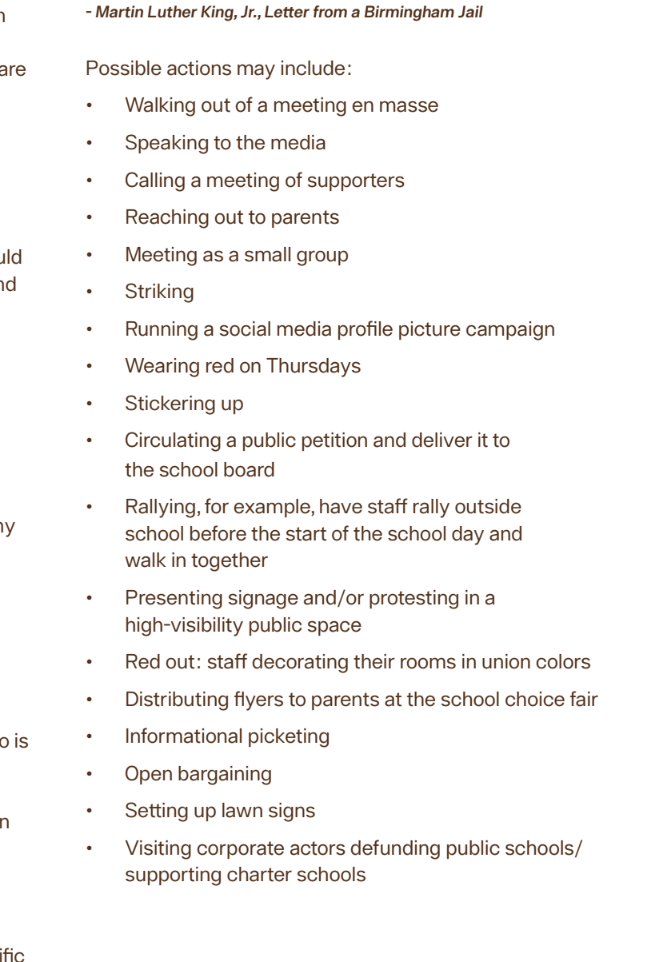
The NEA then provides a list of potential actions that union members can take in order to “escalate” their racial justice campaign. A few of these actions include: running a social media profile picture campaign, reaching out to parents, speaking to the media, distributing flyers, and putting signage in a high-visibility space.
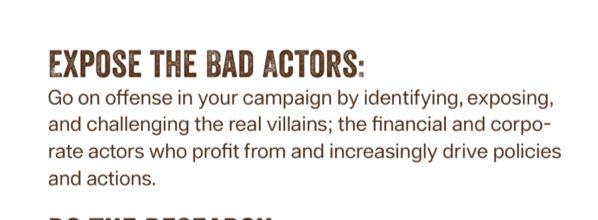
When trying to incite change, the NEA encourages these campaign leaders to “expose the bad actors.” The NEA suggests, “Go on offense in your campaign by identifying, exposing, and challenging the real villains; the financial and corporate actors who profit from and increasingly drive policies and actions.”
The racial justice guide then ends with a glossary of terms, including race, reverse racism, privilege, racial hierarchy, and class. The definitions provided by the NEA are as follows:
Class: “Classism is the systematic oppression of subordinated class groups, held in place by attitudes that rank people according to economic status, family lineage, job status, level of education, and other divisions. One’s race can be a major determinant of one’s social or economic class. The variables of race and class, though closely connected, each need distinct attention.”
Privilege: “Privilege — A set of advantages systemically conferred on a particular person or group of people. White people are racially privileged, even when they are economically underprivileged. Privilege and oppression go hand-in-hand: They are two sides of the same power relationship, and both sides of the equation must be understood and addressed. People can be disadvantaged by one identity and privileged by another.”
Reverse racism: “A concept based on a misunderstanding of what racism is, often used to accuse and attack efforts made to rectify systemic injustices. Every individual can be prejudiced and biased at one time or another toward various people and behaviors, but racism is based on power and systematic oppression. Individual prejudice and systemic racism cannot be equated. Even though some people of color hold powerful positions, white people overwhelmingly hold the most systemic power. The concept of “reverse racism” ignores structural racism, which permeates all dimensions of our society, routinely advantaging white people and disadvantageous to people of color. Structural racism is deeply entrenched and in no danger of being dismantled or “reversed” any time soon.”

Race: “While often assumed to be a biological classification, based on physical and genet-ic variation, racial categories do not have a scientific basis. However, the consequences of racial categorization are real, as the ideology of race has become embedded in our identities, institutions, and culture, and is used as a basis for discrimination and racial profiling. How one is racialized is a major determinant of one’s socioeconomic status and life opportunities.”
Stay Informed