
The National Education Association (NEA) just concluded its most recent Focus Academy event on “Advancing LGBTQ+ Justice.” Held December 2-4, 2025, Defending Education already covered various pre-attendance packets and participant handouts, including sample transition plans for school employees, and collective demands on race, class, and gender justice that referred to Republicans as the “villains” utilizing “strategic racism.”
Following the conference’s wrap-up, Defending Education gained access to the NEA’s day one and two PowerPoints on LGBTQ+ justice, revealing a heightened focus on race, class, and gender justice, as well as campaign-building, transgender terminology, transition plans, and gender.
The introductory announcement in the day one PowerPoint read, “The content we are going to explore may bring up strong feelings. Throughout our time together, we will explore examples of racism, ableism, heterosexism, and sexism. By exploring these together, we can begin the process of unlearning our own internal oppression.”

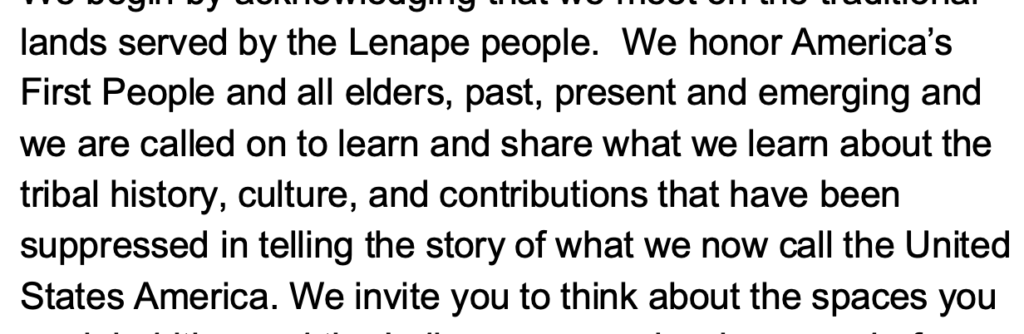
A separate slide of the introduction included a land acknowledgment, noting that “we are called on” to learn about the suppressed history of “what we now call the United States America.”
42 out of 95 informative slides included graphics featuring pride and/or trans flags, including dogs wearing pride flags, a visual image of gender unicorn dreaming about a rainbow, as well as various rainbow keys and graphics.


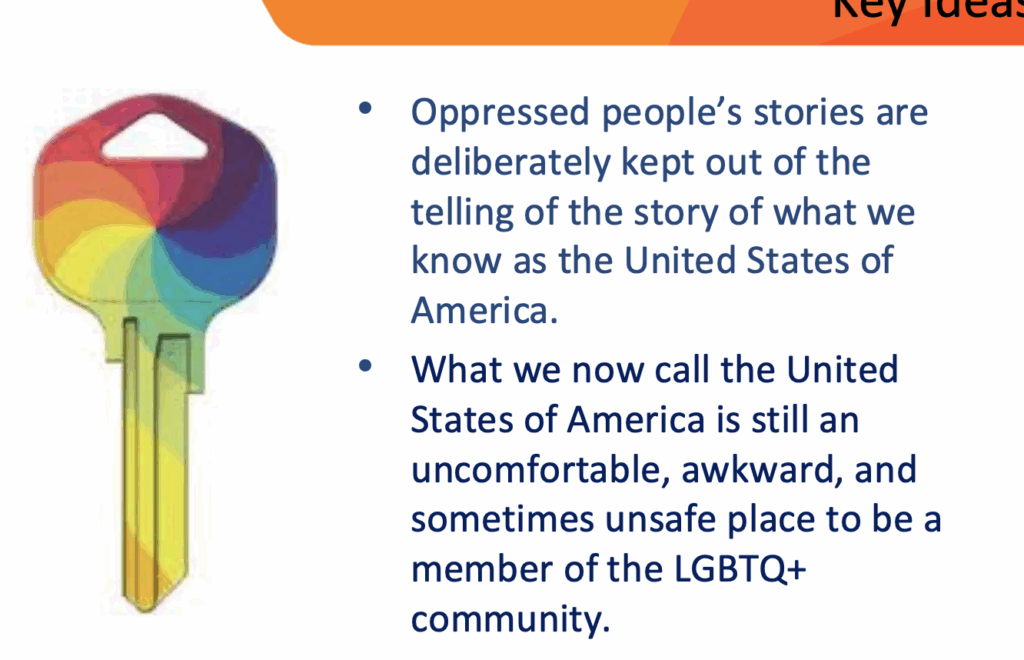
As one of the presentation’s Key Ideas reads, “Oppressed people’s stories are deliberately kept out of the telling of the story of what we know as the United States of America. What we now call the United States of America is still an uncomfortable, awkward, and sometimes unsafe place to be a member of the LGBTQ+ community.”
Similar to the pre-attendance materials, the NEA once again calls on its participants to “center race, class, and gender justice.”

In this section, the training leaders once again discuss the importance of campaign-building, as related to race, class, and gender. Defending Education previously covered this topic in November 2025, examining some of the pre-training handouts. Our findings are linked here.
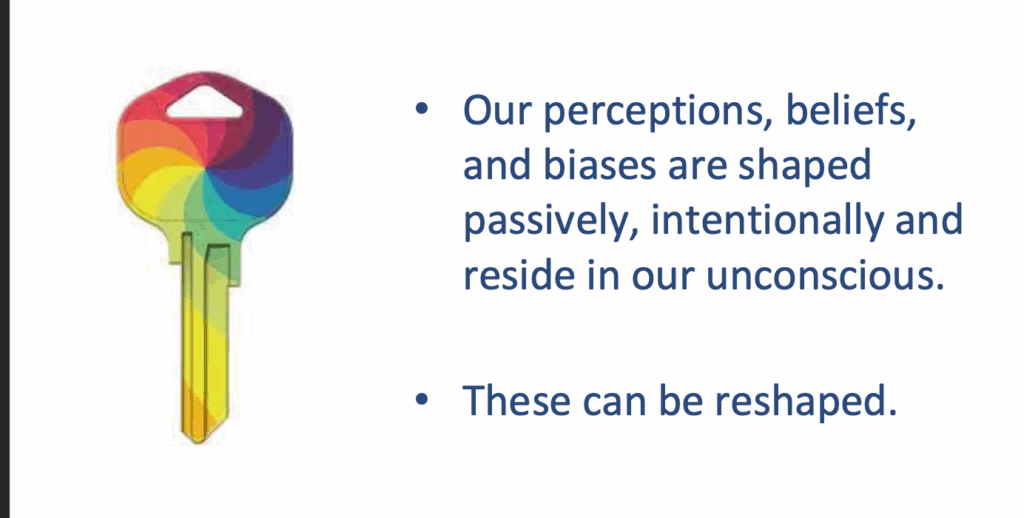
Before a lunch break, the NEA PowerPoint includes another “key idea”: “Our perceptions, beliefs, and biases are shaped passively, intentionally and reside in our unconscious. These can be reshaped.”
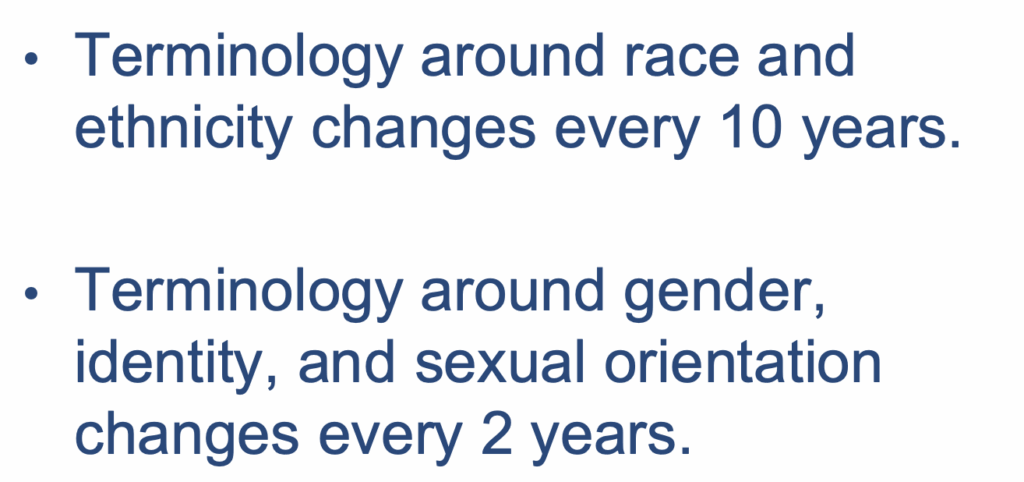
The following section of the day one presentation details language and terminology changes, stating that “terminology around race and ethnicity changes 10 years” while “terminology around gender, identity, and sexual orientation changes every 2 years.”
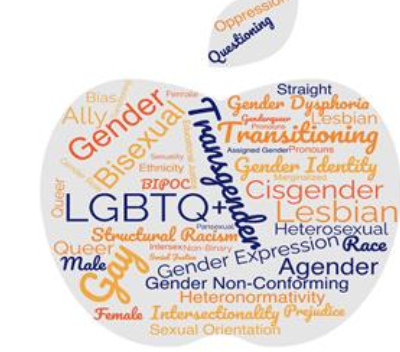
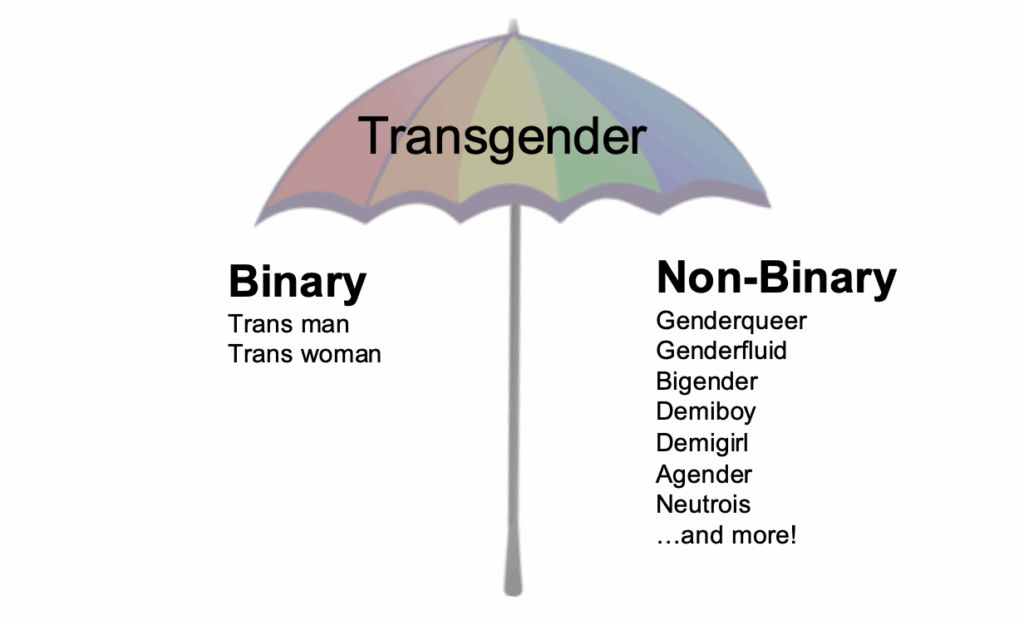
This section then includes transgender terminology, grouped into binary and non-binary, including terms such as: genderqueer, genderfluid, bigender, demiboy, demigirl, neutrois, and more.
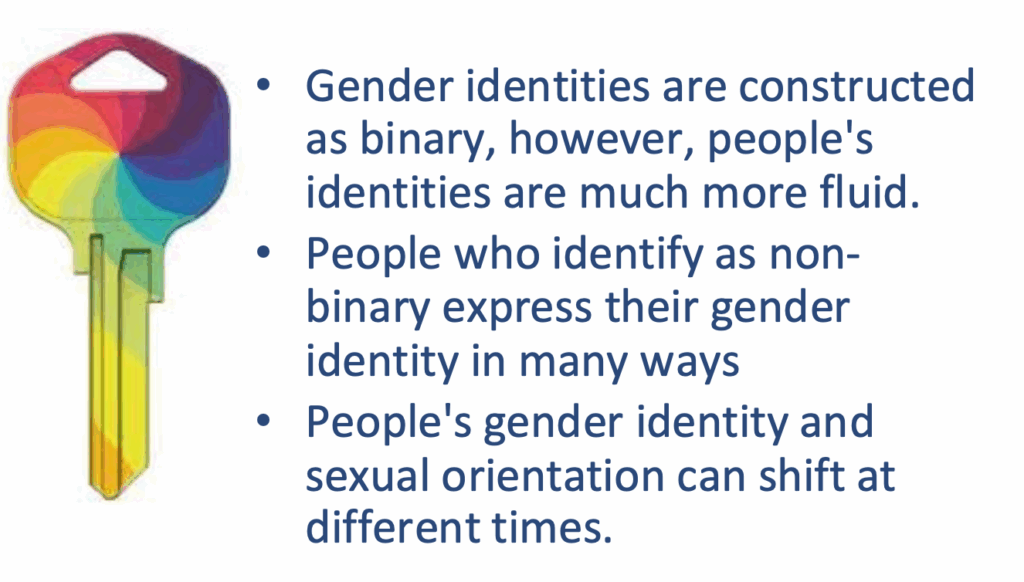
The PowerPoint then reads, “People’s gender identity and sexual orientation can shift at different times,” sharing that gender is not binary, but rather a fluid, ever-changing concept.
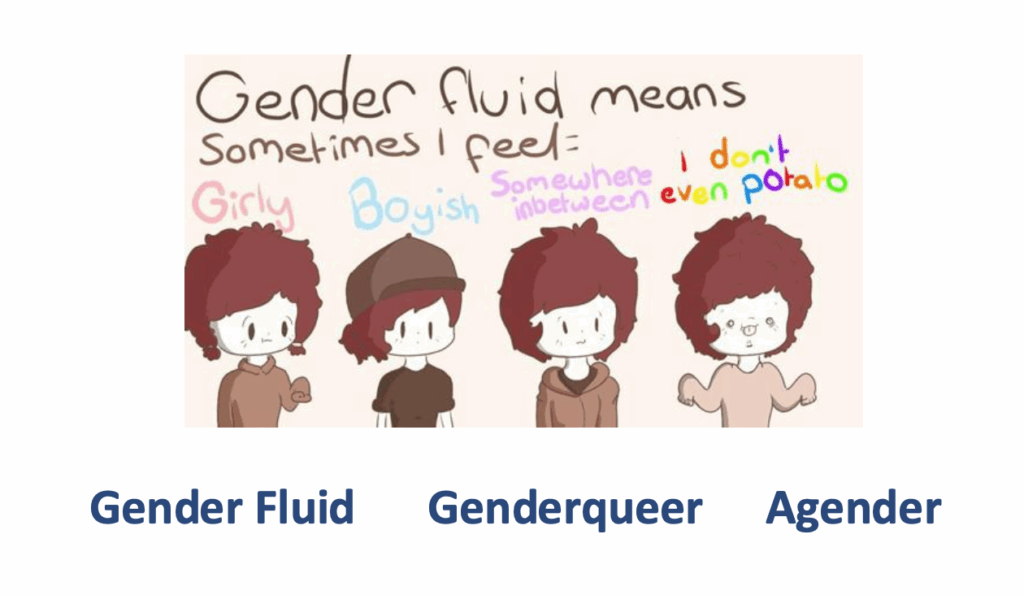
Another slide discusses gender identities, unpacking the terms “Gender Fluid,” “Genderqueer” and “Agender.” This slide includes a graphic depicting gender fluidity, with the final cartooned image reading, “I don’t even potato.”
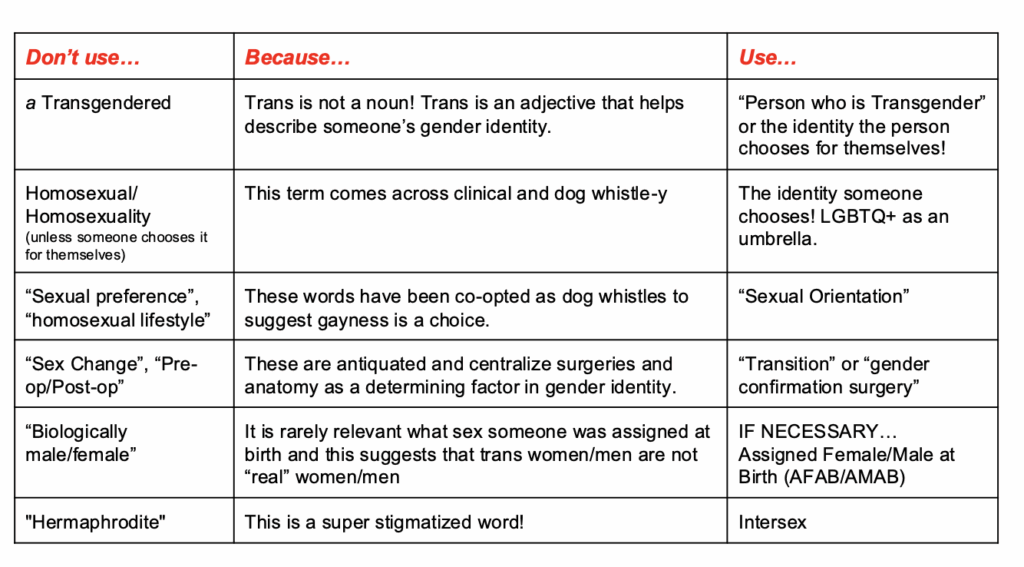
The PowerPoint then provides participants with a list of words to avoid, words that they consider “clinical” and “dog whistle-y” as well as “antiquated.”
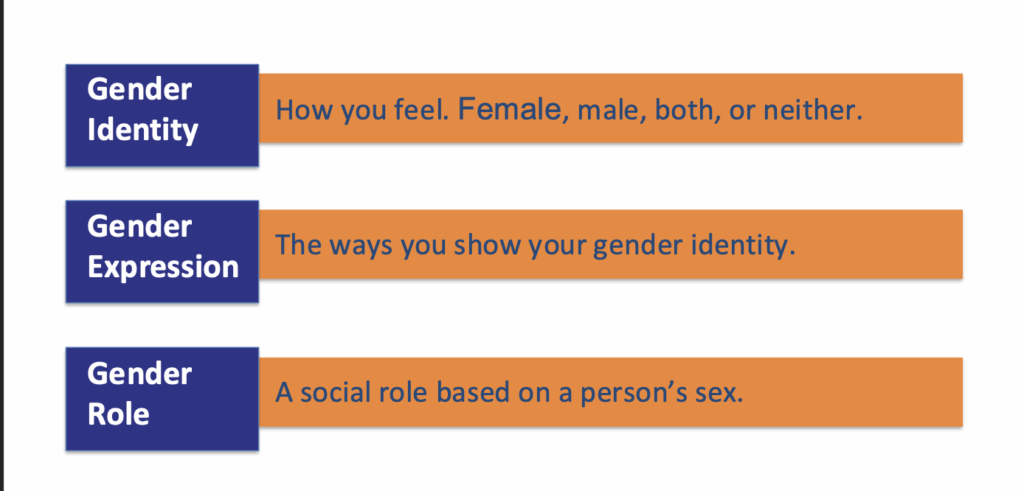
The concluding portion of the day one PowerPoint further explores gender identity and expression. In this segment, training leaders tell participants about the differences between gender identity, gender expression, and gender roles.
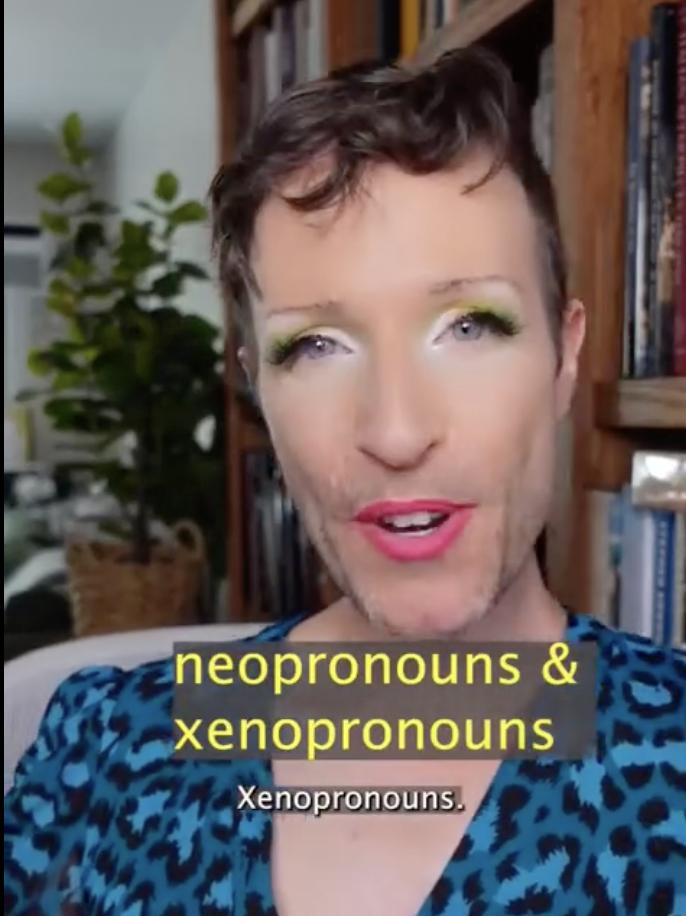
The day two training opens with the same introductory announcements, in addition to asking participants to first view an influencer’s video on pronouns and “neopronouns.”

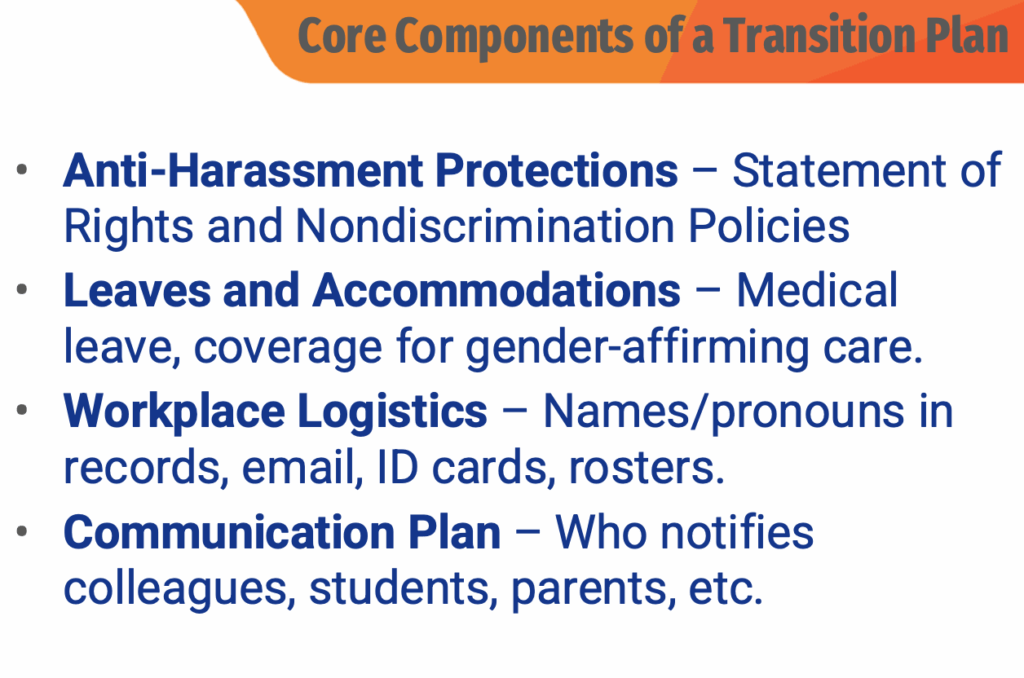
The bulk of the second day centers on transition plans, providing all the core components of how participants can transition, including anti-harassment protections, accommodations, workplace logistics, and a communication plan.
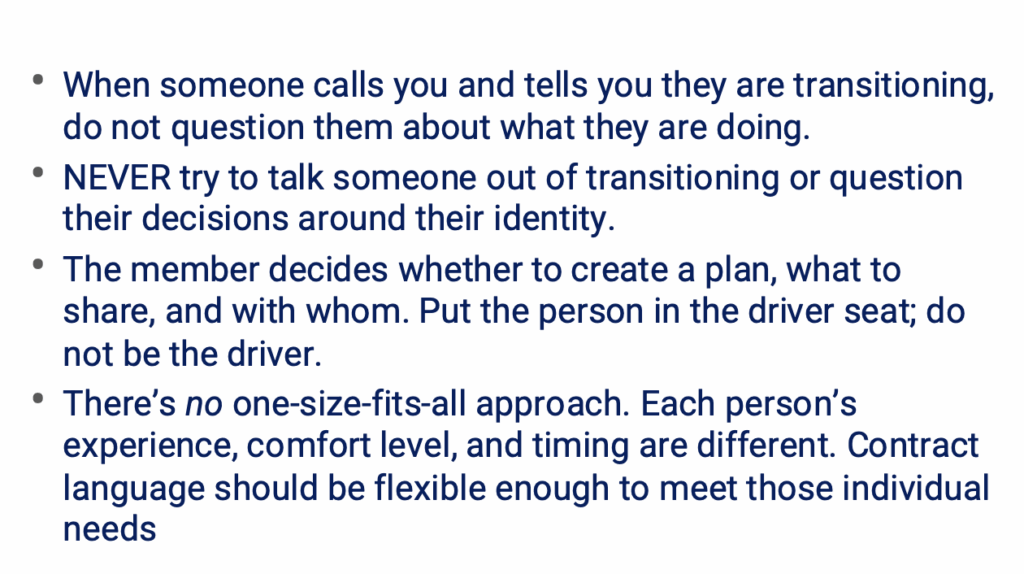
The training leaders then provide key ideas on transitioning, including “NEVER talk someone out of transitioning or question their decisions around their identity.” Twice, the NEA asks participants not to question someone’s transitioning process.
The remainder of day two and three trainings focus on campaigning, a topic extensively covered by Defending Education in our last examination of the NEA’s “Advancing LGBTQ+ Justice” training. Our coverage on those materials is found here and here.