




Montgomery County Public Schools PTA meeting briefed families on “ICE Response & Organizing Tools”
Incidents
- Issues
- Indoctrination
A parent in Montgomery County Public Schools (MCPS) sent photos to the parent advocacy group, United Against Racism in Education (UARE), showing content shared at a PTA meeting about how to identify and deal with members of U.S. Immigration and Customs Enforcement (ICE).
The original invite sent to parents said the information came from leaders of the Montgomery County Council of PTAs (MCCPTA), which serves as the countywide umbrella organization for individual PTAs in Montgomery County Public Schools.
The meeting, which took place on Tuesday, Jan. 20, from 6:30 to 8:00 p.m., featured a virtual information session with Councilmember Kristin Mink and community partners titled, “ICE Response & Organizing Tools for PTAs, Parents & Guardians,” for PTA leaders, parents, guardians, and school community members “who want tools to help keep students and families safe and informed.”
The meeting included updates on ICE activity in Montgomery County, MCPS ICE-related protocols, how to recognize ICE and what to do when you see them, how PTAs and parent organizing can help get kids safely to and from school, how PTAs and school communities can support families impacted by ICE arrests and deportations and next steps on ways to get involved.
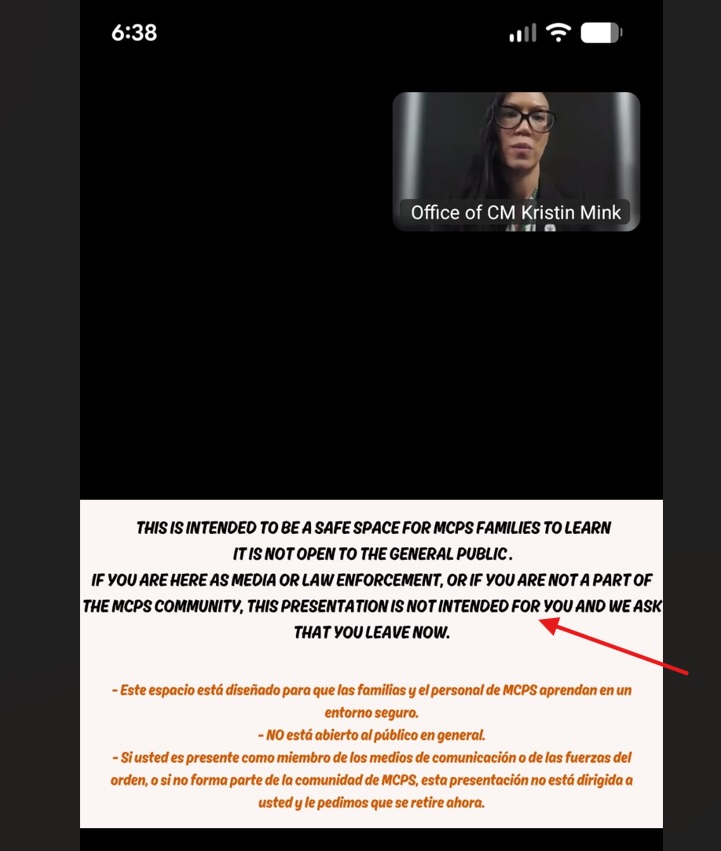
The presentation began by stating that it is intended to be a “safe space for MCPS families” to learn and that the meeting is not open to the general public. Anyone in the media, law enforcement, or anyone not a member of the MCPS community was asked to leave.
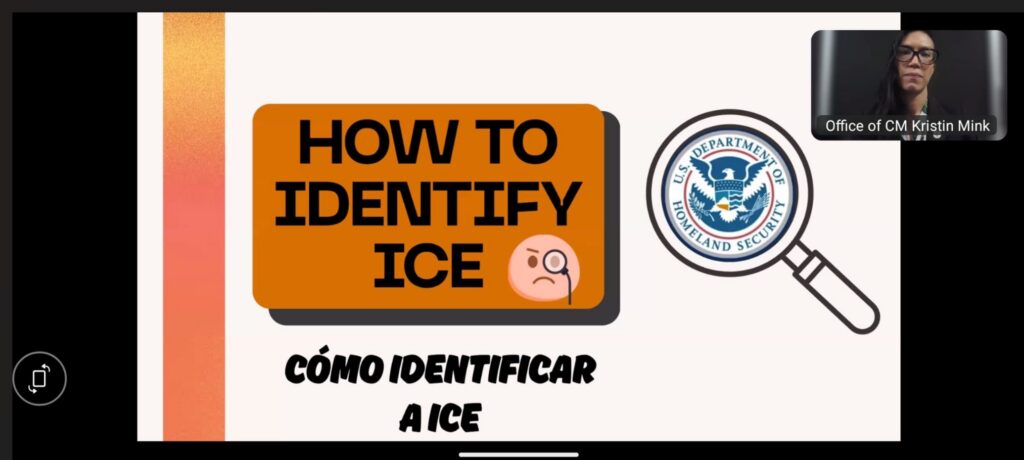
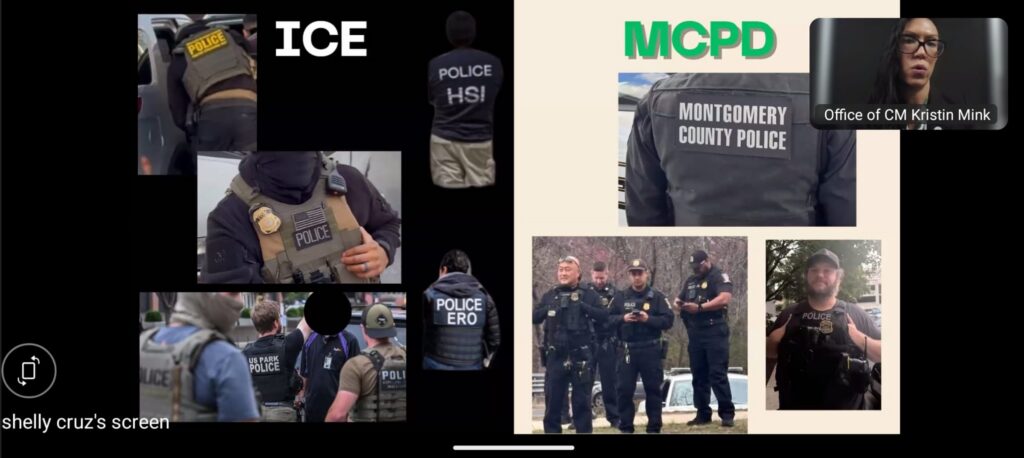
The presentation included a section on “How to Identify ICE.”
Mink broke down the structure of the Department of Homeland Security.
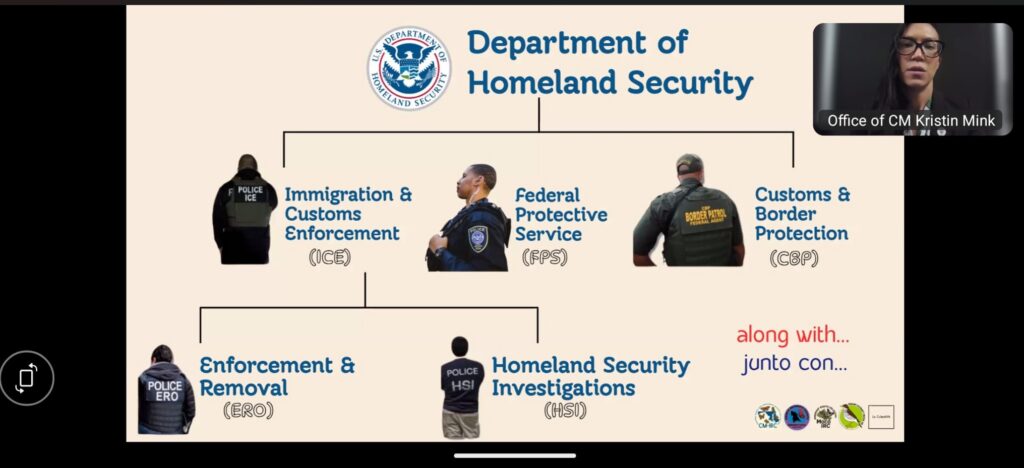
It included photos of agents in uniform alongside photos of Montgomery County Police uniforms.
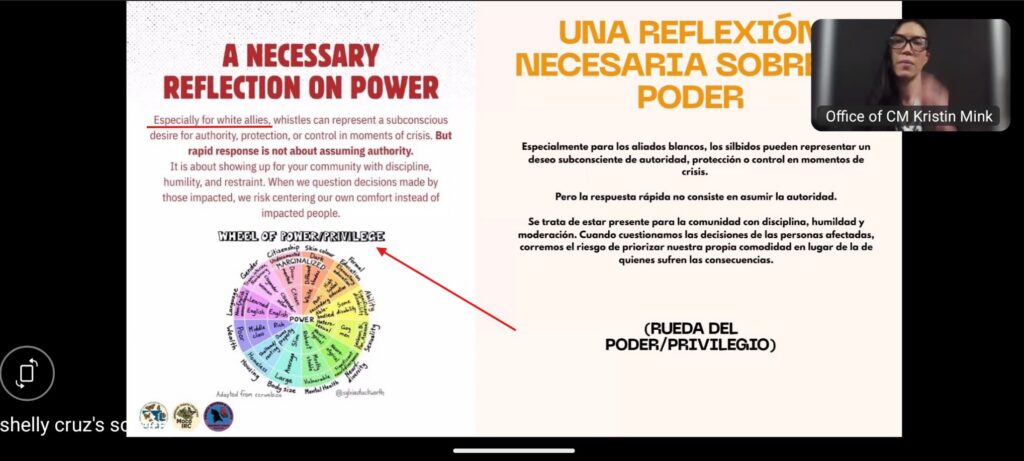
There was a “Wheel of Power/Privilege” instructing attendees on “A Necessary Reflection on Power.”
“Especially for white allies, whistles can represent a subconscious desire for authority, protection, or control in moments of crisis,” the slide read. “But rapid response is not about assuming authority … When we question decisions made by those impacted, we risk centering our own comfort instead of impacted people.”
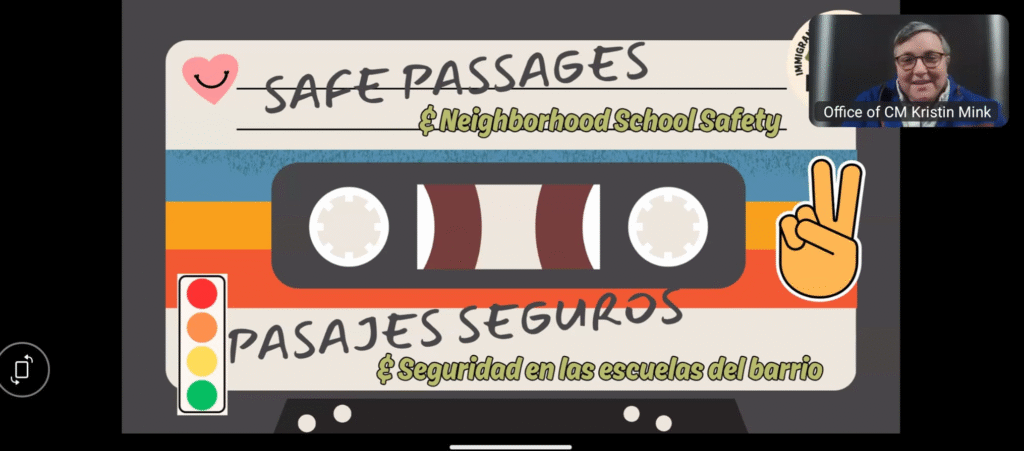
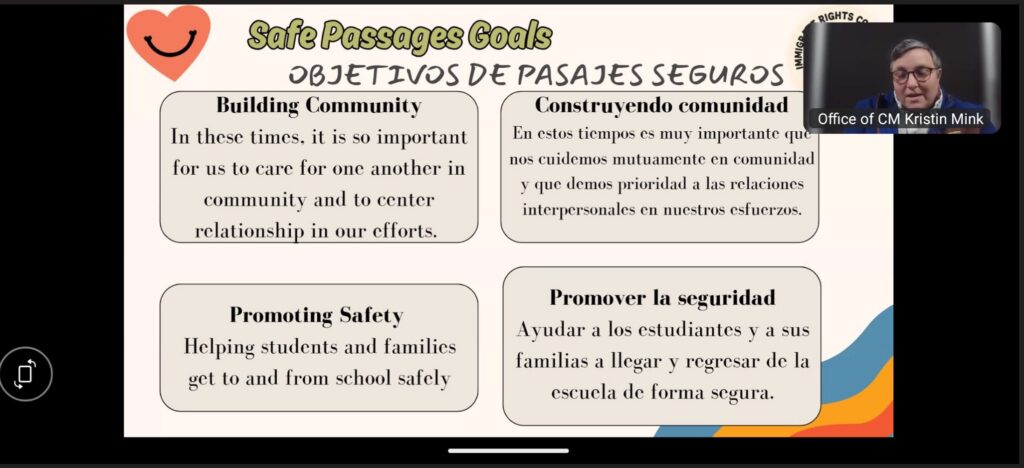
Another section discussed creating “safe passages” and neighborhood school safety.
Stay Informed