


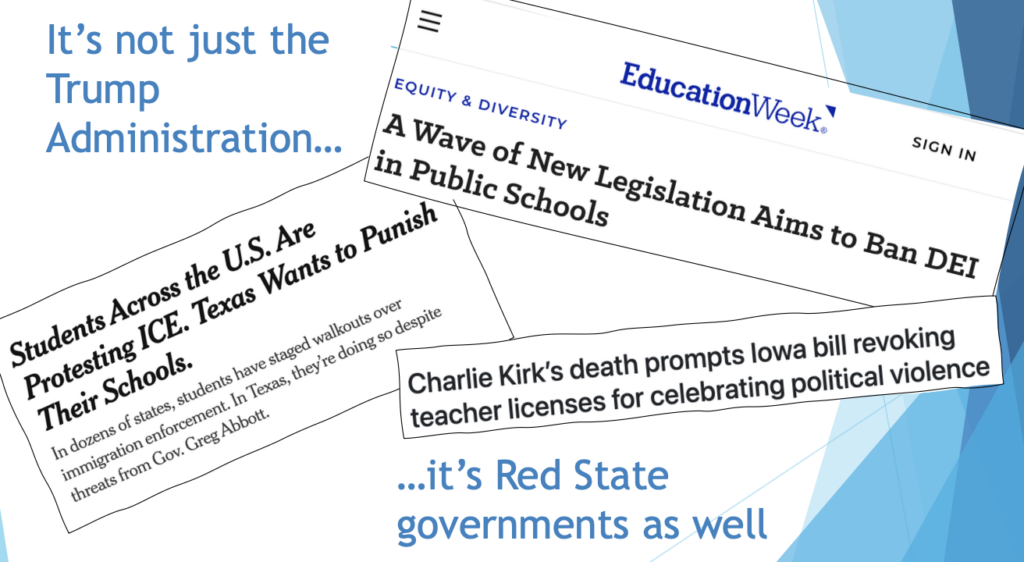
“It’s not just the Trump Administration…it’s Red State governments as well” – NEA training for educators on advocacy
Incidents
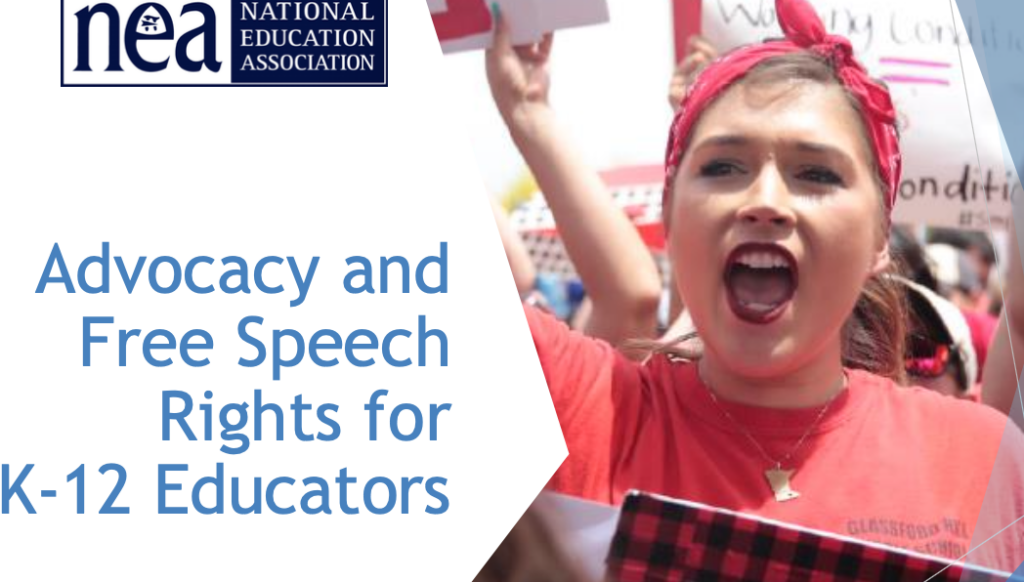
On February 23, 2026 the National Education Association (NEA) hosted an “Advocacy and Free Speech Rights for K-12 Educators” training. The NEA describes itself as “the nation’s largest professional organization, representing more than three million elementary and secondary teachers, higher education faculty, education support professionals, school administrators, retired educators and students preparing to become teachers.”
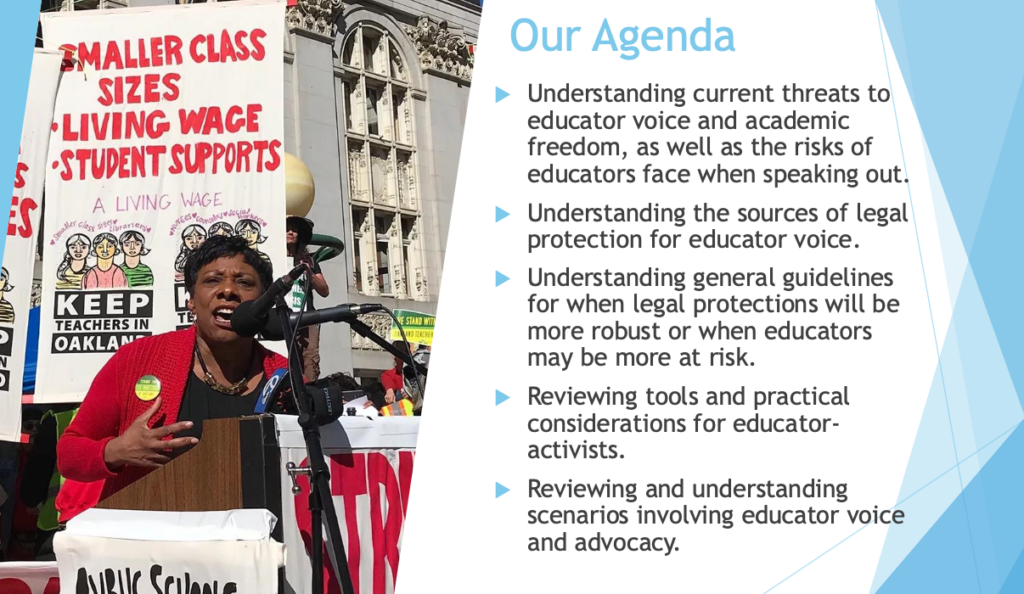
The agenda for the training shares that participants will learn about threats to educator voice and freedom, legal protection for educators, and tools for educator voice and advocacy.
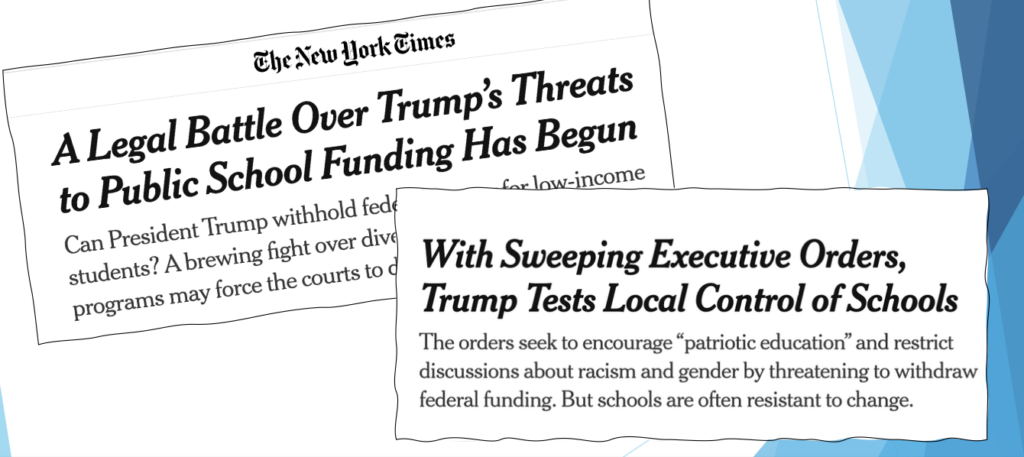
In the first two slides describing “Attacks on honesty in education and educators’ professional autonomy,” Trump is mentioned four times in all of the news headlines included. News stories include: “A Legal Battle Over Trump’s Threats to Public School Funding Has Begun” and “Trump Firings Gut Education Department’s Civil Rights Division.”
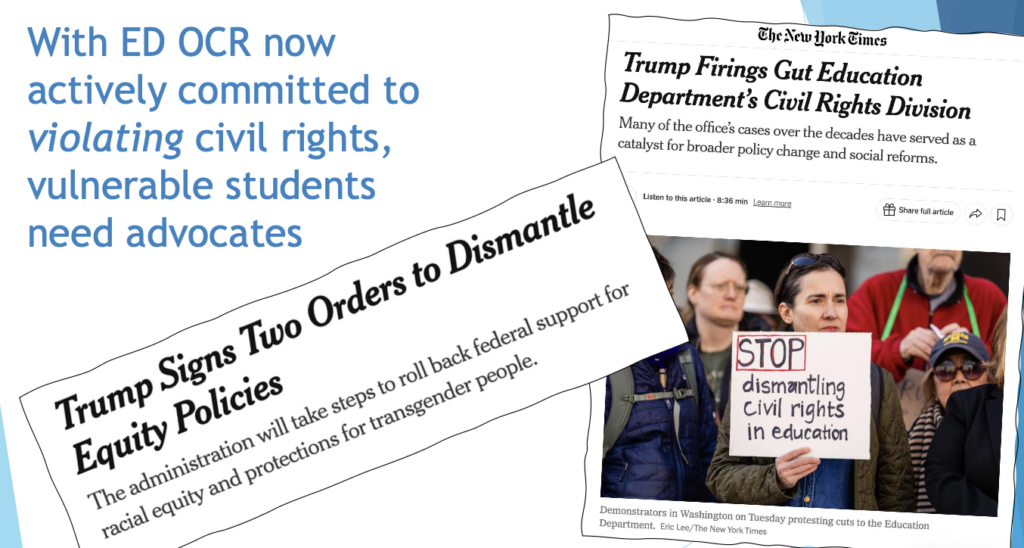
The NEA states that since the Department of Education is “now actively committed to violating civil rights,” educators need to rise up to help out “vulnerable students.”
In the following slides, the NEA argues that “Democracy itself is at stake” with an “unprecedented push to criminalize speech and political opposition.” In the slide on speech and opposition, the NEA shares screenshots that read: “Trump Signs Order Targeting Antifa Movement” and “White House Use of ‘Domestic Terrorist’ Doesn’t Match Legal Reality.”
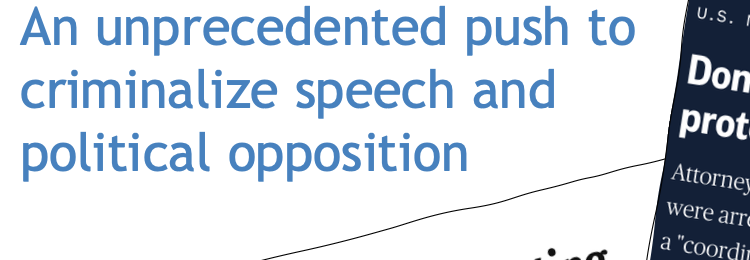
The NEA then explicitly states who are the perpetrators behind the issues in education: “It’s not just the Trump Administration…it’s Red State governments as well.”
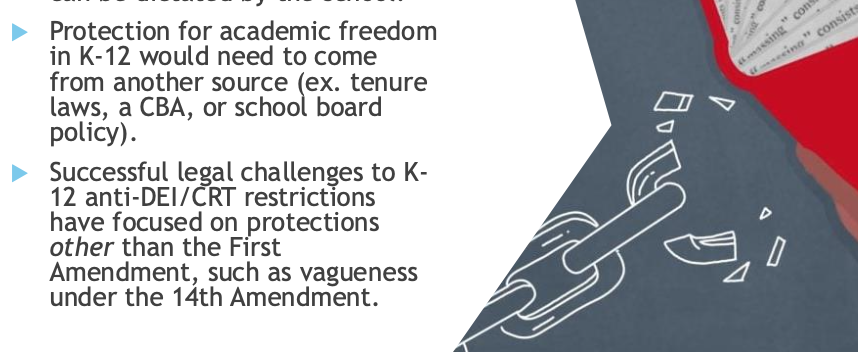
The presentation then explores the First Amendment and academic freedom, referencing recent legal challenges within the education sphere. For instance, one slide reads, “Successful legal challenges to K-12 anti-DEI/CRT restrictions have focused on protections other than the First Amendment, such as vagueness under the 14th Amendment.”
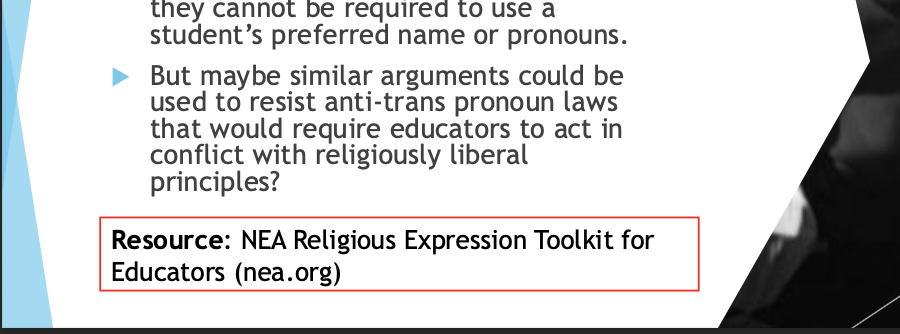
On the following slide titled “The First Amendment and religious liberty,” the NEA explains that the Supreme Court is “increasingly willing to allow religious opt-outs.” The NEA then frames the idea that similar logic could apply to transgender pronoun laws. The bottom text on the slide reads, “But maybe similar arguments could be used to resist anti-trans pronoun laws that would require educators to act in conflict with religiously liberal principles?”
The presentation then details sources of protection for educator voice as well general guidelines for protection against educator voice. The presentation explores which forms of speech and advocacy are more and less likely to be protected.
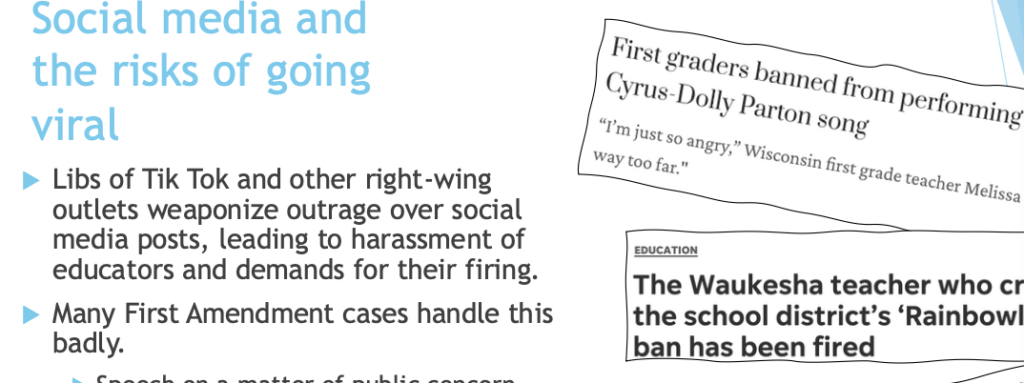
The presentation calls out right-wing outlets for hyper-focusing on educators’ social media: “Libs of Tik Tok and other right-wing outlets weaponize outrage over social media posts, leading to harassment of educators and demands for their firing.”
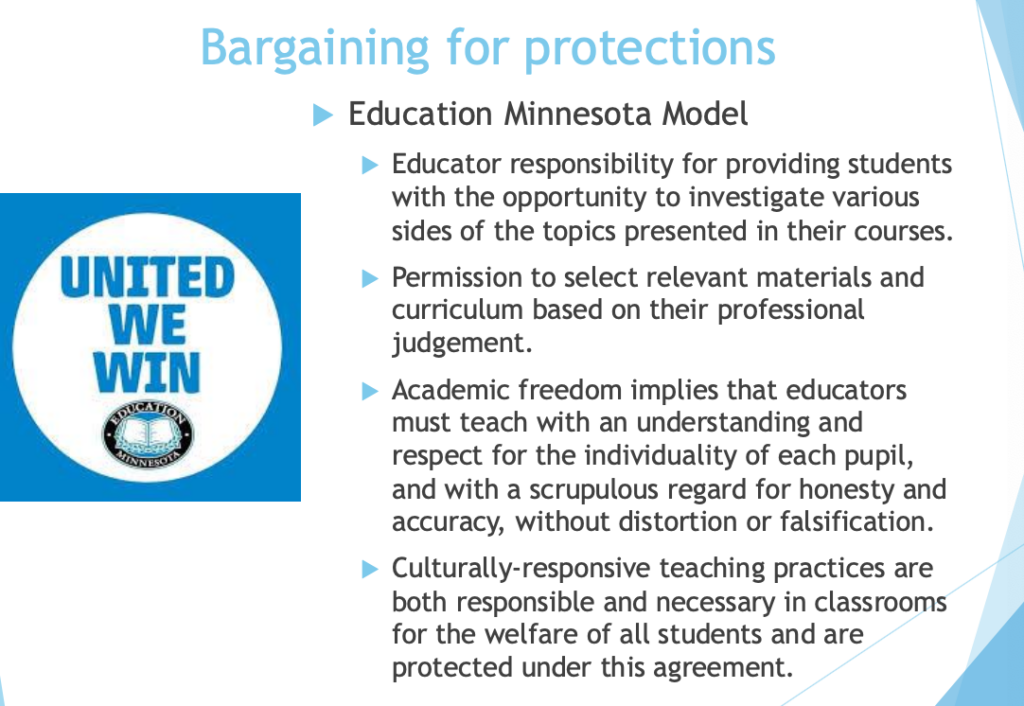
As a remedy to all of these alleged attacks on education, the NEA asks educators to invest in collective bargaining and organize to influence school policy. The NEA offers the “Education Minnesota Model” as a successful example of collective bargaining, in which “Culturally-responsive teaching practices are both responsible and necessary in classrooms” and educators have “Permission to select relevant materials and curriculum based on their professional judgement.”
The following presentation section details potential scenarios for educators. The first scenario follows “Classroom Displays,” offering the example of a teacher who puts up a Pride flag and a Black Lives Matter poster.

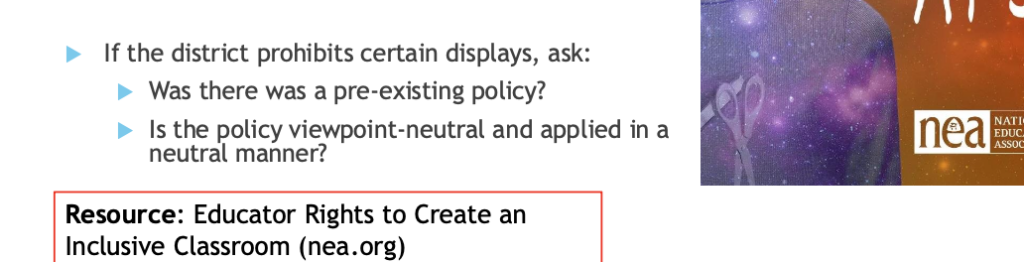
The following slide provides recourse for educators to maintain classroom displays, giving sample questions that educators can ask in response to policies on classroom displays.
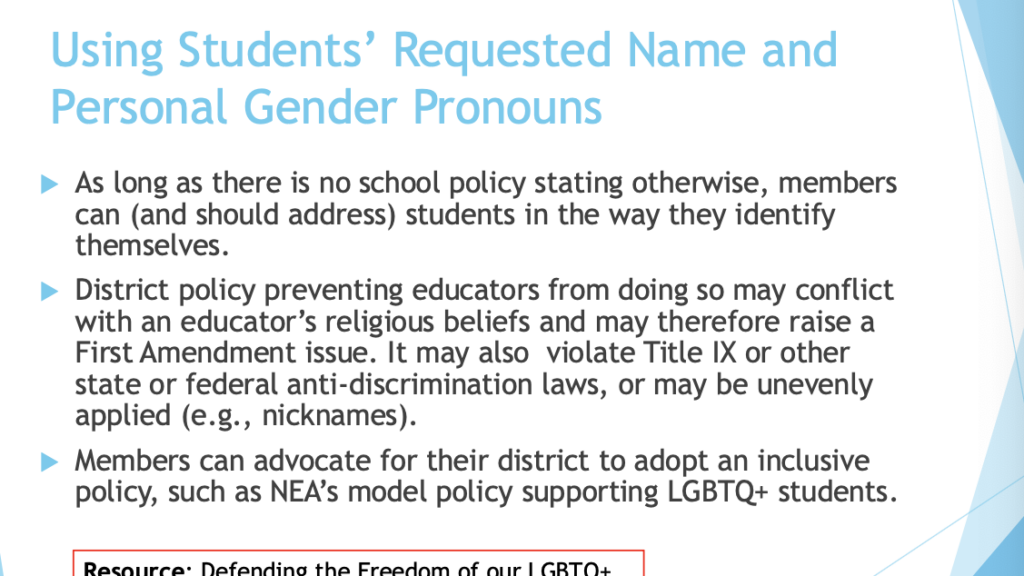
Another scenario deals with pronouns, stating that NEA members “can (and should address) students in the way they identify themselves,” even if that “identity” is different from the student’s school records.
Stay Informed