



The Massachusetts Department of Elementary and Secondary Education guidelines require that pre-service educator programs incorporate ‘anti-racist’ teaching practices and equity as core tenets to become an ‘effective educator’
Investigations
SUMMARY
The Massachusetts Department of Elementary and Secondary Education’s (DESE) guidelines for “Educator Preparation” programs, “Candidate Assessment of Performance,” and “Professional Teaching Standards” require the incorporation of “anti-racist” teaching practices into pre-service teacher preparation and certified teacher evaluations.
The DESE requires teacher preparation programs and cooperating school districts to create opportunities for future educators to observe and implement “anti-racist and culturally and linguistically sustaining practices” while in their respective programs.
KEY TAKEAWAYS
- The DESE defines an “effective educator” as “one who uses evidence-based practices, including anti-racist and culturally and linguistically sustaining practices, to nurture and cultivate academic achievement, cultural and linguistic competence, sociopolitical awareness, and emotional intelligence.”
- The DESE defines “equity” as “placing a heightened focus on groups, particularly racial groups, experiencing disproportionate impact through the development of systems to remediate disparities in their experiences and outcomes.”
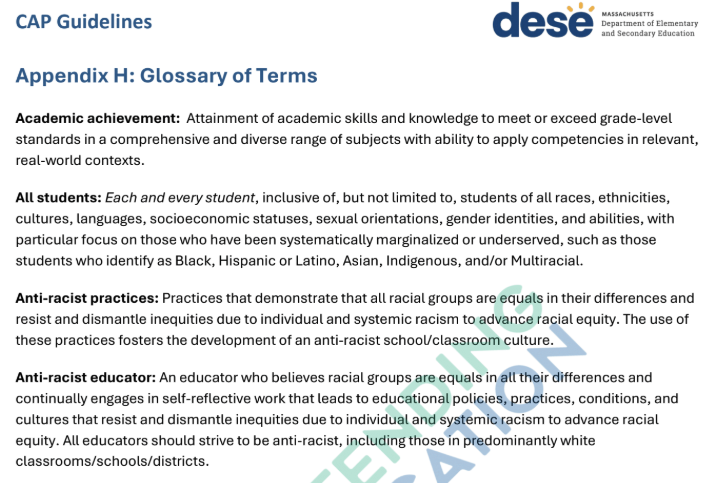
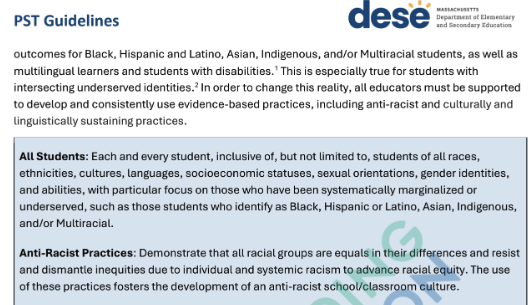
- The DESE defines “anti-racist practices” as those that “demonstrate that all racial groups are equals in their differences and resist and dismantle inequities due to individual and systemic racism to advance racial equity.” It adds that the “use of these practices fosters the development of an anti-racist school/classroom culture.”
- The DESE defines an “anti-racist educator” as one “who believes racial groups are equals in all their differences and continually engages in self-reflective work that leads to educational policies, practices, conditions, and cultures that resist and dismantle inequities due to individual and systemic racism to advance racial equity.” It also states that “all educators should strive to be anti-racist, including those in predominantly white classrooms/schools/districts.”
- Under the “Field-Based Experiences Domain,” the “Sponsoring Organization” is expected to intentionally design and integrate “opportunities for candidates to observe, practice, and demonstrate effective, evidence-based practices, including anti-racist and culturally and linguistically sustaining practices.” The organization “should ensure that candidates also use these experiences to reflect on their identities, biases, and practices while in the role.”
- During the practicum experience, the “Supervising Practitioner” should “be able to model evidence-based instructional practices, including anti-racist and culturally and linguistically sustaining practices” and “be able to provide candidates with high-quality feedback and evaluation that prepares them to be effective, anti-racist, and culturally and linguistically sustaining educators.”
- As part of the “Field-Based Experiences (FBE) Criteria,” sponsoring organizations are required to include “anti-racist and culturally and linguistically sustaining school cultures” as part of its range of settings. It also states that the organization “identifies, selects, and matches Supervising Practitioners” who “model evidence-based instructional practices, including anti-racist and culturally and linguistically sustaining practices.”
- The Guidelines for the Candidate Assessment of Performance document describes the “method through which candidates will be assessed in their ability to use evidence-based practices that will well serve all students in Massachusetts, particularly those from systemically marginalized groups and communities, such that all students will have equitable opportunities to excel in all content areas across all grades.”
PRE-SERIVCE EDUCATOR PREPARATION
The following documents are from the Massachusetts Department of Elementary and Secondary Education (DESE).
DESE Guidance Letter
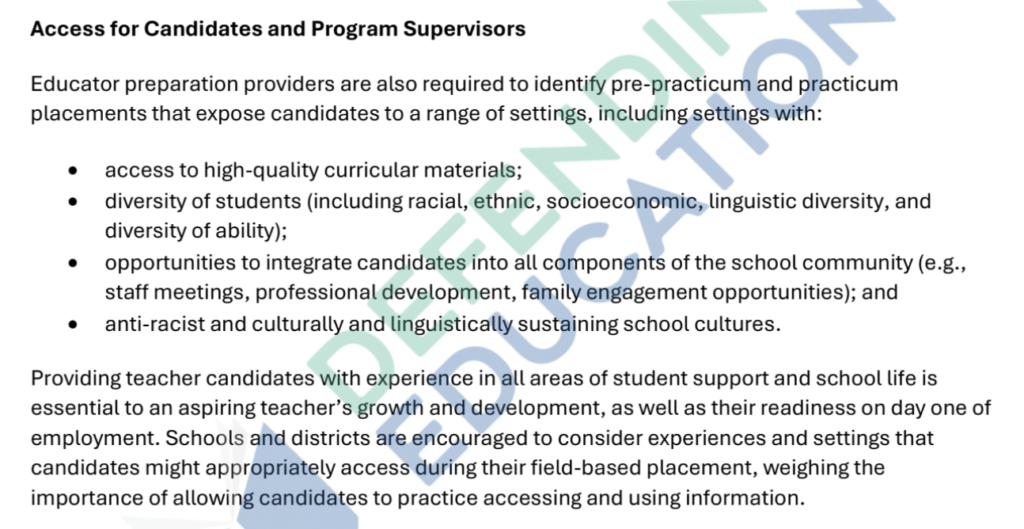
A May 16, 2025, letter to “PK-12 School and District Administrators” shares “recently updated guidance from DESE that affects” a district’s “work with teacher candidates” in schools. The guidance letter states that “educator preparation providers are also required to identify pre-practicum and practicum placements that expose candidates to a range of settings” that include “anti-racist and culturally and linguistically sustaining school cultures.”
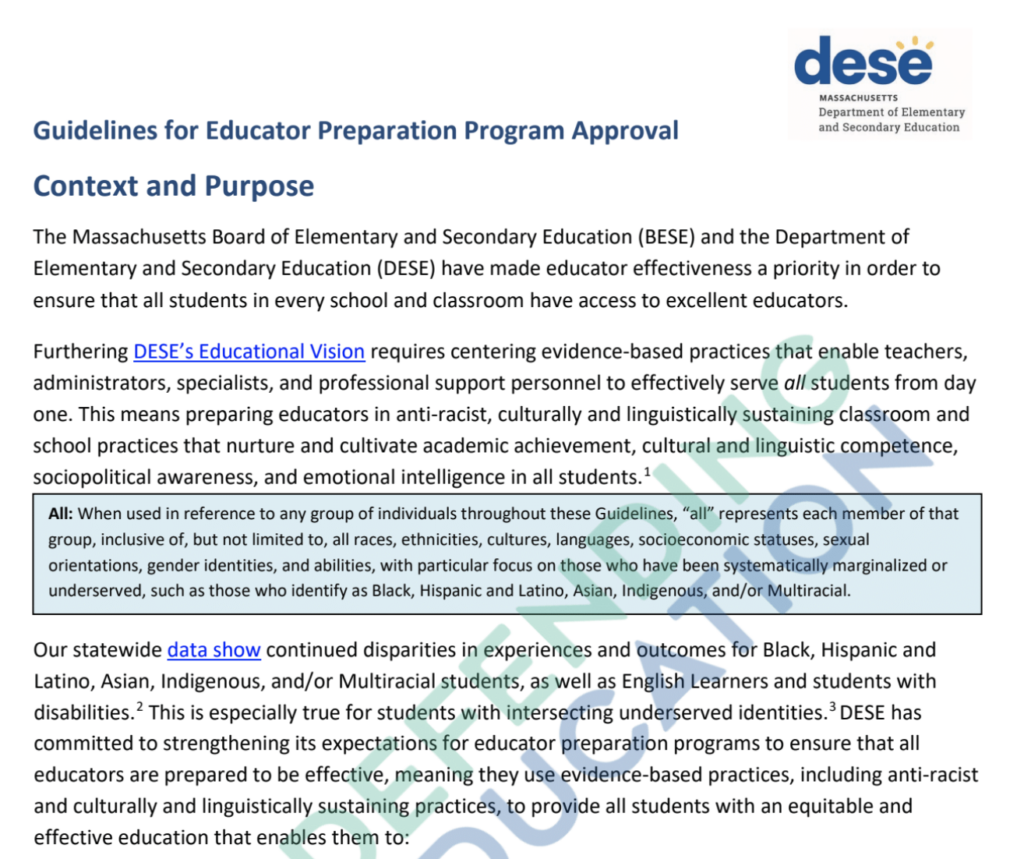
Guidelines for Educator Preparation Program Approval
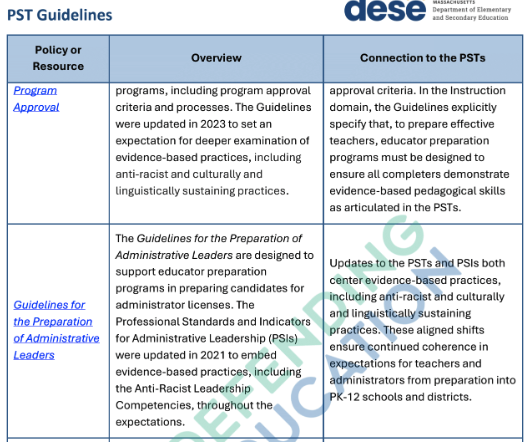
The DESE’s Guidelines for Educator Preparation Program Approval states that in order to “serve all students from day one” requires “preparing educators in anti-racist, culturally and linguistically sustaining classrooms and school practices that nurture and cultivate academic achievement, culturally and linguistic competence, sociopolitical awareness, and emotional intelligence in all students.”
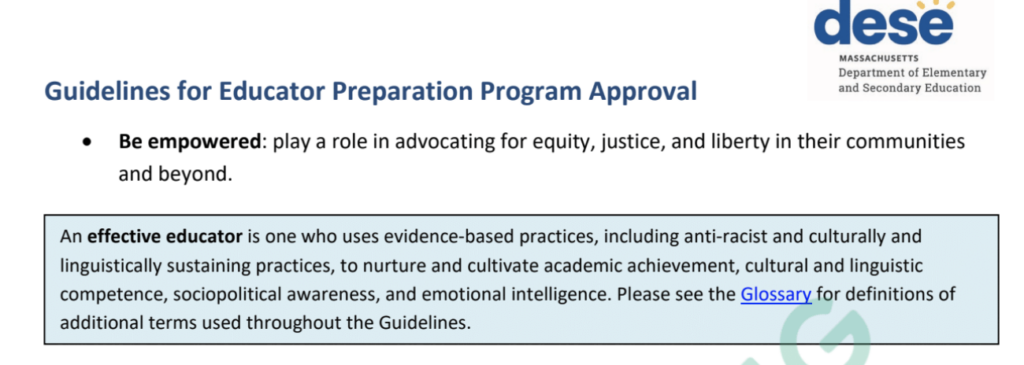
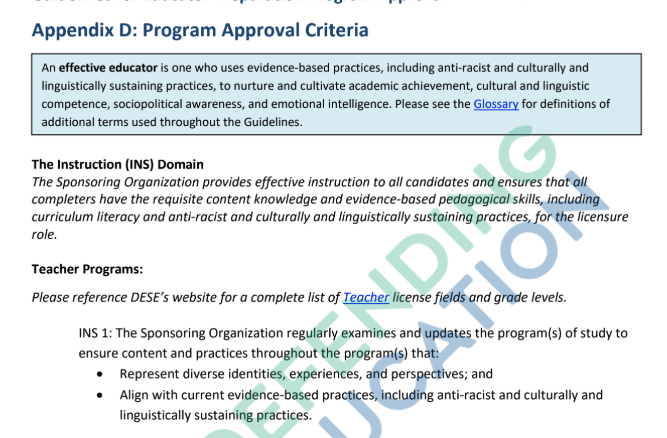
The DESE document defines an “effective educator” as “one who uses evidence-based practices, including anti-racist and culturally and linguistically sustaining practices, to nurture and cultivate academic achievement, cultural and linguistic competence, sociopolitical awareness, and emotional intelligence.”
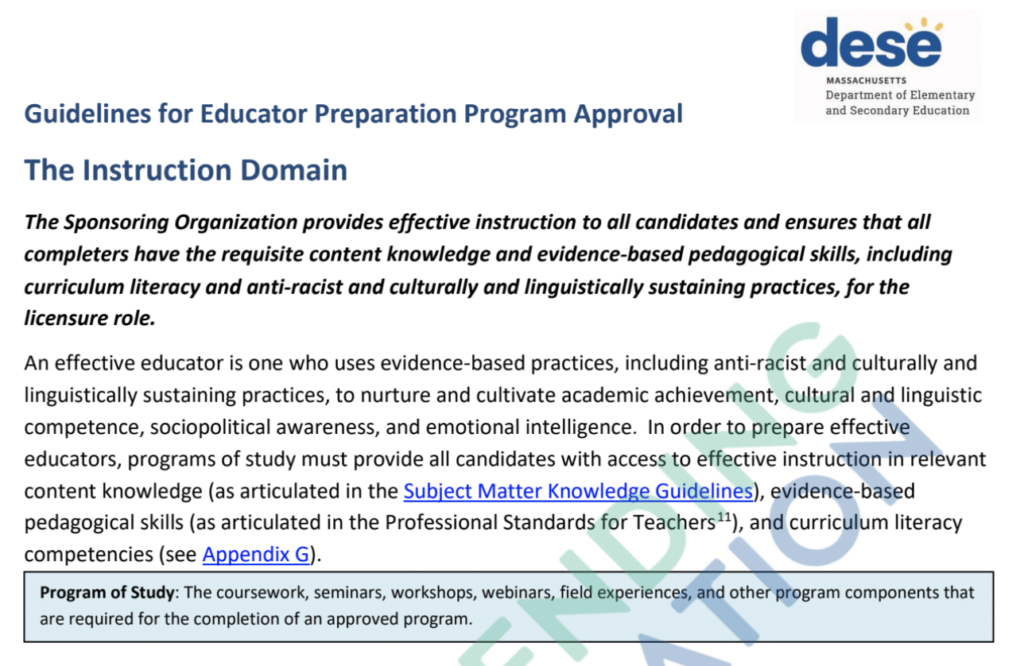
The Instruction Domain
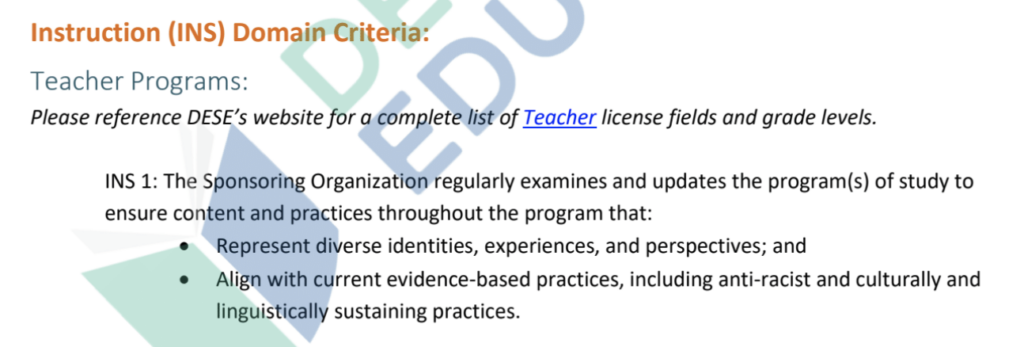
Under the “Instruction Domain,” it states that the “Sponsoring Organization provides effective instruction to all candidates and ensures that all completers have the requisite content knowledge and evidence-based pedagogical skills, including curriculum literacy and anti-racist and culturally and linguistically sustaining practices, for the licensure role.”
The Partnership Domain
Under the “Partnership Domain,” the document states that the “Sponsoring Organization” has benefits for the teacher candidates and schools/districts which include “the cultivation of an increasingly diverse and effective educator workforce and anti-racist and culturally and linguistically sustaining learning experiences for both candidates and PK-12 students.”
The domain also states that the DESE has made a “concerted effort to align expectations and initiatives across educator preparation and employment that center evidence-based, anti-racist, and culturally and linguistically sustaining practices.”

The Field-Based Experiences Domain
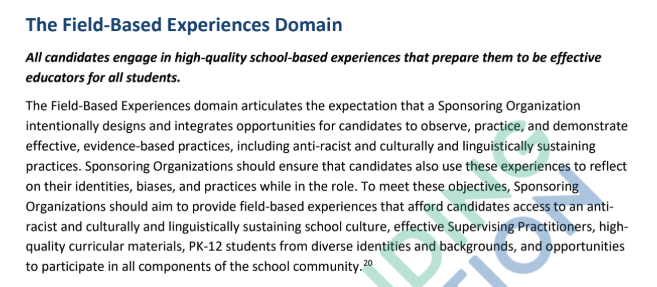
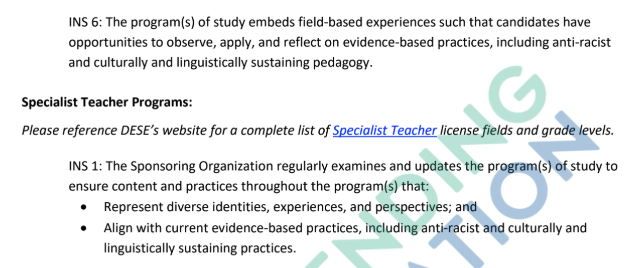
Under the “Field-Based Experiences Domain,” the “Sponsoring Organization” is expected to intentionally design and integrate “opportunities for candidates to observe, practice, and demonstrate effective, evidence-based practices, including anti-racist and culturally and linguistically sustaining practices.” The organization “should ensure that candidates also use these experiences to reflect on their identities, biases, and practices while in the role.”
The document also adds that to “meet these objectives, Sponsoring Organizations should aim to provide field-based experiences that afford candidates access to anti-racist and culturally and linguistically sustaining school culture, effective Supervising Practitioners, high-quality curricular materials, PK-12 students from diverse identities and backgrounds, and opportunities to participate in all components of the school community.”
Placements and Supervision during Practicum/Practicum Equivalent Experiences
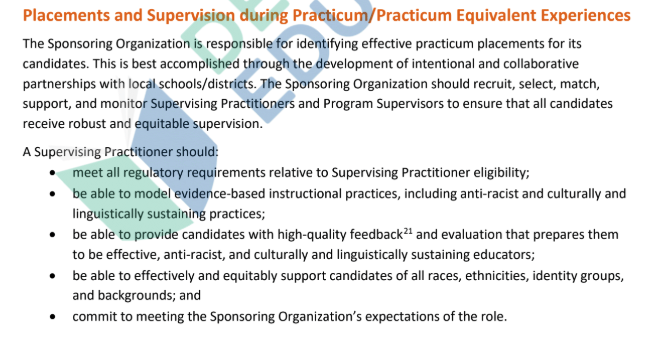
As part of the placement for practicum experiences, the “Supervising Practitioner” should “be able to model evidence-based instructional practices, including anti-racist and culturally and linguistically sustaining practices” and “be able to provide candidates with high-quality feedback and evaluation that prepares them to be effective, anti-racist, and culturally and linguistically sustaining educators.”
Field-Based Experiences (FBE) Criteria
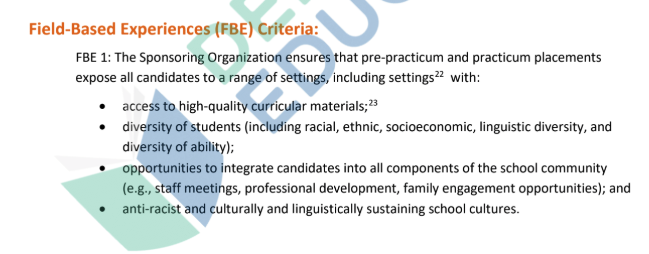
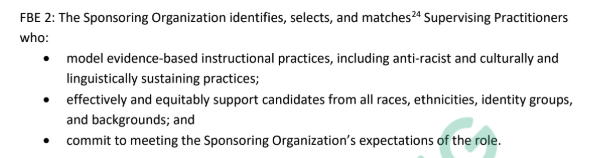
The DESE states that for “Field-Based Experiences (FBE) Criteria,” sponsors are required to ensure that “pre-practicum and practicum placements expose all candidates to a range of settings” including “anti-racist and culturally and linguistically sustaining school cultures.” It also states that the organization “identifies, selects, and matches Supervising Practitioners” who “model evidence-based instructional practices, including anti-racist and culturally and linguistically sustaining practices.”
Guidelines for Candidate Assessment of Performance
A 2024 document titled Guidelines for the Candidate Assessment of Performance describes the “method through which candidates will be assessed in their ability to use evidence-based practices that will well serve all students in Massachusetts, particularly those from systemically marginalized groups and communities, such that all students will have equitable opportunities to excel in all content areas across all grades.”
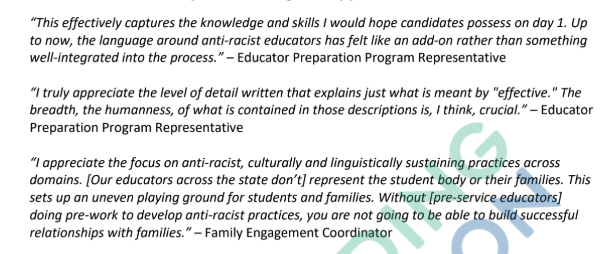
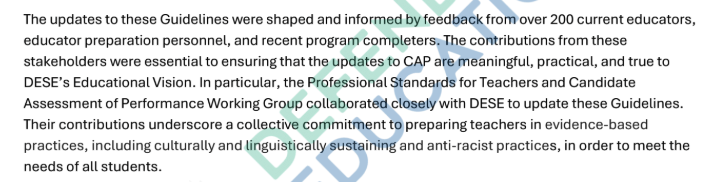
The introduction notes that the contributions from those surveyed underscores a “collective commitment to preparing teachers in evidence-based practices, including culturally and linguistically sustaining and anti-racist practices, in order to meet the needs of all students.”
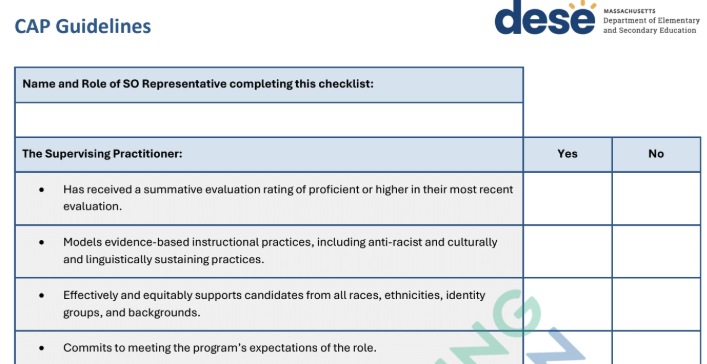
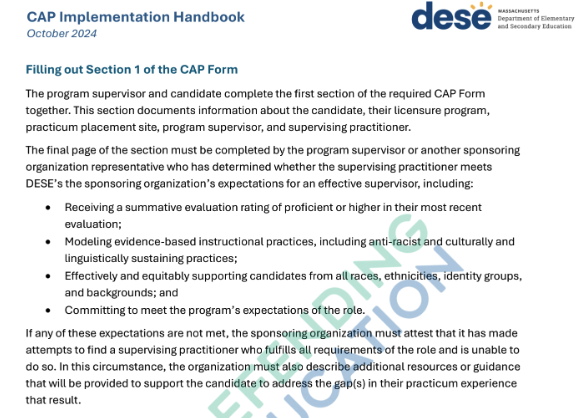
The required “Candidate Assessment of Performance (CAP) Form” evaluates whether the “Supervising Practitioner” models “evidence-based instructional practices, including anti-racist and culturally and linguistically sustaining practices” or not.
Handbook for the Candidate Assessment of Performance
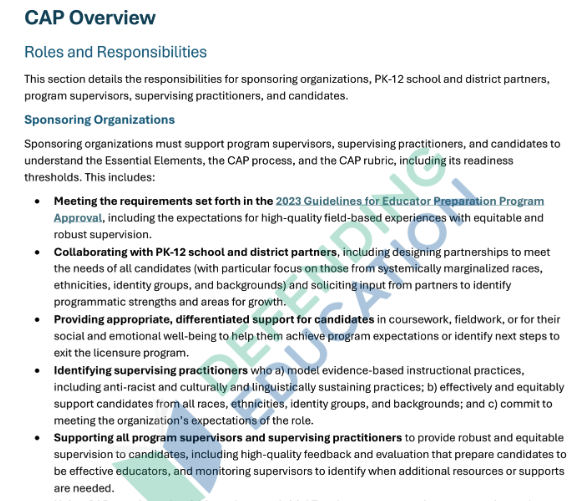
The Handbook for the Candidate Assessment of Performance (CAP) lays out the “Roles and Responsibilities” for “Sponsoring Organizations” which includes “identifying supervising practitioners who a) model evidence-based instructional practices, including anti-racist and culturally and linguistically sustaining practices; b) effectively and equitably support candidates from all races, ethnicities, identity groups, and backgrounds; and c) commit to meeting the organization’s expectations of the role.”
CERTIFIED EDUCATORS
Guidelines for the Professional Standards for Teachers
The Guidelines for the Professional Standards for Teachers document “articulates the expectation that all aspiring teachers be prepared to use evidence-based practices that will well serve all students in Massachusetts, particularly those from systemically marginalized groups and communities, such that they will have equitable opportunities to excel in all content areas across all grades.”
The PST Guidelines define “anti-racist practices” as the demonstration that “all racial groups are equals in their differences and resist and dismantle inequities due to individual and systemic racism to advance racial equity.”
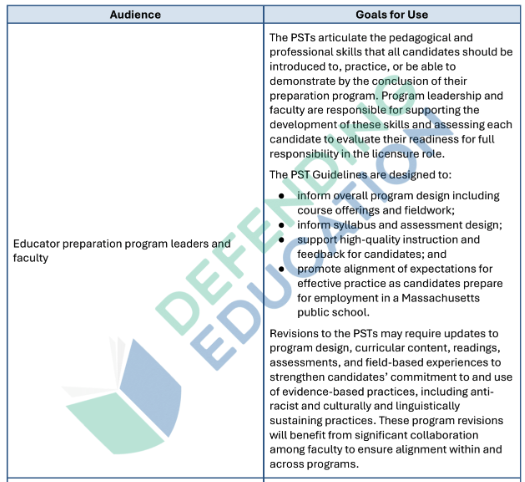
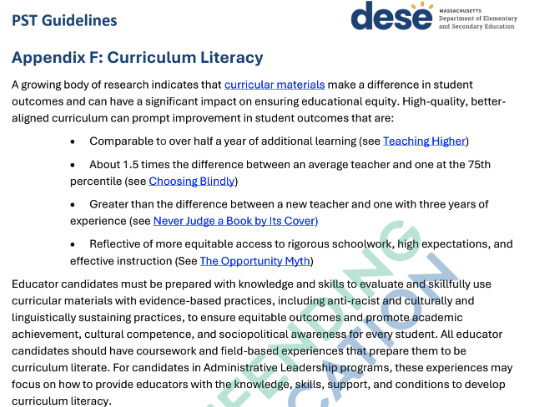
Under the category of “Educator preparation program leaders and faculty,” the document states that “revisions to the PSTs may require updates to program design, curricular content, readings, assessments, and field-based experiences to strengthen candidates’ commitment to and use of evidence-based practices, including anti-racist and culturally and linguistically sustaining practices.”
Model Rubric for Classroom Teacher Evaluation
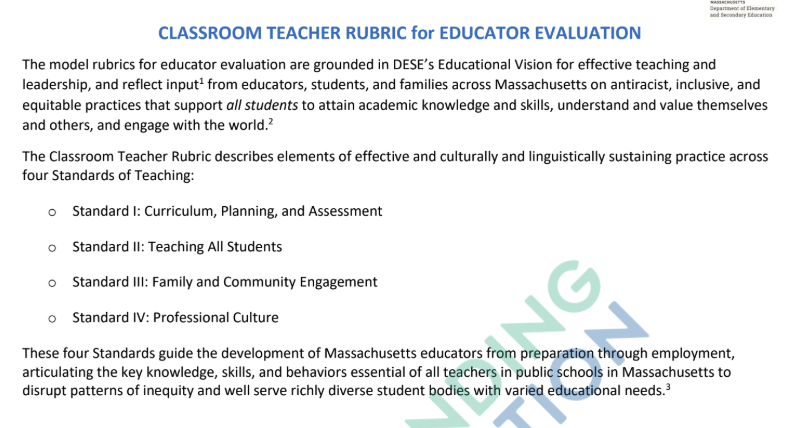
Another DESE document titled Model Rubric for Classroom Teacher Evaluation states that the “model rubrics for educator evaluation are grounded in DESE’s Educational Vision for effective teaching and leadership, and reflect input from educators, students, and families across Massachusetts on antiracist, inclusive, and equitable practices that support all students to attain academic knowledge and skills, understand and value themselves and others, and engage with the world.”
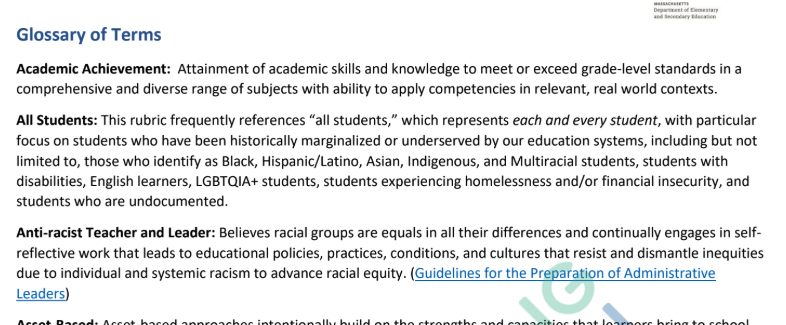
The document defines “Anti-racist Teacher and Leader” as someone who “believes racial groups are equals in all their differences and continually engages in self-reflective work that leads to educational policies, practices, conditions, and cultures that resist and dismantle inequities due to individual and systemic racism to advance racial equity.”
It defines “equity” as “placing a heightened focus on groups, particularly racial groups, experiencing disproportionate impact through the development of systems to remediate disparities in their experiences and outcomes.”

Stay Informed