



A K-12 school walkout toolkit encourages rule-breaking and class interruptions to achieve social justice demands
Investigations
SUMMARY
Defending Education uncovers Alliance for Education Justice’s “Direct Action Training” toolkit for K-12 “Student Walkouts.” The thirty-six page toolkit promotes direct action tactics and instructs children on how to develop, organize, recruit, and train for a school walkout or protest.
Alliance for Education Justice (AEJ) is a project of Coleman Children and Youth Services doing business as Coleman Advocates for Children & Youth, which has received past funding from nonprofits such as the Marguerite Casey Foundation, New Venture Fund, and the Tides Foundation.
Several foundations such as the Ford Foundation, the Foundation to Promote Open Society, The Schott Foundation for Public Education, and Borealis Philanthropy have designated money for Alliance for Education Justice through Coleman Advocates for Children and Youth and Movement Strategy Center.

KEY TAKEAWAYS
- The Walkout Toolkit encourages K-12 students to organize a school walkout for far-left social justice causes.
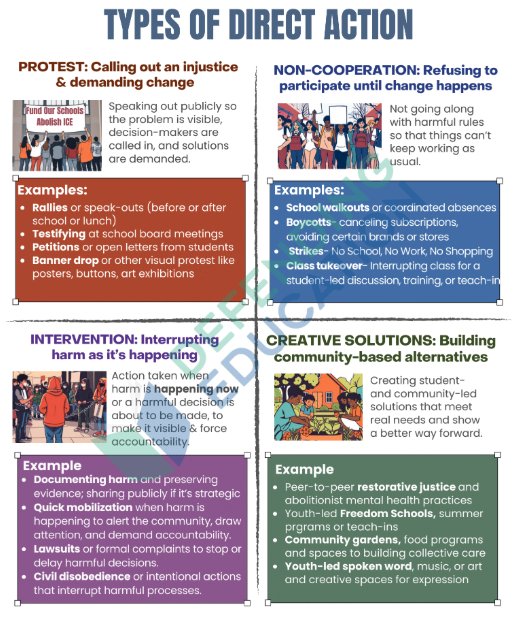
- The document promotes direct actions such as “refusing to participate until change happens.” Examples include “school walkouts,” “boycotts,” “strikes – No School, No Work, No Shopping,” and “class takeover” which includes “interrupting class for a student-led discussion, training, or teach-in.”
- The training toolkit also notes that walkouts “intentionally break school rules” and are “also a form of nonviolent civil disobedience” that have been used to “interrupt business as usual and demand accountability.”
- The document details how to turn “absence into power” by “disrupting normal school routines and making a problem impossible to ignore.”
- The Foundation to Promote Open Society donated $250,000 to AEJ in 2022.
ALLIANCE FOR EDUCATIONAL JUSTICE WALKOUT TOOLKIT
DIRECT ACTION TRAINING: SCHOOL WALKOUTS
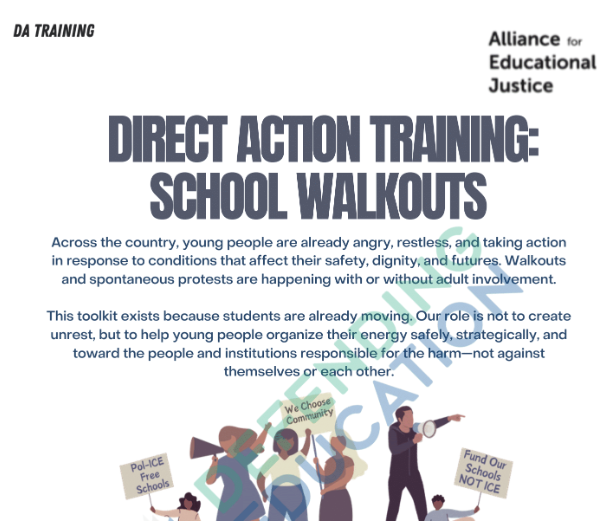
Alliance for Education Justice’s (AEJ) Walkout Toolkit titled “Direct Action Training: School Walkouts” encourages K-12 students to organize a school walkout. The document states that “across the country, young people are already angry, restless, and taking action in response to conditions that affect their safety, dignity, and futures.”
The toolkit “exists because students are already moving” and is not meant to “create unrest, but to help young people organize their energy safely, strategically, and toward the people and institutions responsible for the harm – not against themselves and each other.”
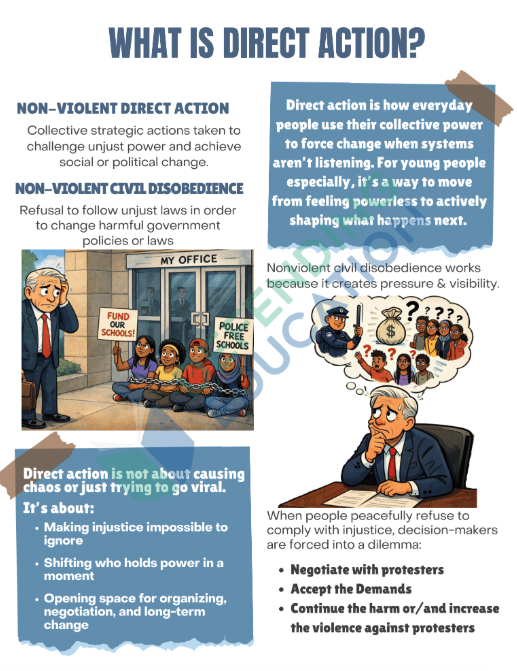
The toolkit states that a “Direct Action” is “how everyday people use their collective power to force change when systems aren’t listening,” and it is a “way to move from feeling powerless to actively shaping what happens next.” Direct action has two forms – “non-violent direct action” and “non-violent civil disobedience.”
Moreove, the guide states that direct action is “not about causing chaos or just trying to go viral.” It is, rather, about “making injustice impossible to ignore,” “shifting who holds power in a moment,” and “opening space for organizing, negotiating, and long-term change.”
The document lists several types of direct action including “protest,” “non-cooperation,” “intervention,” and “creative solutions.”
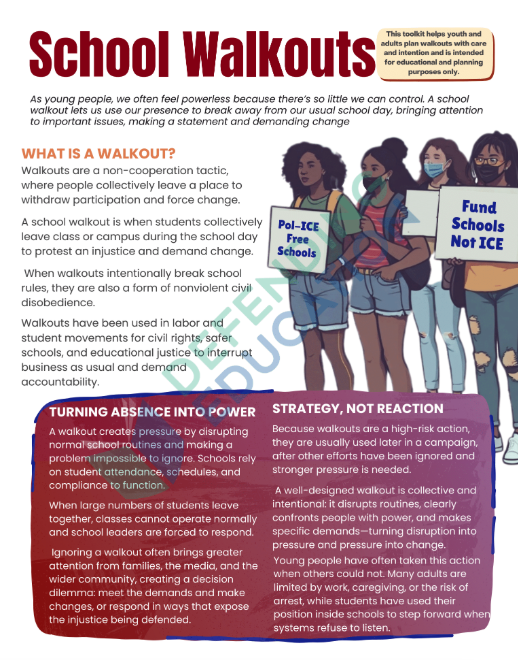
The section titled “School Walkouts” states that a “school walkout lets us use our presence to break away from our usual school day, bringing attention to important issues, making a statement and demanding change.” It also notes that walkouts “intentionally break school rules” and are “also a form of nonviolent civil disobedience” that have been used to “interrupt business as usual and demand accountability.”
The document details how to turn “absence into power” by “disrupting normal school routines and making a problem impossible to ignore.” It continues: “When large numbers of students leave together, classes cannot operate normally and school leaders are forced to respond.” The purpose is to force school officials into a “decision dilemma: meet the demands and make changes, or respond in ways that expose the injustice being defended.”
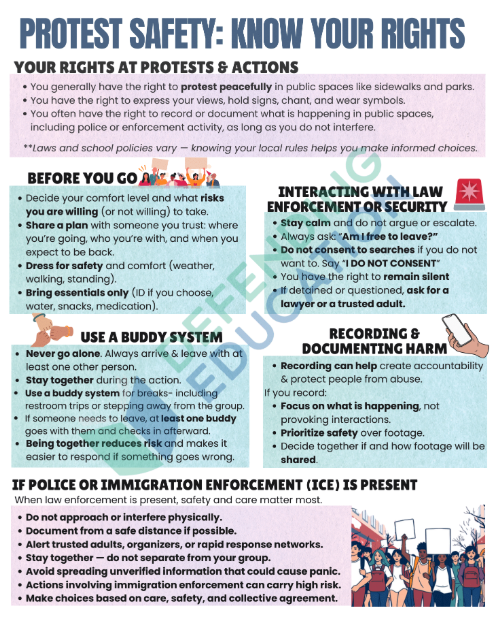
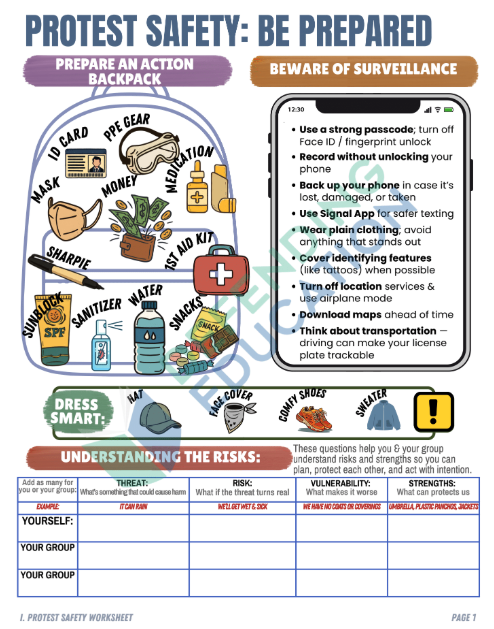
The remainder of the toolkit includes topics such as planning and organizing a walkout, protest safety such as “Know Your Rights,” action planning, recruiting, walkout leader roles, and media protocols.
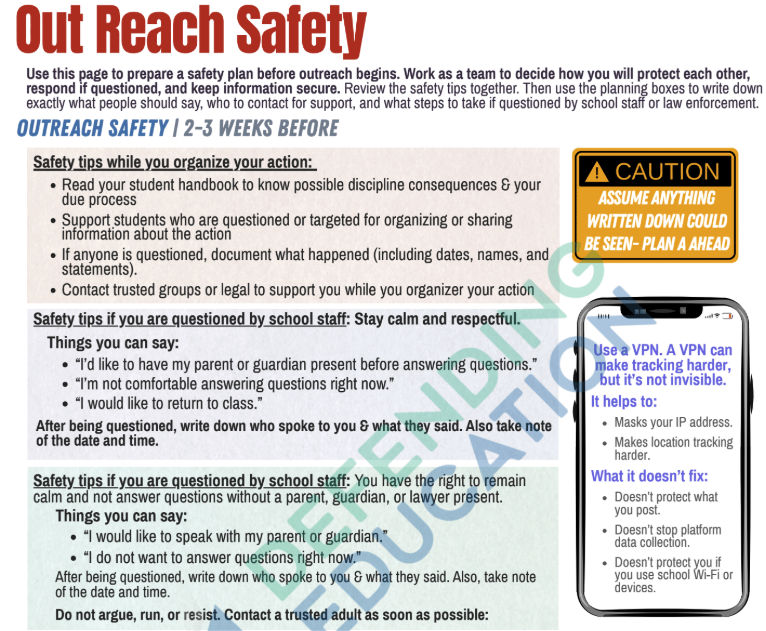
A section titled “Out Reach Safety” advises students to “use a VPN” because “a VPN can make tracking harder, but it’s not invisible.” The toolkit also provides “safety tips” such as refusing to answer questions from school staff without a parent/guardian or lawyer.
Stay Informed