




West Hartford Public Schools years-long equity goals: hiring based on color, a $20,000 equity contract, and trainings on privilege and oppression
Incidents
Summary
A $20,000 contract signed in 2023 between West Hartford Public Schools (WHPS) and Recenter Race & Equity Inc. consisted of years-long equity-based goals, including trainings for the Board of Education as well as the facilitation of District Equity Diversity Council Meetings.
In one of the presentations, Recenter emphasizes the importance of hiring and retention on the basis of color, a policy that WHPS openly endorses on its website. Other takeaways from the Recenter presentations include an emphasis on privilege and intersectionality. Following Recenter’s trainings, WHPS furthered policies aiming to attract, retain, and promote teachers of color.
$20,000 contract with Recenter Race & Equity in Education Inc.
In 2023, WHPS signed a $20,000 contract with Recenter Race & Equity in Education Inc., a now defunct organization. The services provided by Recenter included the facilitation of on-site District Equity Diversity Council Meetings, coaching and consultation sessions, and Board of Education trainings.
The founder of this organization praises her “commitment to decolonizing systems and operationalizing justice.”
Recenter’s list of service offerings online includes professional development for educators, equity and racial justice workshops + training series, and coaching. Under the training series, the description reads, “The approach is based on shifting mindsets in order for participants to understand where they are situated in term of historical and contemporary oppression, how their identities align or intersect with those of communities they serve, and how their ideas, relationships, and practices are informed by their positionality.”
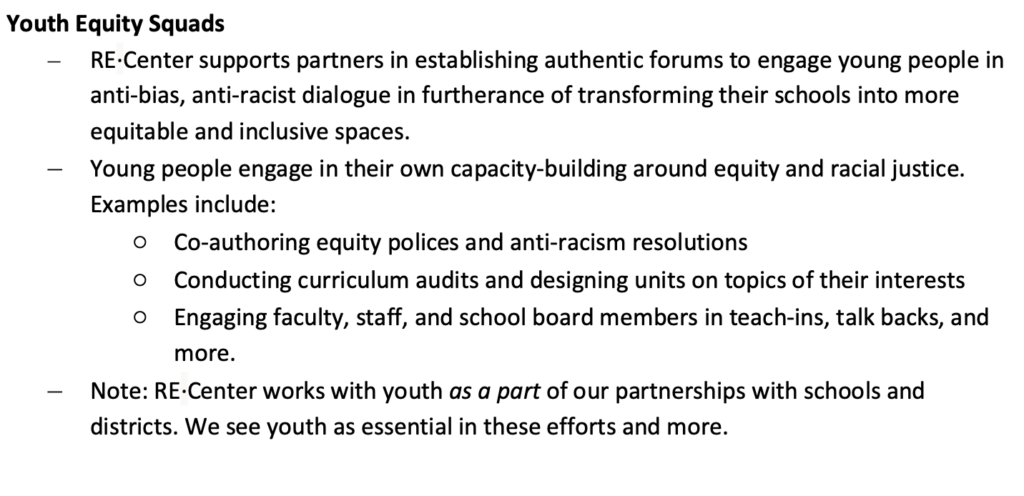
Additionally, Recenter’s work included “Youth Equity Squads,” programming in which young people engage in “anti-bias, anti-racist dialogue in furtherance of transforming their schools into equitable and inclusive spaces.”
The goal is for students to “engage in their own capacity-building around equity and racial justice.” For students, this could look like writing equity-related policies and anti-racism resolutions.
District Equity Commitment
West Hartford Public Schools boasts the district’s equity and anti-racism values, as found on their website in a commitment statement.
In the statement, the district strives to become “an anti-racist organization,” while vowing to increase teacher diversity. WHPS shares that the district has seen “incremental growth in the diversity of our teaching staff every year for six years amounting to a 2.5% increase…we have seen a net increase of 19 teachers of color as part of a larger whole of an additional 24 teachers among minority race classifications.”
As the statement reads, “This is a result of both competency-based promotions and diversity hiring principles, including our commitment to creating diverse hiring pools for all positions.”
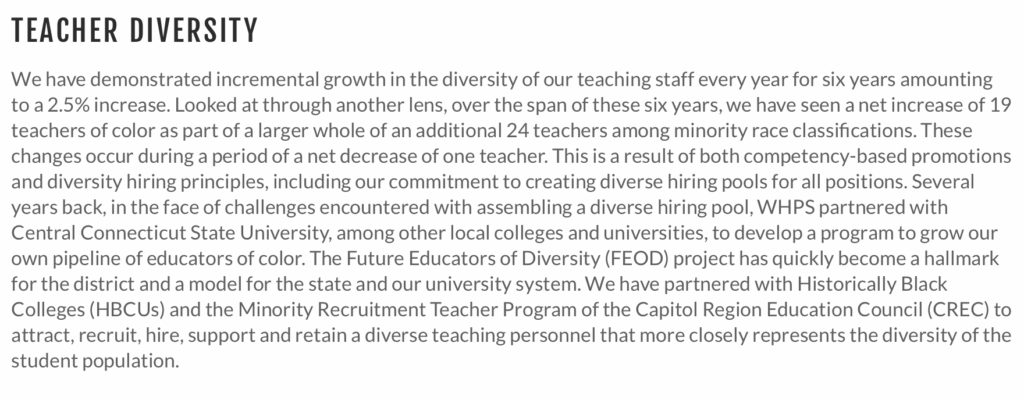
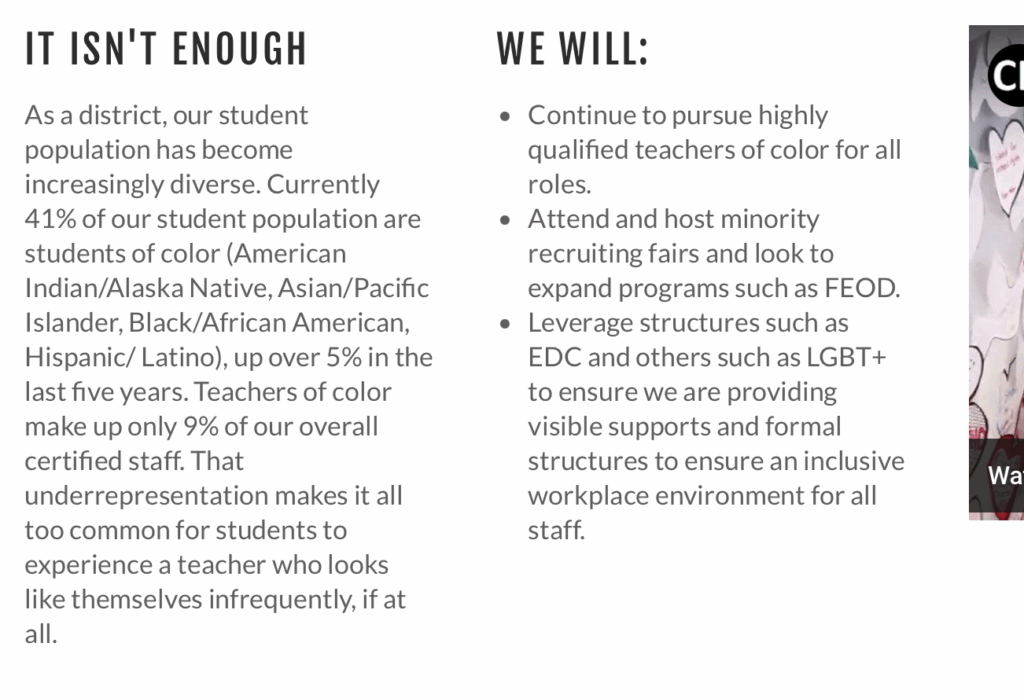
In this section on teacher diversity, WHPS affirms its commitment to pursue teachers of color and attend and host minority recruiting fairs.
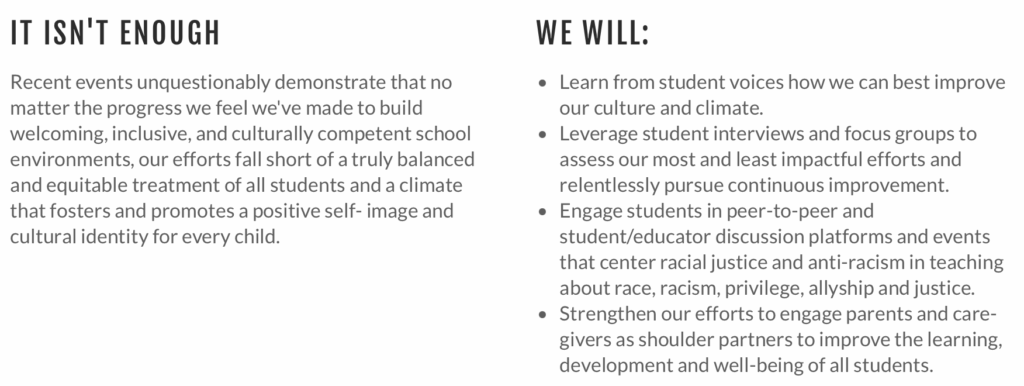
The final section on the WHPS statement–devoted to “School Climate and Student Engagement”–says they will: “Engage students in peer-to-peer and student/educator discussion platforms and events that center racial justice and anti-racism in teaching about race, racism, privilege, allyship and justice.”
Recenter Training for WHPS
Defending Education obtained access to one of the presentations Recenter gave to WHPS staff.
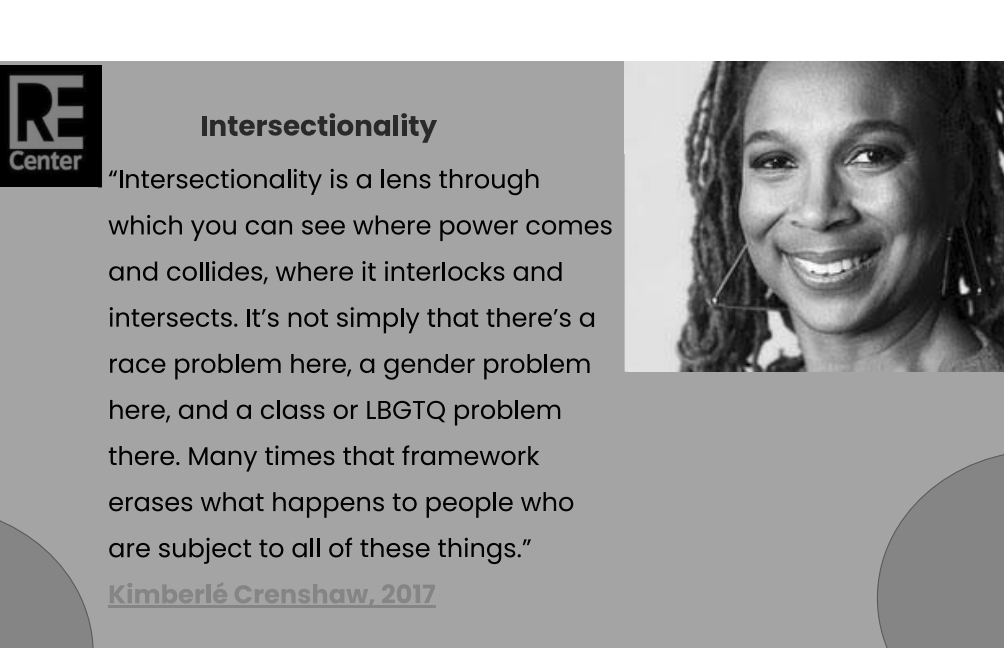
In the training, terms such as “privilege” and “intersectionality” are defined as “‘The benefits, advantages, and power given due to the social identities shared with the dominant culture'” and “‘Intersectionality is a lens through which you can see where power comes and collides, where it interlocks and intersects. It’s not simply that there’s a race problem here, a gender problem here, and a class or LBGTQ problem there. Many times that framework erases what happens to people who are subject to all of these things,'” respectfully.
The definition of “privilege” is pulled from Tiffany Jewell’s This book is antiracist, and the definition of “intersectionality” comes from Kimberlé Crenshaw, one of the leading architects behind critical race theory.

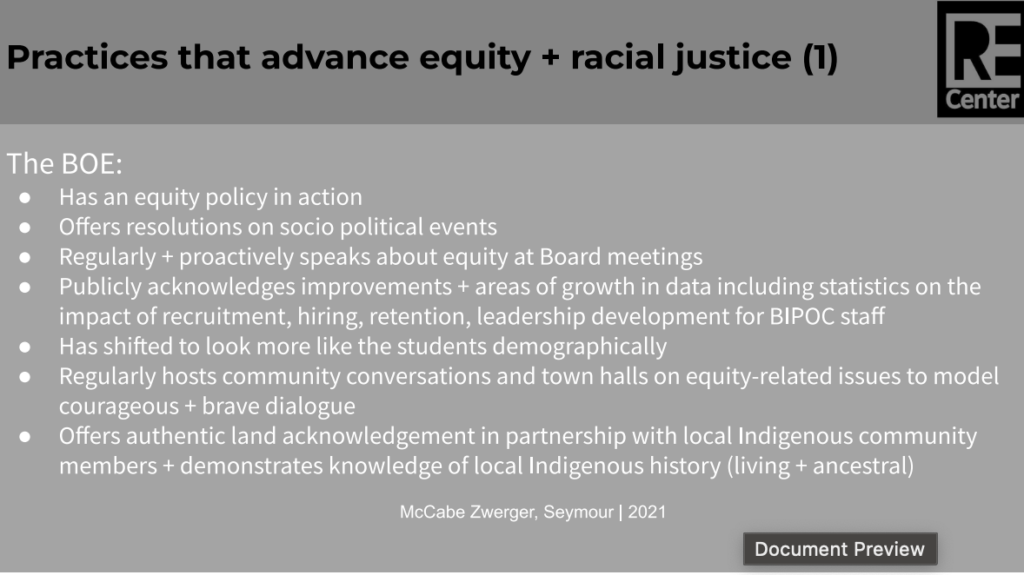
The presentation continues, detailing practices for the Board of Education that will advance equity and racial justice. According to the document, this includes: having an equity policy in action, offering resolution on socio political events, speaking regularly and proactively abut equity, finding areas of growth for hiring, retaining, and promoting BIPOC staff, and hosting more equity-related conversations.
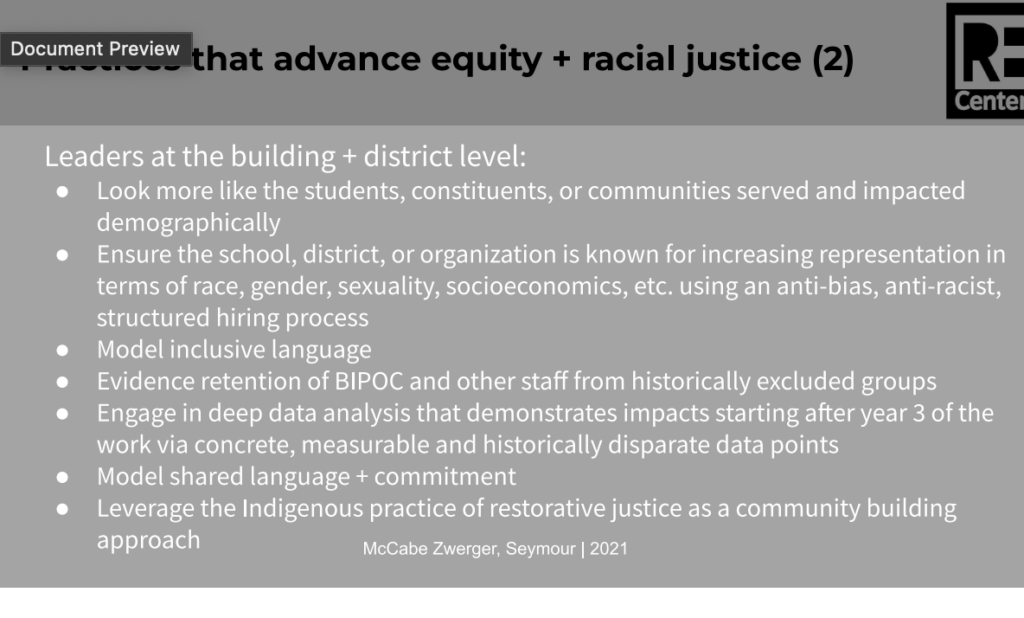
For school district leaders, Recenter suggests that the school should work to be ” known for increasing representation in terms of race, gender, sexuality, socioeconomics, etc. using an anti-bias, anti-racist, structured hiring process.” Additionally, Recenter suggests that WHPS improve its retention of BIPOC staff and grow its restorative justice practices.
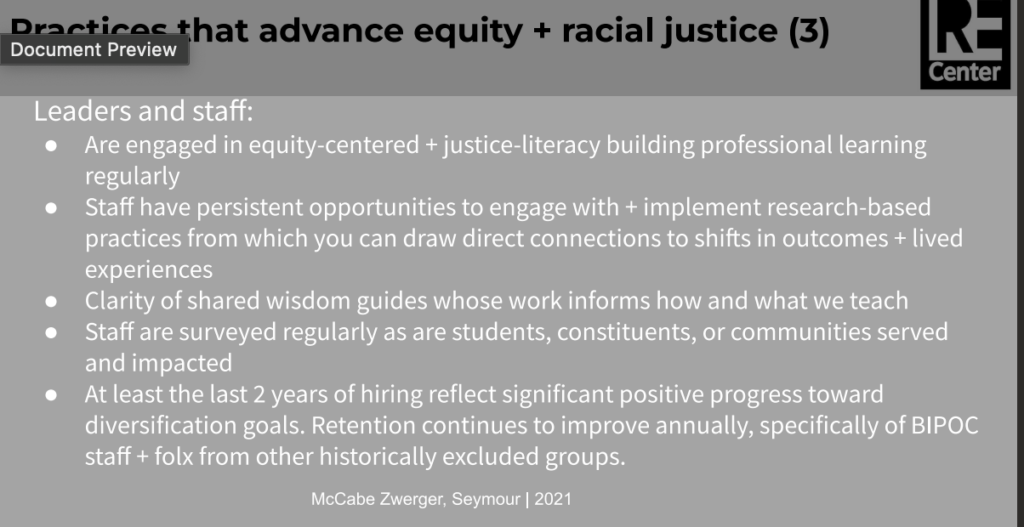
In the following slide, Recenter reiterates the importance of diversity-based hiring. Specifically, the last bullet point on the slide reads, “At least the last 2 years of hiring reflect significant progress toward diversification goals. Retention continues to improve annually, specifically of BIPOC staff +folx from other historically excluded groups.”
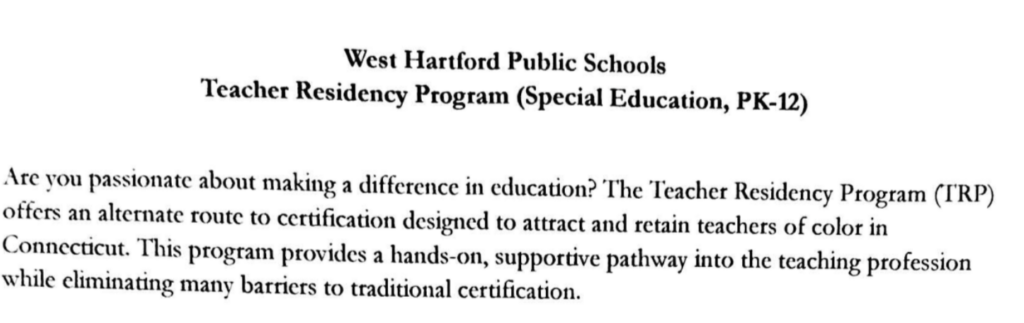
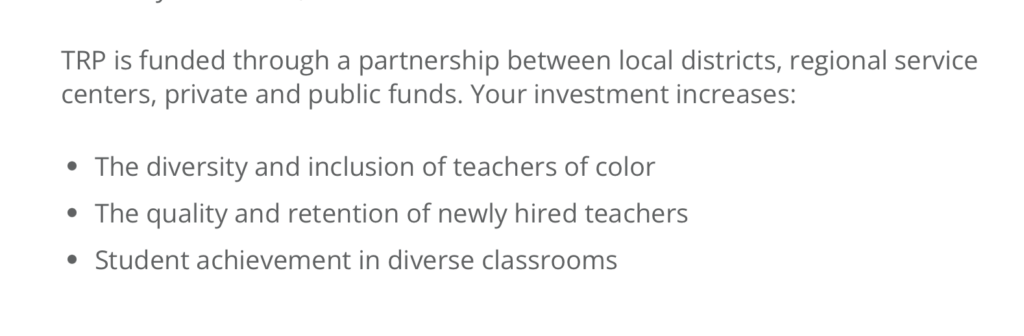
One likeminded initiative by the state, implemented in West Hartford Public Schools, is the Teacher Residency Program. As advertised in the program description, “The Teachers Residency Program (TRP) offers an alternative route to certification designed to attract and retain teachers of color in Connecticut.”
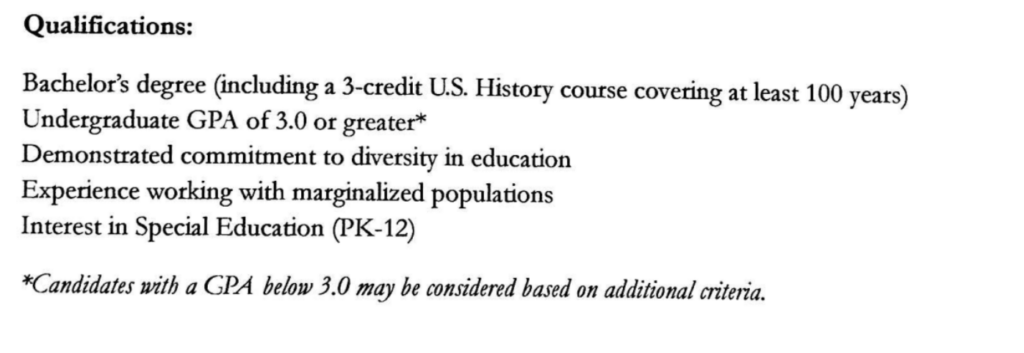
Part of the criteria for applicants includes a “Demonstrated commitment to diversity in education” as well as “Experience working with marginalized populations.”
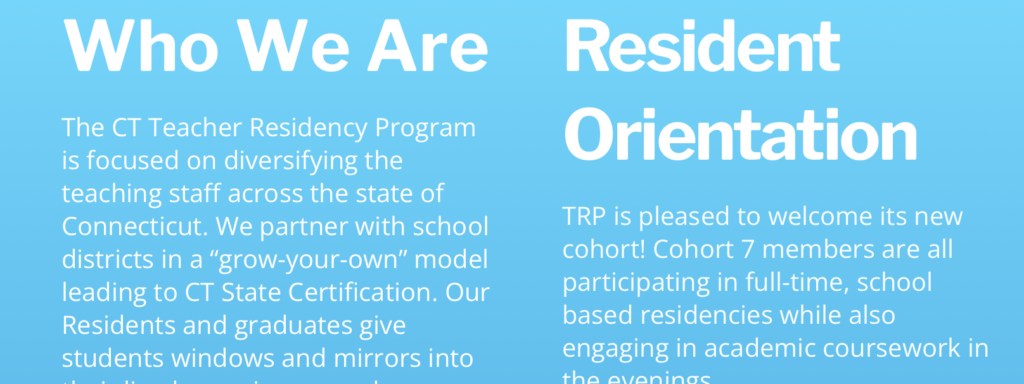
This statewide program–with the acronym CT TRP–still exists, with the goal of “diversifying the teaching staff across the state of Connecticut.”
The program is funded “through a partnership between local districts, regional service centers, private and public funds.”
Equity & Diversity Council
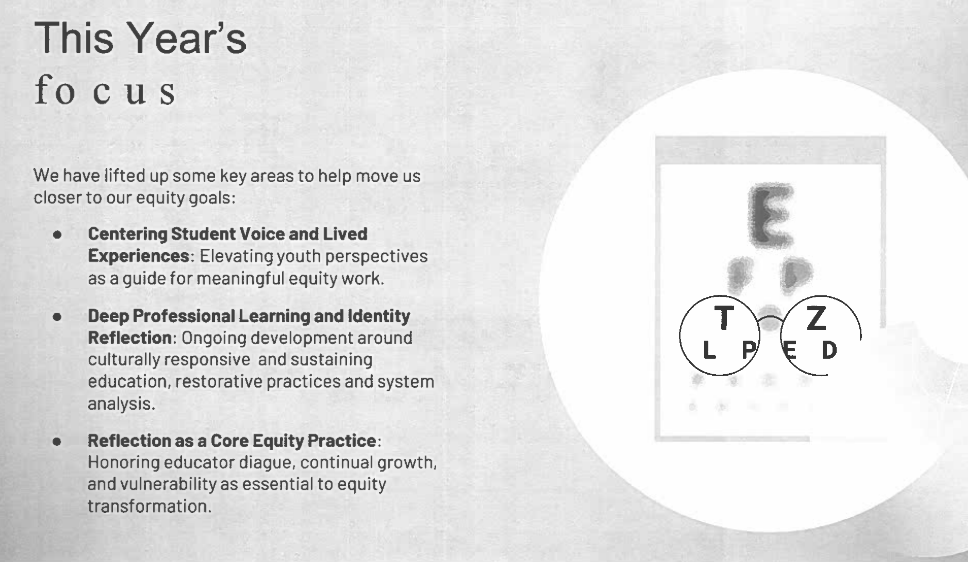
A 2024 “Year in Review” from the WHPS Equity & Diversity Council offered some of the “key areas” in order to better achieve the district’s equity goals. These areas included: “Centering Student Voice and Lived Experiences,” “Deep Professional Learning and Identity Reflection,” and “Reflection as a Core Equity Practice.”
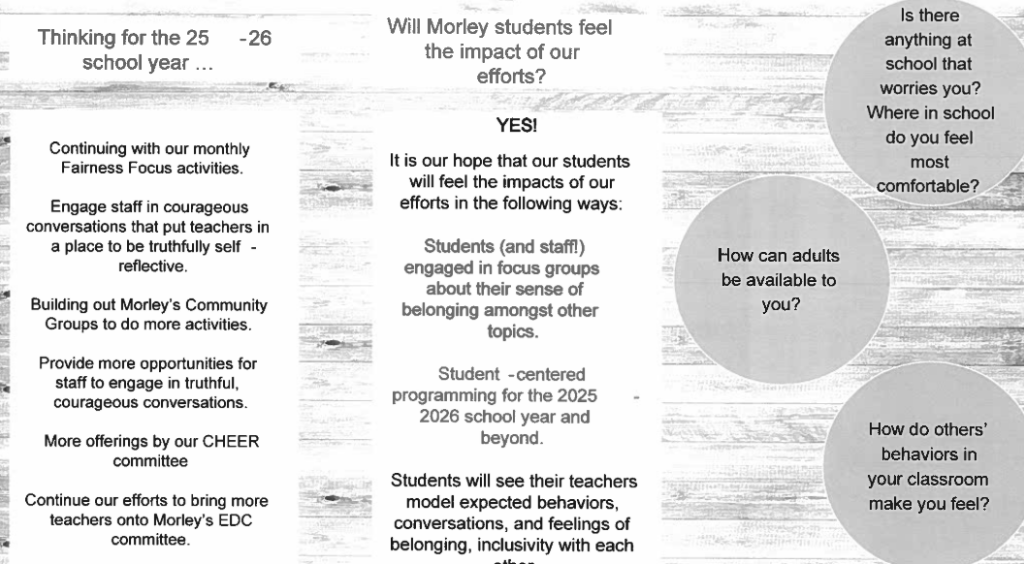
This review focused primarily on WHPS’ Morley Elementary School. One slide reads, “Will Morley [Elementary] students feel the impact of our efforts? YES!” This slide details ways in which students will be affected by equity efforts, including student-centered programming taking place this year as well as focus groups “about their sense of belonging amongst other topics.”
Elementary School Curriculum Equity Goals
Defending Education previously reported on West Hartford’s “elementary social justice lessons standards and mentor texts,” finding that K-12 students were required to engage in “social emotional learning through an equity lens.” Those findings are here.
Stay Informed